The recent incidents involving truck fires along the Sahelian border region are far from isolated security occurrences. Instead, these events underscore a significant deterioration in the crucial commercial pathways connecting Mauritania, Morocco, and Mali’s northern territories. These once comparatively stable transit routes are now plagued by ongoing insecurity, exacerbating the challenges faced by northern Malian communities in accessing essential food supplies and vital goods.
Against this backdrop, the commercial exchanges that historically sustained markets in Timbuktu and Gao through Mauritanian territory have seen a drastic reduction. The trans-Saharan routes, long indispensable for the movement of goods, are now severely disrupted, further destabilizing an already fragile economic balance across Mali’s northern regions.
For many years, Mauritania held a pivotal position within the trade networks linking Morocco to northern Mali. Goods regularly flowed through its ports before reaching major northern Malian urban centers. This commerce was underpinned by established Malian merchant networks, perpetuating a long-standing tradition tied to ancient desert caravan routes. Analysts like Umar Al-Ansari have consistently highlighted Mauritania’s instrumental role in fostering humanitarian and economic stability in northern Mali. As Al-Ansari observed, “Mauritania served as a vital lifeline for northern Mali. The nation not only facilitated the passage of goods but also offered refuge to populations seeking safety. From 1991 to the present day, Nouakchott has consistently kept its borders open to successive waves of Malian refugees. Current estimates indicate over 300,000 Malian refugees and asylum seekers reside in the country’s eastern parts, particularly within the Mbera camp and various host villages.”
A progressively strained security cooperation
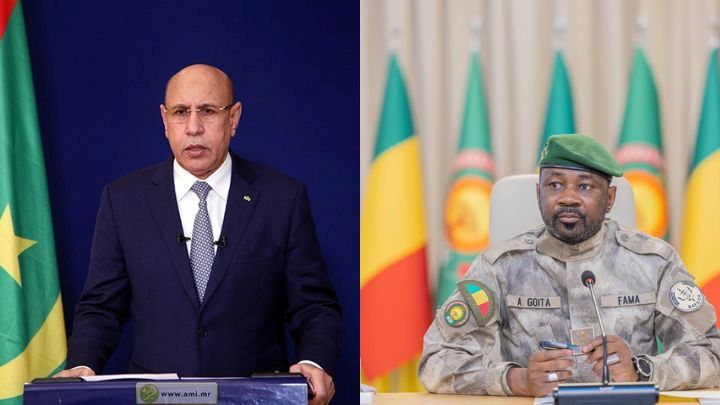
This open stance also bolstered Mauritania’s efforts to secure its own borders. Authorities in Nouakchott successfully managed to contain armed threats early on and restrict their presence in border areas, a fact noted by various observers. However, this cooperative momentum appears to have steadily eroded due to a worsening regional security environment. The border management strategies employed by Mali’s transitional authorities, coupled with the involvement of foreign military partners, notably Russian forces, are perceived to have fundamentally altered the dynamics between the two nations.
Border regions have increasingly become flashpoints for military operations and heightened tensions, directly impacting civilian populations. Over time, numerous incidents have been documented, including arrests, armed confrontations, and allegations targeting civilians suspected of collaborating with armed groups. These occurrences have gradually undermined the long-standing traditional cooperation mechanisms among border communities.
Erosion of local networks and rising tensions
Umar Al-Ansari’s analysis indicates that this deterioration directly weakened the local networks that had sustained border life for decades. As he emphasized, “With every incident—every abduction, every accusation—the local networks that structured border life, including traders, herders, traditional leaders, and transporters, progressively diminished. This erosion of trust created voids of instability, allowing armed groups to establish a foothold in areas once dedicated to vital commercial and human exchanges.”
Presently, the routes connecting Mali and Mauritania face increasing exposure to insecurity, with constant disruptions affecting commercial flows and further isolating northern Mali. Within this evolving landscape, Mauritania, once a critical partner and a beacon of stability for Bamako, has steadily distanced itself from cooperative engagements. This shift signifies a profound reorientation in the relationship between the two nations, driven by escalating security tensions and the realignment of regional alliances.