The health sector in Benin has undergone a remarkable overhaul in recent years, shifting from a system plagued by inefficiencies to one built on innovation, accessibility, and excellence. Spearheaded by President Patrice Talon’s administration and the Ministry of Health, this transformation rests on four foundational pillars: governance, infrastructure, technical capacity, and sanitation. Gone are the days of opaque medical evacuations; today, world-class hospitals, stringent regulations, and universal coverage place the well-being of Beninese citizens at the heart of national priorities.
a bold vision for healthcare reform
For decades, Benin’s healthcare system struggled under the weight of outdated infrastructure, chronic underfunding, and recurring strikes. The arrival of a new administration marked a turning point. Rather than relying on short-term fixes, the government chose a decisive path—launching a sweeping overhaul to rebuild the sector from the ground up. Today, the results speak for themselves as Benin emerges as a regional leader in healthcare excellence.
tough governance reforms end decades of neglect
The first pillar of change was reinventing how health services are regulated. The creation of the Health Sector Regulatory Authority (ARS) established clear standards, enforced quality control, and introduced mandatory accreditation for medical facilities. Equally transformative was the outright ban on public healthcare workers practicing privately—a move that restored faith in public hospitals by ensuring doctors remained available where they were most needed.
Sanitation efforts also targeted illegal medical practices. Hundreds of unlicensed clinics and practitioners, once operating without oversight, were shut down. This crackdown sent a powerful message: healthcare in Benin is no longer a commercial venture but a national security imperative.
building the hospitals of tomorrow
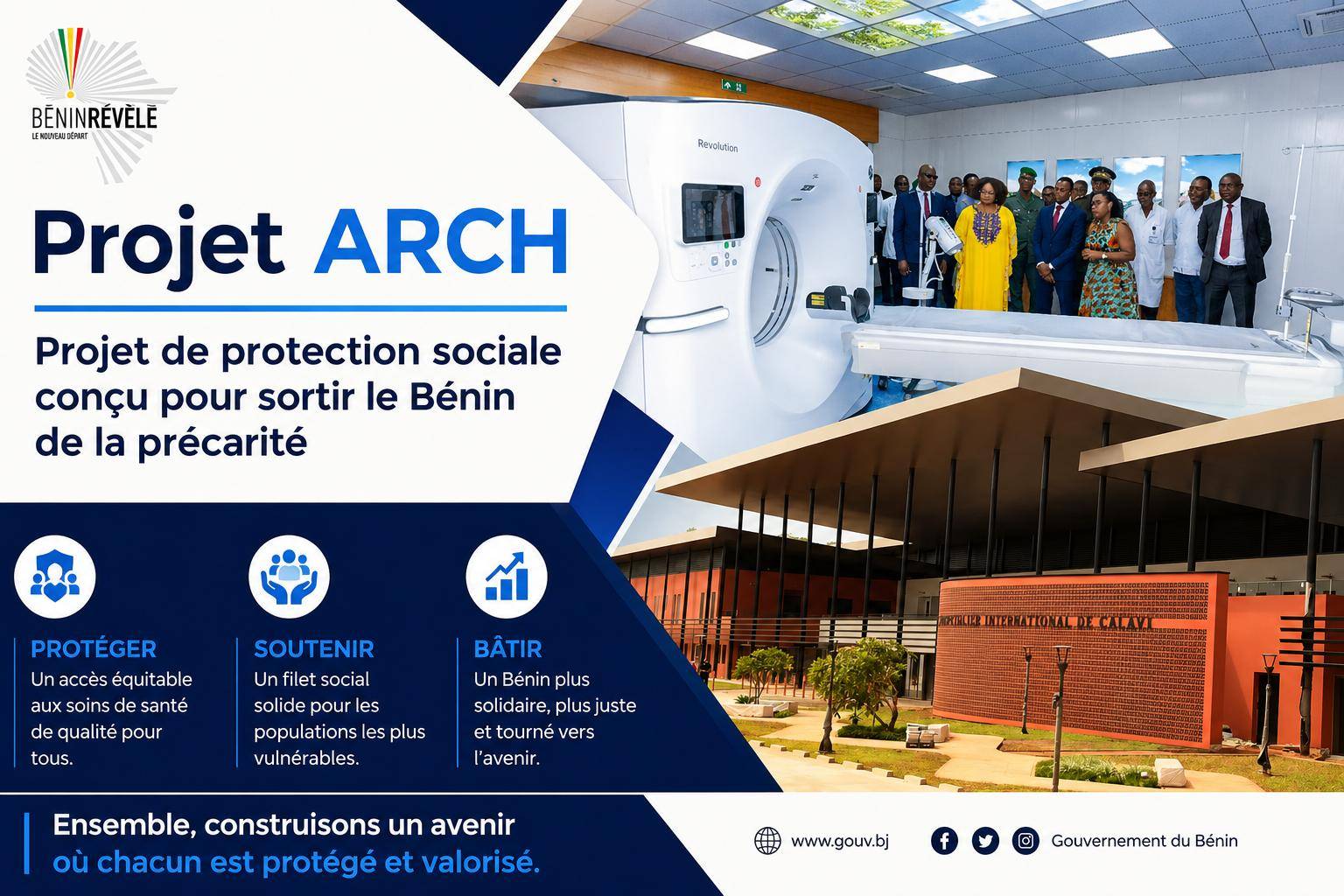
Infrastructure development has been nothing short of revolutionary. The flagship project, the International Hospital Center of Calavi (CHIC) in Abomey-Calavi, alongside the upcoming Togbin medical complex, sets new benchmarks in medical architecture. Designed to meet European and Asian standards, these facilities symbolize Benin’s regained healthcare sovereignty.
Renovation efforts haven’t spared existing institutions. Landmark hospitals like the National University Hospital Hubert Koutoukou Maga (CNHU-HKM) in Cotonou, the Lagune Mother and Child University Hospital (CHU-MEL), and regional hospitals have undergone major upgrades to bring high-quality care closer to every household.
cutting-edge technology reshapes medical care
Modernizing technical capacity was essential to curb the financial and human toll of overseas medical evacuations. The government allocated over 198 billion FCFA in annual health budgets and 275 billion FCFA in project-specific funding to equip hospitals with state-of-the-art technology.
Key upgrades include:
- Advanced imaging: High-resolution 64-slice CT scanners, 3 Tesla MRI machines, and digital radiology systems for precise diagnostics.
- Operating and critical care units: High-performance ventilators, real-time multiparametric monitors, ergonomic surgical tables, and minimally invasive laparoscopic equipment.
- Laboratories and maternity wards: Automated diagnostic systems, modern neonatal incubators, and 4D ultrasound machines.
the CHIC: a 115 billion FCFA medical marvel
The International Hospital Center of Calavi (CHIC), funded through a historic financial partnership totaling 175 million euros (115 billion FCFA), stands as the crown jewel of Benin’s healthcare transformation. Its ultra-modern facilities include:
- A cutting-edge oncology unit with linear accelerators for targeted radiotherapy and laminar flow hoods for safe chemotherapy preparation.
- A dedicated cardiac intervention center featuring digital angiography suites and integrated operating rooms with heart-lung machines for open-heart surgeries.
- Molecular biology platforms that automate complex pathology testing, drastically reducing diagnostic turnaround times.
With these advancements, life-saving treatments—from advanced cancer care to major cardiovascular surgeries—are now available locally, sparing families the financial and emotional strain of overseas medical travel.
ensuring no one is left behind
A healthcare revolution is only as strong as its reach. President Talon’s administration has prioritized inclusivity through massive recruitment drives, deploying thousands of doctors, nurses, midwives, and technicians to underserved regions. The ARCH Human Capital Strengthening Insurance initiative expands free or subsidized health coverage across all municipalities, while the revitalized National Community Health Policy deploys village-based health workers to deliver primary care and prevention.
Digital innovation is also playing a transformative role. Telemedicine platforms now connect rural patients with specialists in Cotonou, while electronic health records streamline care coordination and reduce inefficiencies.
tangible progress for beninese families
The impact is visible in the trust now placed in public hospitals. Shorter wait times, reliable access to essential medicines via the reformed Central Essential Medicines Procurement Agency (CAME), and a growing sense of healthcare security are reshaping lives. Transparency has become a cornerstone—rigorous monitoring and evaluation, including the publication of Benin’s first national health report with WHO support, underscore the government’s commitment to accountability.
The data tells a compelling story: steady declines in maternal and infant mortality, improved efficiency in public health spending, and a healthcare system that works for everyone.
the road ahead: challenges and opportunities
While the progress is undeniable, challenges remain. Maintaining high-tech equipment and ensuring continuous staff training are ongoing priorities. Yet the trajectory is unmistakably positive. Benin has demonstrated that with political will, disciplined budgeting, and a deep commitment to national progress, transforming a nation’s healthcare system is not just a dream—it’s an achievable reality.