West African leaders focus on gender and green economy in Abidjan talks
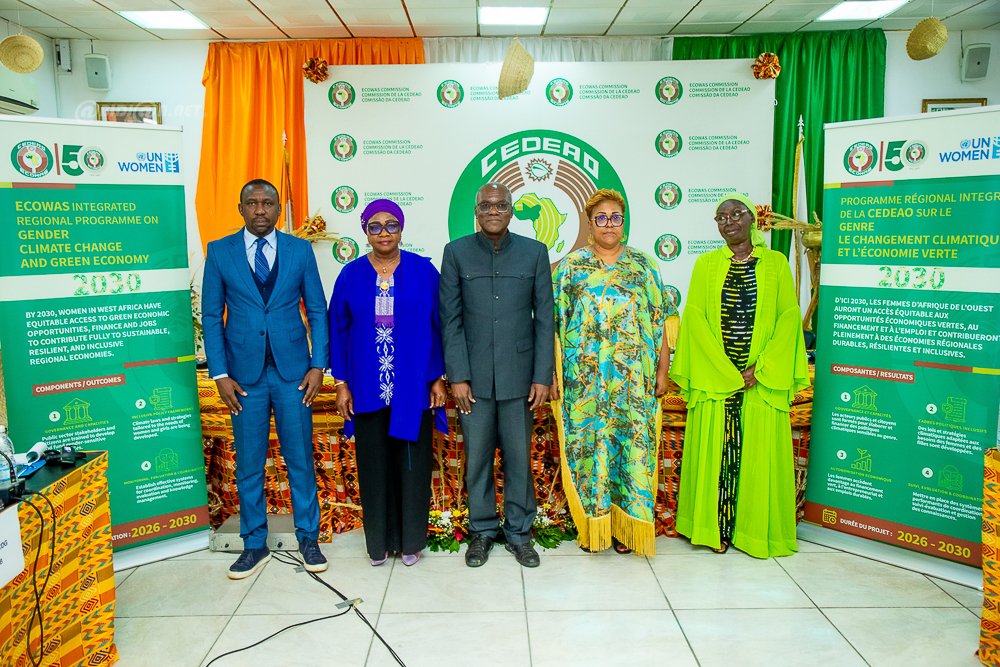
The Economic Community of West African States (ECOWAS) launched a two-day regional workshop in Abidjan today, centered on gender equality, climate change, and the green economy. Bringing together experts, policymakers, and technical partners, the event addresses the urgent need for inclusive climate action tailored to West Africa’s unique challenges.
Empowering women in climate action
Organized by ECOWAS’s Gender Development Centre (GDC) and supported by UN Women, the workshop explores solutions to integrate gender perspectives into West Africa’s ecological transition. The goal: develop a regional framework by 2030 that strengthens women’s participation in environmental policies and green economic opportunities.
Key challenges and priorities
At the opening session, GDC Director Sandra Oulaté emphasized the disproportionate impact of climate change on women in the region. Agriculture and rural livelihoods—where women play a foundational role—are particularly vulnerable to droughts, soil degradation, and erratic weather patterns. The planned regional program aims to address these disparities by improving women’s access to green financing, sustainable jobs, and leadership roles in climate initiatives.
Policy momentum in Côte d’Ivoire
Côte d’Ivoire’s delegation, led by Louis-Philippe Boni, highlighted the country’s progress in gender and environmental policies, including reforestation efforts, renewable energy transitions, and women’s representation in decision-making. The session also stressed the need for cross-border collaboration to expand women’s access to climate finance and regional climate projects.
Rural women bear the brunt of climate extremes
Dr. Namizata Binaté, representing Côte d’Ivoire’s Ministry of Women, Family, and Children, underscored how floods, droughts, and land degradation disproportionately affect rural women. She called for their greater inclusion in shaping climate policies that directly impact their communities.
Gender equality as a climate resilience strategy
ECOWAS Commissioner for Economic Affairs and Agriculture, Dr. Kalilou Sylla, reinforced the link between gender equality and climate resilience. Despite their critical role in agriculture—West Africa’s economic backbone—women face systemic barriers to productive resources and financing. Closing these gaps, he argued, is essential for building resilient economies capable of withstanding climate shocks.
Next steps for regional action
Participants will finalize the roadmap for the regional program, including budget allocations, operational mechanisms, and timelines for implementation over the coming years. The outcome is expected to guide ECOWAS member states in aligning gender-sensitive climate policies with sustainable development goals.