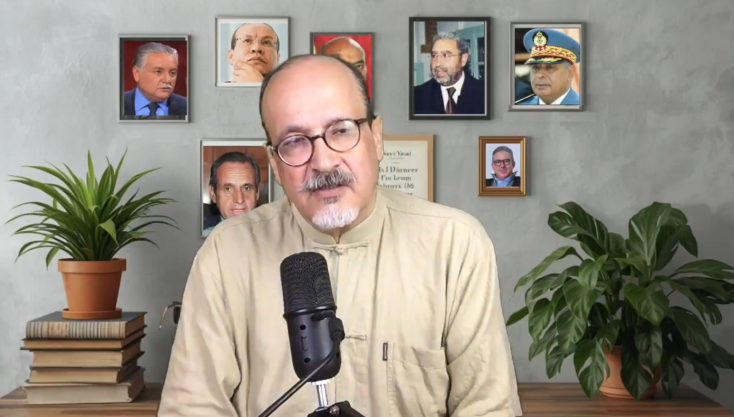
The renowned Franco-Moroccan journalist Ali Lmrabet faced another round of legal harassment when authorities detained him at Tangier’s airport upon his arrival from Spain on July 12. He was subsequently transferred to Casablanca, where judicial officials placed him under provisional detention pending investigations into allegations of « alleged dissemination of false information. »
Reporters Without Borders has condemned the move, urging Moroccan authorities to drop all charges and release Lmrabet immediately, emphasizing that his arrest reflects a broader pattern of judicial overreach against critical voices.
Legal accusations and procedural details
According to official statements, the prosecutor’s office in Casablanca cited multiple outstanding warrants linked to digital publications deemed defamatory toward individuals and state institutions. The charges specifically include « alleged dissemination of false information that undermines constitutional institutions. » While administrative in nature, the case has drawn sharp criticism over its potential to stifle dissent.
International condemnation of the arrest
« The detention of Ali Lmrabet is deeply alarming and underscores the systematic misuse of legal instruments to silence independent journalism, » stated Oussama Bouagila, North Africa director at Reporters Without Borders. « His decades-long commitment to exposing truth and holding power to account aligns with the very principles Morocco has pledged to uphold. Prosecuting a journalist for doing his job is not justice—it is repression disguised as law. »
A lifetime of defending press freedom
Lmrabet, a trailblazer in Morocco’s independent media landscape, founded groundbreaking publications such as Demain Magazine and Doumane. His uncompromising coverage of sensitive topics—including political dissent and security matters—earned him international recognition, including a spot on RSF’s 100 Information Heroes list in 2014. Despite a 2003 imprisonment for « insulting the king » and a 2005 ban on practicing journalism in Morocco, he continued his work from exile in France and Spain, contributing to major Spanish media outlets like El Mundo and El País.
His wife, Laura Feliu, noted that over the past two decades, Lmrabet has traveled to Morocco multiple times for personal reasons without incident. The latest arrest, however, signals a renewed crackdown on journalists operating across borders.
Morocco currently ranks 105th out of 180 countries in the 2026 Reporters Without Borders World Press Freedom Index, a position reflecting ongoing challenges to media independence in the region.