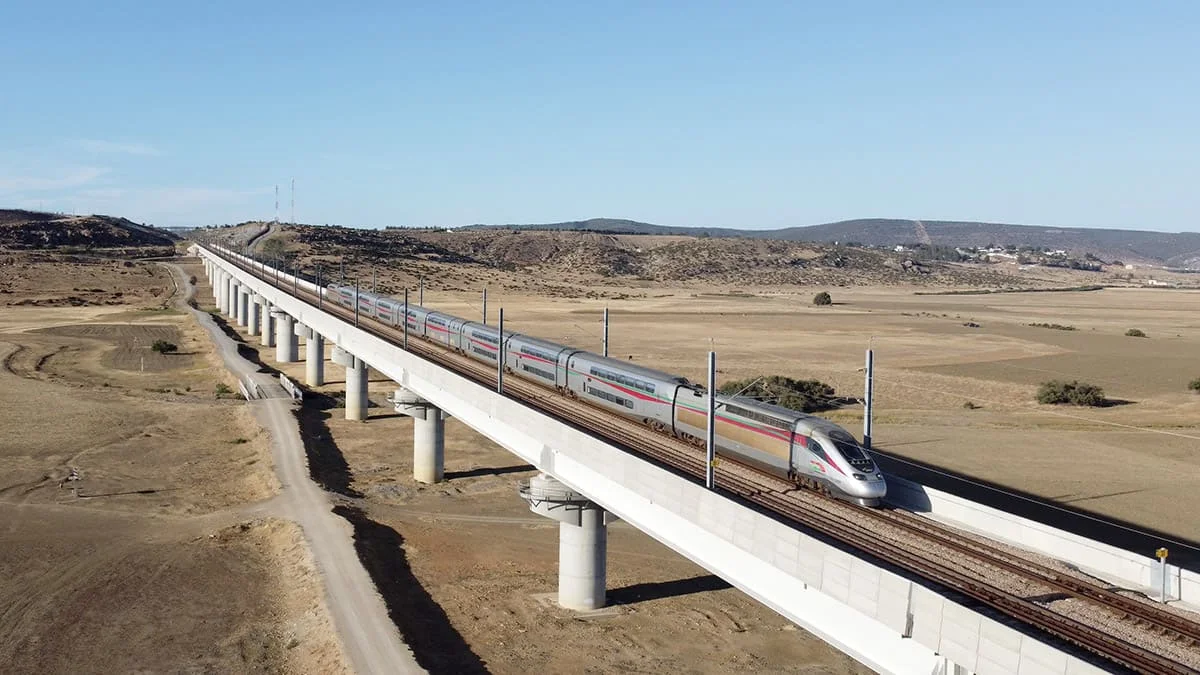
In a significant move to bolster national connectivity, Morocco and the European Investment Bank (EIB) have finalized financing agreements totaling 365 million euros. Signed in Rabat, these funds are specifically designated to enhance the safety and structural resilience of the country’s extensive road and rail networks.
Strategic investment in Moroccan railways
The first phase of this financial cooperation involves a 50 million euro loan from the EIB, paired with a 15 million euro grant from the European Union. This capital is allocated to the Office national des chemins de fer (ONCF) for a large-scale railway rehabilitation program. The agreement was formalized by Lionel Rapaille, Deputy Director of EIB World, Mohamed Smouni, Deputy Director General of ONCF, and Daniele Dotto, representing the EU delegation. The signing ceremony was attended by the Minister of Economy and Finance, Nadia Fettah, and EIB President Nadia Calviño.
Strengthening the highway network
A second major agreement was reached with the Autoroutes du Maroc (ADM), consisting of a 300 million euro loan. This substantial investment is directed toward the highway resilience project, aimed at ensuring that the kingdom’s motorways can withstand environmental pressures while maintaining high safety standards for travelers.
During the proceedings, Nadia Calviño described Morocco as a vital strategic partner for the EIB. She noted that the kingdom serves as a cornerstone of stability and economic progress within the region. Minister Nadia Fettah echoed these sentiments, highlighting that the 365 million euro package is a testament to a partnership spanning five decades. This collaboration, she noted, continues to deliver modern and sustainable mobility solutions that directly benefit the daily lives of citizens.
For fifty years, the EIB has remained a primary investment partner for Morocco. By supporting critical infrastructure, the bank plays an essential role in driving economic development, social cohesion, and climate-focused initiatives across the country.