Tshisekedi’s Libreville visit strengthens Gabon-DRC ties
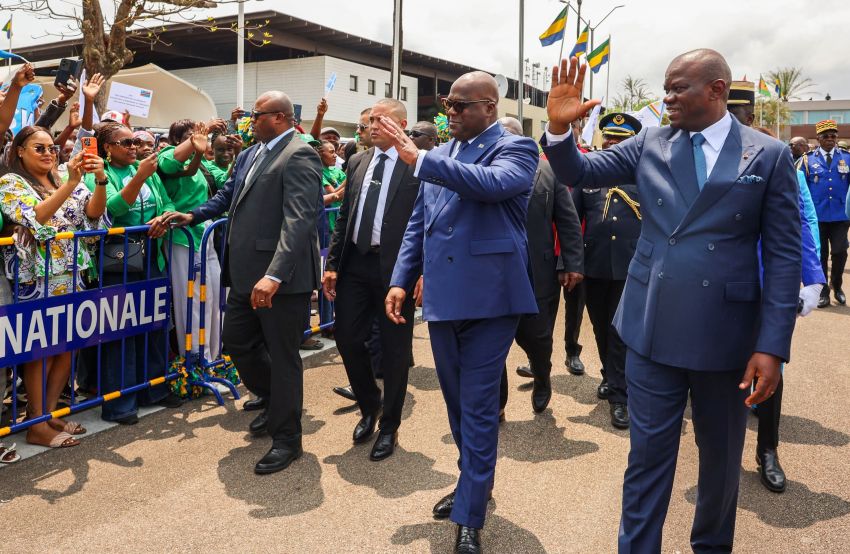
Libreville, Saturday, August 15, 2026 — Félix-Antoine Tshisekedi Tshilombo’s three-day working and friendship visit to Libreville has reawakened a diplomatic axis between Gabon and the Democratic Republic of Congo (DRC), signaling a new chapter in African partnerships.
The Congolese president arrived in Gabon on August 15, greeted by his Gabonese counterpart, Brice Clotaire Oligui Nguema. This visit unfolds against a backdrop of growing African states’ efforts to convert historical ties into tangible political, economic, and strategic collaborations.
The warm public reception—marked by a crowd greeting in Libreville—elevated the visit beyond mere diplomatic protocol. Gabon and the DRC share deep historical, cultural, and diplomatic bonds that have evolved into a foundation for stronger cooperation. This rapprochement comes at a critical juncture when intra-African collaboration is increasingly seen as a vital tool for advancing the continent’s collective interests in a rapidly shifting global landscape.
A diplomacy rooted in shared history
The visit’s symbolic opening at the Léon Mba Memorial was carefully chosen. Renovated just one day before Tshisekedi’s arrival, this site honors Gabon’s first president and provided a poignant setting for the two leaders’ meeting.
Félix Tshisekedi paid tribute to Léon Mba by laying a floral wreath, reviewing his biography, and observing a moment of silence accompanied by the national anthem. He also inscribed a message in the memorial’s guestbook, reinforcing the significance of these symbolic acts.
By honoring Léon Mba, the DRC president acknowledged a generation of leaders who played pivotal roles in shaping Africa’s early political emancipation. This gesture underscores the power of memory in diplomacy and highlights the need for African nations to build their future while remaining anchored in their shared past.
In a continent where institutional memory often faces challenges, the restoration of historical sites and their integration into diplomatic exchanges serve as a reminder of national and continental continuity.
From friendship to strategic partnership
The success of Tshisekedi’s visit will ultimately be measured by its ability to yield concrete outcomes. While the warmth between Libreville and Kinshasa is undeniable, it must now translate into enhanced cooperation across economics, trade, culture, education, security, and diplomacy.
Gabon boasts significant strengths in multiple sectors, while the DRC, with its vast territory, large population, and economic potential, stands as a central African powerhouse. Closer ties between the two nations could foster deeper regional integration and unlock new synergies benefiting both countries and their people.
This partnership holds particular importance for Central Africa, where efforts to strengthen regional cohesion and collective action are gaining momentum. Libreville and Kinshasa have a unique opportunity to turn their bilateral relationship into a model for mutually beneficial cooperation that directly impacts communities.
The moment for decisive action
This visit coincides with Gabon’s efforts to redefine its diplomatic and economic positioning, while the DRC grapples with pressing security, economic, and geopolitical challenges. In this context, the dialogue between Brice Clotaire Oligui Nguema and Félix Tshisekedi carries strategic weight beyond bilateral relations.
The challenge ahead is to move beyond symbolic gestures and translate the enthusiasm of this visit into measurable commitments. A strengthened Gabon-DRC relationship will only fulfill its true potential if it leads to increased trade, mobility, institutional cooperation, and joint initiatives.
By beginning his visit with a tribute to Léon Mba, Félix Tshisekedi framed the trip within the broader themes of African memory and solidarity. Now, it is up to both nations to ensure this visit’s legacy endures through a results-driven diplomacy. Central Africa does not merely need to celebrate its historical connections—it must harness them as instruments of collective strength, prosperity, and sovereignty.