Le Maroc fait de l’islam un rempart contre l’extrémisme
19 juin 2026Following the devastating Casablanca attacks in 2003, Moroccan authorities opted for a comprehensive response that extended beyond mere security enhancements. They initiated an extensive reform program aimed at meticulously structuring the religious landscape, specifically through robust training for imams and proactive measures to counter extremist narratives.
This multifaceted approach, detailed in the Institute for Applied Geopolitics Studies (IEGA) report released on Thursday, June 18, 2026, forms a core component of a broader national strategy focused on prevention, deradicalization, and strengthening religious institutions.
The Commander of the Faithful: central to Morocco’s strategy
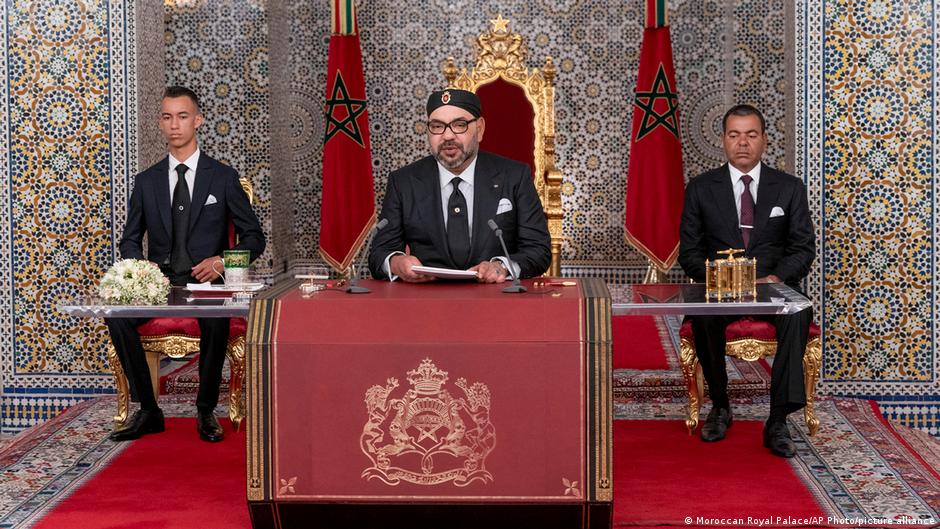
At the heart of this enduring model lies the Commanderie des Croyants (Imarat al-Mouminine), an institution constitutionally recognized and directly overseen by King Mohammed VI. This unique role grants the monarch profound religious legitimacy, enabling him to adjudicate doctrinal matters and actively champion a moderate interpretation of Islam.
Alexandre Negrus, President of the IEGA and a co-author of the comprehensive report, emphasizes the Commanderie des Croyants as the absolute cornerstone of the entire framework. He observes, “What truly sets Morocco apart from other nations attempting to regulate their religious domains is that this oversight emanates from within the religious sphere itself. The sovereign is acknowledged as a legitimate religious authority, not merely a political overseer.”
Furthermore, the Moroccan model is anchored in three pivotal doctrinal pillars: Malikism, a legal tradition deeply rooted historically across the Maghreb and Sahel regions; Ash’arism, which advocates for a harmonious integration of faith and reason; and Sufism, designed to address the spiritual and communal aspirations that extremist movements often exploit.
Morocco’s model: an inspiration for Sahelian nations
Many analysts commend the Kingdom of Morocco for developing such an original and effective response to the extremist threat, which deliberately prioritizes religious guidance and prevention alongside conventional security measures.
This perspective is echoed by Driss Aït Youssef, a distinguished security expert, who suggests that several Sahelian nations grappling with the persistent jihadist menace could indeed find valuable lessons within certain aspects of Morocco’s successful experience.
Nevertheless, the expert cautions that “the direct transferability of this model has significant limitations. He posits that the remarkable stability observed in Morocco largely stems from the distinctive status of King Mohammed VI as the Commander of the Faithful, a role that also enjoys widespread recognition and acceptance among the populace.” This inherent legitimacy, he argues, plays a crucial role in sustainably structuring and regulating the nation’s religious landscape.
The study further brings to light Morocco’s proactive initiatives in the realms of prevention and deradicalization, notably through the Moussalaha program. This program is specifically designed for the religious and social reintegration of individuals convicted of terrorism-related offenses. Additionally, the report underscores the pivotal role of the Mohammed VI Institute, which annually educates hundreds of African imams, thereby fostering the dissemination of moderate Islamic principles across various countries in the region.
Challenges ahead: digital spaces and model transferability
Despite its demonstrable successes, the Moroccan model is not without its critics or facing new challenges. Alexandre Negrus, President of the Institute for Applied Geopolitics Studies (IEGA), points out that while “the standardization of sermons effectively prevents official mosques from becoming conduits for radical discourse, this approach might inadvertently contribute to the rise of an institutionalized Islam occasionally perceived as detached from the everyday concerns of its adherents.”
Negrus also highlights the burgeoning influence of digital platforms as a significant contemporary challenge. Radical narratives now proliferate extensively beyond conventional religious regulatory frameworks, thereby diminishing the efficacy of established institutional control mechanisms.
A further limitation identified by the study is the inherent difficulty in replicating this specific model in diverse national contexts. Although several Sahelian states are indeed drawing inspiration from it, the model’s fundamental underpinnings are deeply rooted in unique Moroccan specificities, particularly the Commanderie des Croyants and the monarchy’s profound historical legitimacy—elements that largely lack direct equivalents in most other countries across the region.
Consequently, the report’s authors suggest that the Moroccan model should be viewed more as a source of valuable inspiration rather than a universally replicable blueprint. Nevertheless, they contend that it provides crucial avenues for reflection on how to bolster societal resilience against radicalization and identity divisions, particularly within the highly volatile security landscape of the Sahel.