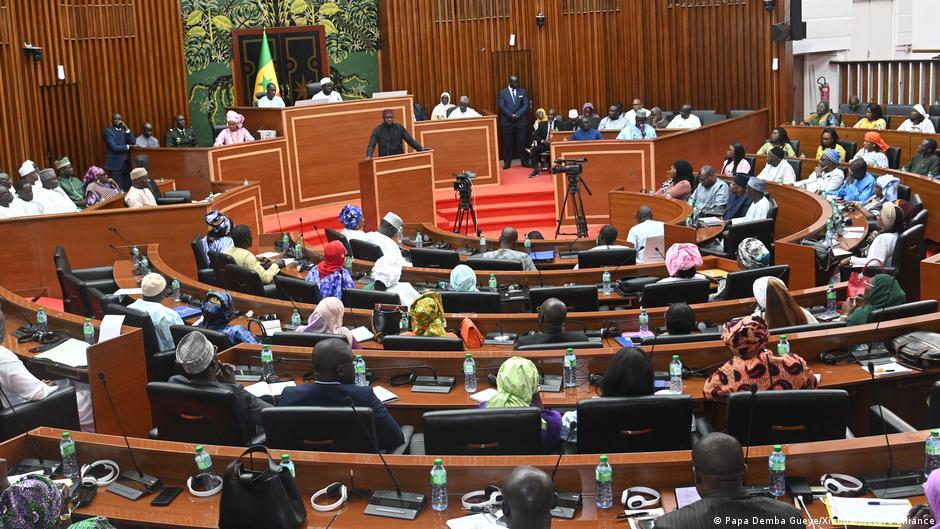
A significant stride towards greater accountability has been made within Senegal’s political sphere. The measure, approved this Monday by 133 out of 165 lawmakers, bolsters a requirement originally enshrined in the 2001 Constitution.
Under this updated legislation, the nation’s three highest-ranking officials—the President of the Republic, the Prime Minister, and the Speaker of the National Assembly—must now formally declare their assets to the Constitutional Council, not only at the commencement but also at the conclusion of their terms, with a three-month submission window.
This development has been lauded by Pastef, the political party of National Assembly Speaker Ousmane Sonko.
“Enacting such legislation unequivocally strengthens public financial transparency, aligning perfectly with Ousmane Sonko’s Pastef principles. It empowers Senegalese citizens to scrutinize their leaders’ holdings, thereby curbing illicit enrichment and the squandering of public funds,” articulated Ansoumana Sambou, a member of Pastef’s National Communication Secretariat.
Adopted but submitted to referendum
While the bill passed with a significant majority, Pastef, the driving force behind this initiative, finds its battle far from over.
According to the Justice Minister, the President of the Republic has informed the Speaker of the National Assembly of his decision to submit this proposed revision for public approval via a referendum, in accordance with Article 4 of Article 103 of the Constitution.
Justice Minister Moussa Sarr confirmed that the text will therefore be put to a referendum, further suggesting that this reform should ideally be integrated into a broader constitutional review process.
“A costly referendum”
However, political analyst Moussa Diaw expressed his bewilderment regarding the choice to proceed with a referendum.
“One questions why the President would subject this law to a referendum when he ostensibly agrees with its core principles. The rationale for holding a costly referendum, especially given Senegal’s considerable economic challenges, remains unclear.”
From Pastef’s perspective, Ansoumana Sambou asserted that the Senegalese populace broadly supports this legislation, rendering the referendum decision perplexing.
“The issue has never been contentious. On the contrary, the practice of declaring one’s assets both upon assuming and leaving office, regardless of the position, is widely regarded as positive.”
The asset declaration reform is clearly transcending its initial institutional scope, now emerging as a fresh arena for political confrontation between Ousmane Sonko’s Pastef party and the presidential movement led by Bassirou Diomaye Faye.
Looking ahead, this Wednesday, August 19, will see the deliberation on the special credits bill, which pertains to the “opaque” funds managed by the presidency and the prime minister’s office. Anticipation is high for potentially contentious debates.