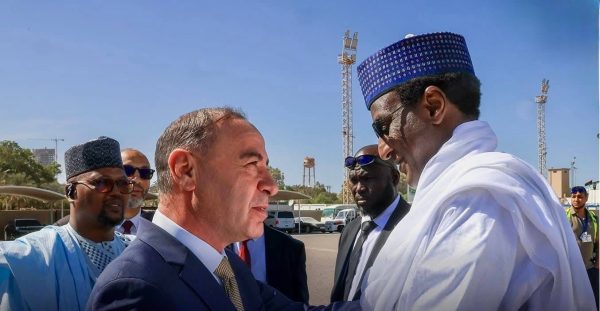
The Prime Minister of Niger, Ali Mahamane Lamine Zeine, arrived in Tripoli on Monday, June 15, 2026, at the helm of a high-level government delegation. The aim? To bolster bilateral relations between Niamey and Tripoli. Welcomed with full honors by Libya’s Prime Minister Abdel Hamid Dbeibah, Zeine’s visit included a ceremonial reception featuring national anthems and military honors.
High-level talks focus on security and regional stability
The two heads of government held a private meeting to discuss ways to deepen cooperation. Key topics included bilateral relations, regional integration, economic development, and pressing security challenges. Both nations, grappling with shared threats such as armed groups and migration flows, emphasized the need for coordinated action to address these issues effectively.
A delegation of experts: Security and diplomacy in focus
Zeine’s delegation included prominent figures such as General Ibro Amadou Bacharou of the CNSP and Foreign Minister Bakary Yaou Sangaré. Their inclusion reflects the visit’s significance, highlighting Niger’s commitment to strengthening ties with Libya across both security and diplomatic spheres.
The visit underscores the enduring friendship between the two nations and their shared determination to forge a strategic partnership. This collaboration aims to enhance border security, combat armed factions, and manage migration more effectively.
Administrative modernization takes center stage
In parallel with the high-level discussions, Niger’s Ministry of Mines organized a training session for sector officials. Led by Secretary-General Yaou Fatimata Korgom, the program focused on improving administrative and managerial skills to enhance service efficiency, optimize team performance, and foster a results-driven culture. This initiative demonstrates Niger’s dedication to strengthening governance in its key economic sectors.
For the people of both countries, these discussions hold the promise of tangible outcomes: fortified border security, joint economic ventures, improved migration management, and enhanced resource cooperation. The challenge now lies in turning these commitments into actionable agreements and ensuring their successful implementation.