massacre in Doungouro: when protection turns into slaughter
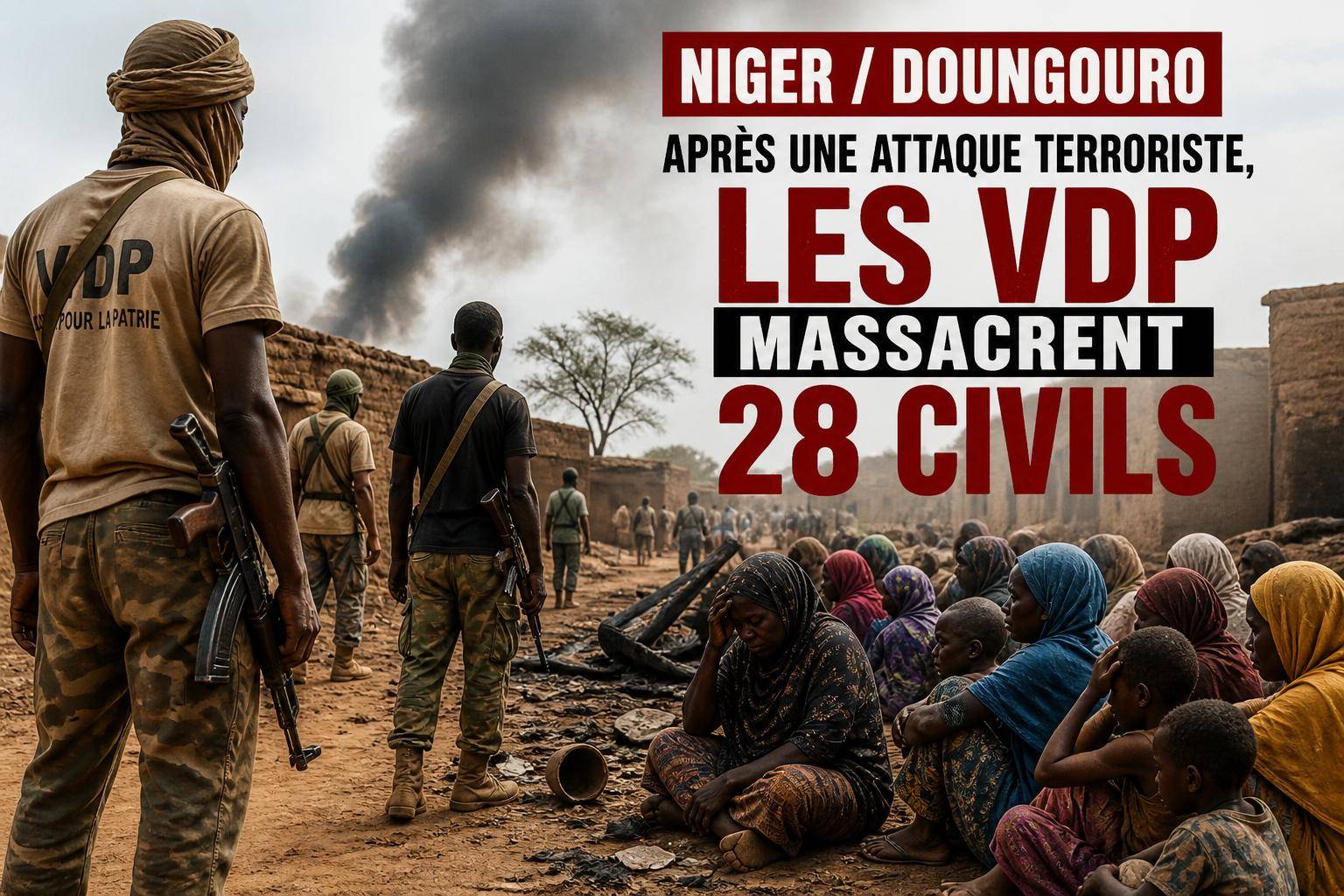
On the morning of May 4, 2026, the tranquil village of Doungouro in Niger‘s Tillabéri region became the site of a horrific double tragedy. Just hours after an attack by the Islamic State in the Greater Sahara (ISGS) left four civilians dead, the arrival of the Volunteers for the Defense of the Homeland (VDP) from the neighboring commune of Kokorou escalated the violence into an even greater catastrophe. Under the guise of pursuing terrorists, these pro-government militiamen unleashed a deadly rampage, targeting anyone wearing a turban. The final toll: 32 lives lost, with 28 deaths attributed to the VDP themselves—men tasked with safeguarding the population. This latest tragedy raises a critical question: how long will the Nigerien junta allow these so-called DomolLeydi militias to operate with impunity?
the terror attack and the VDP’s bloody response
Dawn had barely broken over Doungouro on that fateful Monday when the weekly market’s usual calm was shattered by the roar of motorcycles. Heavily armed militants from the ISGS stormed the market square, their mission clear: sow terror and seize supplies. In a matter of minutes, four civilians were executed in cold blood as stunned vendors watched in horror. The attackers then rounded up all available livestock before vanishing toward the Mali border in a swift, coordinated retreat. This brazen assault underscores a harsh reality: despite official reassurances, the three-border zone remains a glaring security vulnerability.
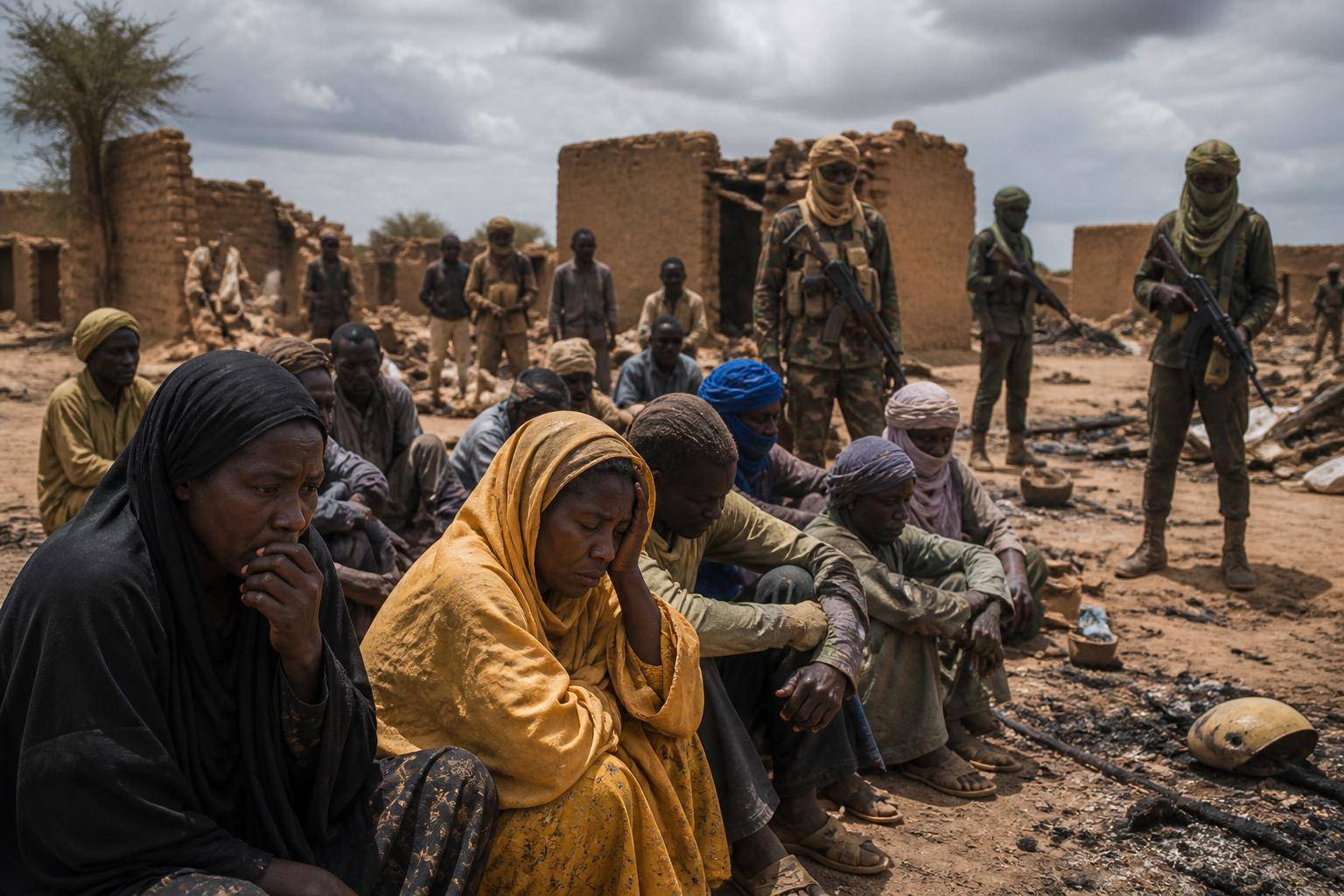
But the nightmare for survivors was only beginning. Alerted to the attack, the VDP from Kokorou rushed to Doungouro—only to deliver a wave of indiscriminate violence instead of protection. Locally dubbed DomolLeydi, these militiamen, often poorly trained and loosely supervised, launched a brutal purge based on a single, dangerous criterion: the wearing of a turban. To them, this traditional garment worn by merchants and herders was proof enough of affiliation with terrorism.
The results were catastrophic. Among the 28 civilians slain by the VDP were several traders from Téra, faces familiar to the community. Their only crime? Being in the wrong place at the wrong time, dressed in the attire of their culture. A survivor recounted how the militiamen opened fire on anyone in a turban without hesitation or investigation, describing it as a mass execution. The victims were not collateral damage—they were sacrifices to a failing security strategy.
the DomolLeydi system: a ticking time bomb
The bloodshed in Doungouro lays bare the fatal flaws in Niger‘s counterterrorism approach. By leaning heavily on civilian militias to compensate for the army’s shortcomings, the Niamey junta has fostered a monster it can no longer control. Officially recognized yet operating in a legal and operational gray zone, the VDP often lack strict command structures and consistent oversight by professional soldiers. This vacuum has repeatedly led to communal violence, as seen in Doungouro, where ethnic and sartorial profiling became the norm.
Since the coup d’état, the government has urged civilians to defend themselves. Yet arming untrained people without instilling respect for international humanitarian law or human rights is a recipe for disaster. While the junta condemns foreign interference, it remains disturbingly silent on the atrocities committed by its own proxies. The massacre in Doungouro is not an isolated incident but part of a disturbing pattern that erodes trust between civilians and defense forces.
a wake-up call for Niger’s security strategy
By turning their weapons on traders and herders, the VDP have not only deepened insecurity but also pushed marginalized communities toward the very groups they claim to fight. The Nigerien government cannot win this war by turning against its own people. An independent investigation into the Doungouro killings is urgently needed, with those responsible for the summary executions held accountable. The transitional administration must radically rethink how these volunteer forces operate, ensuring no action is taken without direct oversight from regular troops. Ending systemic profiling based on ethnicity or attire is equally critical to preserving national unity.
If no action is taken, Doungouro will stand as a grim symbol of a security apparatus gone rogue—a state-backed militia causing more harm to civilians than the terrorists it was meant to defeat. The families of the 32 victims demand justice. The lives lost on that black Monday were not mere casualties; they were sacrifices to a strategy in freefall.