The Patriotic Movement for Liberty and Justice (MPLJ) has released a video sequence showcasing Nigerien military personnel taken hostage during the deadly assault on August 15, 2026, in Séguédine. While the captives assert they are being treated humanely, this latest security escalation plunges the communities of northern Niger into deep anxiety and cripples the local economy.
A new threshold has been crossed in the ongoing destabilization of northern Niger. Days after the brutal attack on an army outpost in Séguédine on August 15, 2026, which claimed the lives of at least 15 Nigerien soldiers, the Patriotic Movement for Liberty and Justice (MPLJ) disseminated a propaganda video. The group’s objective was to demonstrate its growing dominance on the ground.
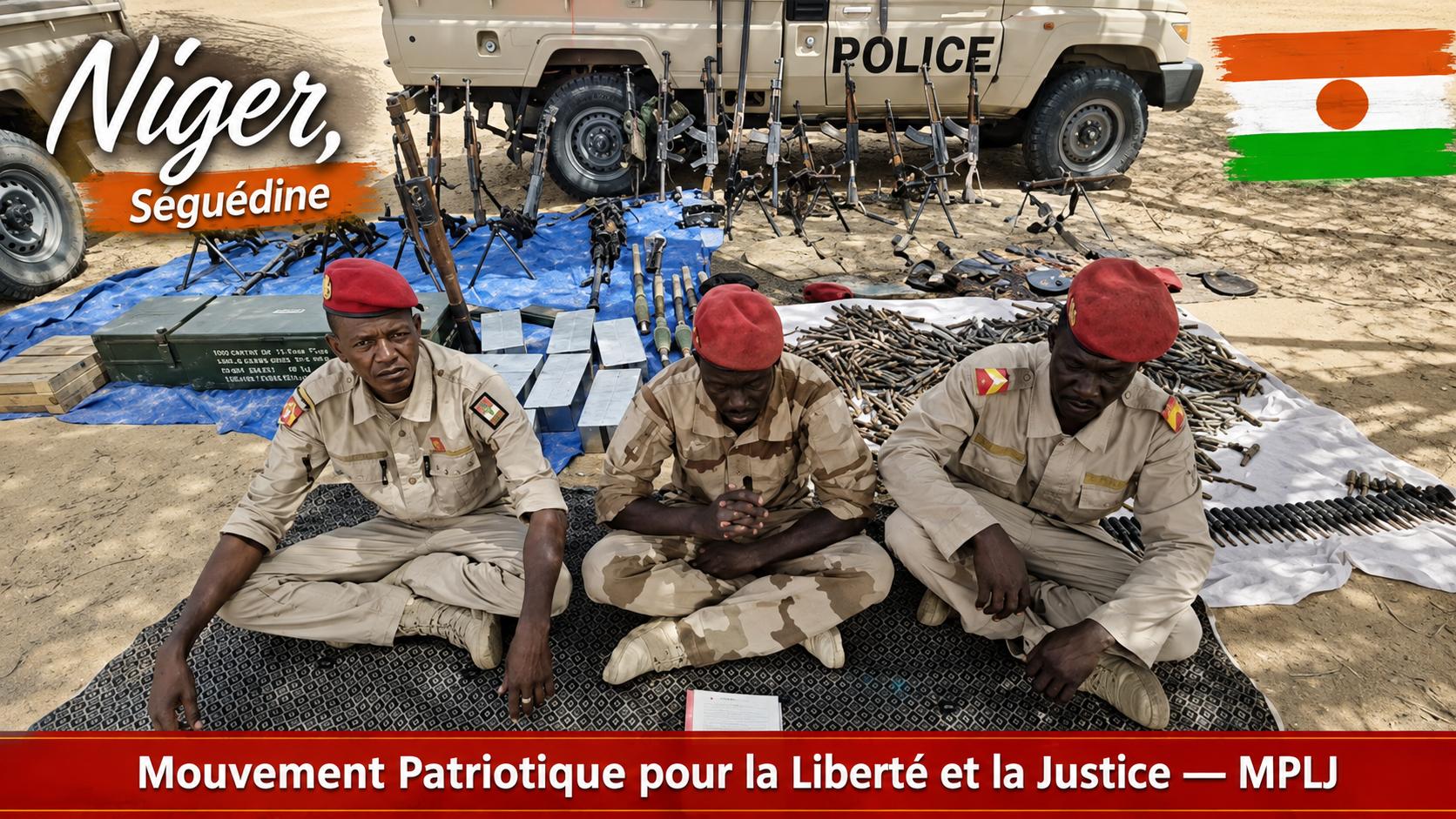
In this several-minute-long sequence, widely circulated across social media platforms and encrypted messaging channels, the armed faction led by Moussa Kounaï displays a group of Nigerien soldiers captured during the fierce engagements. The insurgent movement also prominently features a substantial cache of seized military equipment, including armored vehicles, automatic weapons, and various light munitions.
Captured soldiers staged under duress
The imagery within the video adheres to typical information warfare tactics. The Nigerien soldiers, arranged in a seated line, speak sequentially to the camera. They declare themselves to be in good health, confirm that injured personnel have received medical attention, and state they are being “properly treated” by their captors, in accordance with humanitarian law.
While these statements appear designed to improve the MPLJ’s public image and garner favor with international organizations, intelligence and security experts advise extreme caution. Such testimonials, gathered under the undeniable duress of captivity, are primarily part of a well-rehearsed communication strategy. For the MPLJ, the aim is to showcase its operational capabilities against the Nigerien Armed Forces (FAN) while simultaneously challenging the authority of the central government.
For the families of the soldiers and the army command in Niamey, viewing these images has evoked intense emotion. Although seeing their loved ones alive offers a fragile sense of relief, the ultimate uncertainty regarding their fate remains absolute. Military authorities have not yet officially responded to the video’s release, even as extensive search and sweep operations continue in the affected zone.
A severe blow to northern security arrangements
The Séguédine attack and the capture of these soldiers underscore the persistent vulnerability of isolated garrisons within Niger’s Saharan region. Situated in the Bilma department, close to the Libyan border, Séguédine represents a critical strategic point along key migratory and commercial routes traversing the desert.
By successfully breaching the defenses of this vital position, inflicting heavy casualties (15 fatalities), and retreating with both captives and equipment, the MPLJ has unequivocally demonstrated its increasing power. This rebel faction, which asserts its role in defending local populations’ rights and criticizes central government management, leverages the vastness of the territory to conduct commando-style operations before withdrawing to hard-to-access areas or across international borders.
This resurgence of armed violence dramatically complicates the security landscape for Nigerien defense forces. These forces are already stretched thin, engaged on multiple fronts against jihadist groups in the Liptako-Gourma tri-border area and the Lake Chad Basin.
Residents caught between terror, isolation, and economic strangulation
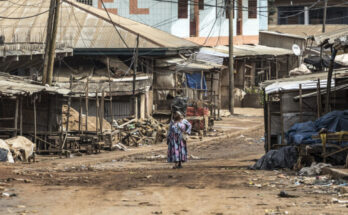
Beyond the military implications, it is the civilian populations of the Kawar region who bear the heaviest burden of this deteriorating security situation. For the inhabitants of Séguédine, Bilma, and the surrounding oases, the August 15 assault and the MPLJ’s show of force have plunged daily life into an atmosphere of deep fear.
The most immediate impact is felt in supply chains and the economy. The road connecting Agadez to the Libyan border, crucial for the transport of food, fuel, and essential goods, is now virtually paralyzed. Road transporters and merchants, fearful of ambushes, robberies, or forced requisitions of their vehicles by rebels, are refusing to venture onto these desert routes.
“The price of a bag of rice and a can of oil has skyrocketed within 48 hours,” confided a community activist based in Bilma, reached by telephone. “Supply convoys no longer circulate without a strong armed escort. If this situation persists, we risk severe shortages of basic products and medicines within days.”
This insecurity also severely impacts the region’s mining and artisanal economy, particularly traditional salt exploitation and small-scale cross-border commercial activities that sustain the majority of households. The region’s youth, caught between widespread unemployment and the fear of violence, dread being associated with insurgent groups or becoming targets for forced recruitment.
The urgency of a comprehensive response
The release of the MPLJ video poses a direct challenge to Nigerien authorities. While the immediate tactical priority remains the liberation of the captured soldiers and securing communication routes in the North, a purely military response may prove insufficient in the long run.
Local observers agree that achieving lasting stability in the region will necessitate enhanced territorial dialogue, the restoration of basic social services in isolated areas, and guarantees for the free movement of goods and people. Pending an official government reaction, the population of Kawar holds its breath, fearing that Séguédine could become the epicenter of a prolonged conflict.