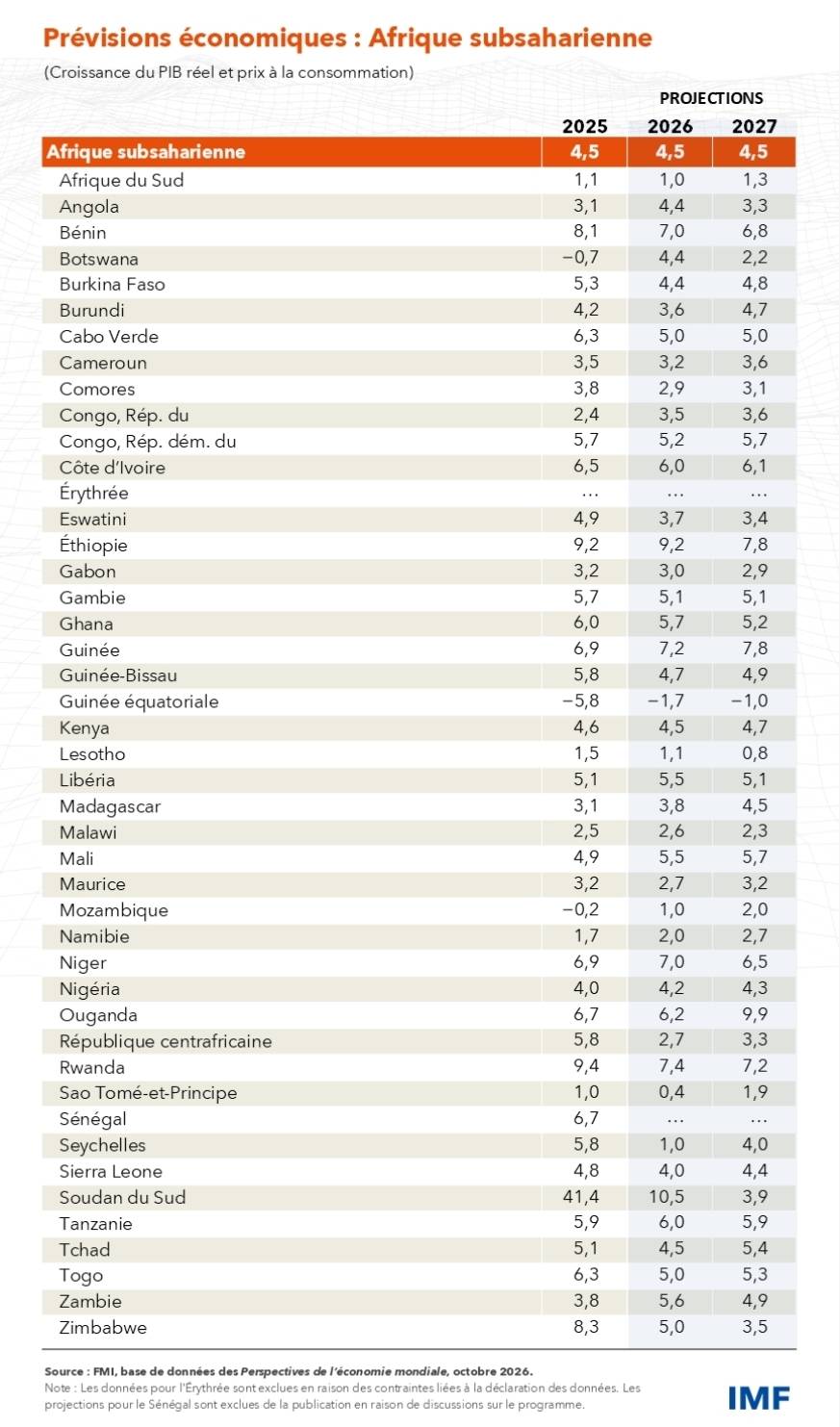
The Benin economy is projected to grow by 7% in 2026 and 6.8% in 2027, according to the latest IMF outlook, outpacing Sub-Saharan Africa’s average of 4.5%. This sustained expansion solidifies Benin’s position as one of the continent’s fastest-growing economies and the only West African nation ranked among the top three performers.
Key metrics reveal Benin’s exceptional economic performance
After a remarkable 8.1% GDP growth in 2025, Benin’s economy is forecasted to maintain strong momentum. The IMF’s October 2026 projections highlight a consistent trajectory, with growth rates well above regional benchmarks:
2025: 8.1% real GDP growth
2026: 7% projected growth
2027: 6.8% projected growth
These figures contrast sharply with Sub-Saharan Africa’s steady 4.5% average over the same period, underscoring Benin’s unique economic resilience.
Why Benin stands out in West Africa
Within West Africa, Benin remains the sole representative among Africa’s top three fastest-growing economies. This distinction is not merely statistical it reflects deliberate policy choices, sustained investment, and structural reforms aimed at modernizing productive sectors.
The country’s economic strategy emphasizes:
Diversification beyond traditional sectors
Private sector development
Infrastructure upgrades
Vocational training initiatives
These measures collectively contribute to a growth model that, while not universally replicable, offers valuable lessons for neighboring nations grappling with slower economic expansion.
Economic growth vs. household prosperity: bridging the gap
While GDP growth is a critical indicator, its true impact hinges on translating these gains into tangible improvements for citizens. Benin’s leadership faces the dual challenge of sustaining high growth while ensuring that:
Job creation keeps pace with labor market demand
Income inequality does not widen
Public services expand to match urban and rural needs
Small businesses access financing and markets
Achieving this balance will determine whether Benin’s economic success translates into lasting societal progress.
Investor confidence and regional implications
Benin’s IMF ranking serves as a powerful signal to global investors, reinforcing the country’s appeal as a stable and high-potential market. The sustained growth outlook attracts foreign direct investment, particularly in logistics, agriculture, and digital services.
For West African peers, Benin’s trajectory presents a case study in economic resilience amid global uncertainties. Its ability to maintain growth above 6% annually demonstrates the payoff of long-term policy consistency a model worth examining by regional policymakers.
Sustaining momentum: the path forward
To cement its status as West Africa’s economic reference, Benin must confront structural challenges:
Enhancing industrialization to reduce reliance on primary exports
Strengthening agricultural productivity to support rural livelihoods
Expanding vocational training to address youth unemployment
Ensuring macroeconomic stability during external shocks
Success will hinge on policies that balance fiscal discipline with inclusive development, ensuring that growth benefits extend beyond statistical tables to reach every household.
By Nicolas Biyong — Journalist