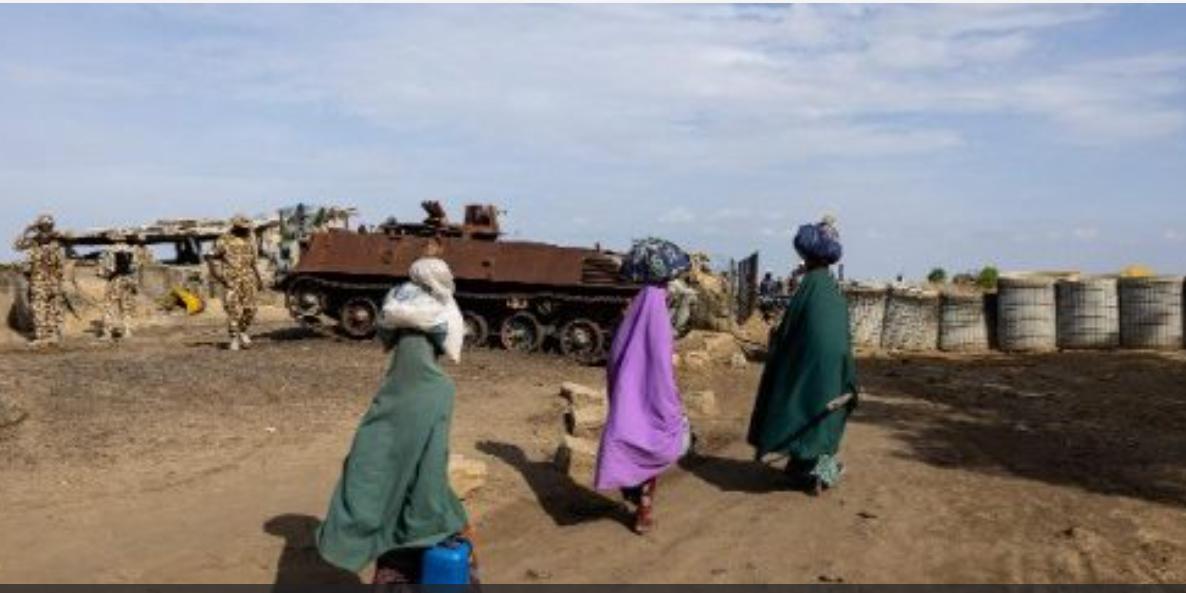
The weekend of 26-27 September 2026 delivered another grim reminder of how entrenched mass abduction has become across northern Nigeria. In under 48 hours, armed men swept through farming and village communities in Niger and Zamfara states, seizing at least 87 people — most of them women and girls. The attacks did not come out of nowhere. They are the visible tip of a criminal system that has quietly taken root over years, feeding on ransom payments, weak rural policing and vast ungoverned forest belts.
How the two raids unfolded within 48 hours
The first strike hit Mariga district in Niger State on Saturday. Gunmen on roughly 50 motorcycles descended on farmland where residents were harvesting groundnuts. At least 47 farmers, many of them women, were rounded up and taken away. Local accounts suggest the captives were moved toward the Ma’undu forest, a known hideout. No ransom demand had reached the families at the time the information emerged.
The following day, Sunday, a second wave hit Yargada in Gusau district, Zamfara State. Around 40 women were abducted, and nearby villages — Yargada, Maikogo and Magama Mairake — also came under attack. Homes and vehicles were set on fire.
Residents who spoke about the raids put the toll higher than official figures, claiming more than 50 women and children were taken across several villages. Independent verification remains almost impossible: the areas are remote, the roads are unsafe, and access for journalists or monitors is severely restricted.
Bandits, jihadists and the blurred lines behind the abductions
These attacks are pinned on the armed gangs Nigerians call “bandits.” Historically, they operated separately from jihadist outfits such as Boko Haram or the Islamic State West Africa Province (ISWAP). But the distinction has become increasingly fuzzy, with criminal networks, rural banditry and insurgent factions sometimes overlapping, sharing weapons, routes or fighters.
In Nigeria’s northwest and north-central zones, these groups have spent years kidnapping for ransom, rustling cattle and raiding villages. Dense forests serve as both shelter and staging ground. State authorities struggle to project control over rural territories that sit far from major cities and military bases. In Zamfara, some residents described Sunday’s raids as retaliation for the killing of gang members by local vigilantes — a claim that remains unverified.
The money trail: kidnapping as a revenue machine
Violence is only part of the story. Abduction has evolved into a revenue stream for armed groups. Data cited from SBM Intelligence indicates that roughly 7.78 billion naira — about $5.8 million — was paid in ransoms between July 2025 and June 2026. That is more than triple the amount recorded in the previous period.
The same assessment puts the number of people abducted during that window at 7,825 — a 66% year-on-year increase. These figures are not a perfect census, but they sketch the scale of a crisis that touches far more than farmers and travellers. Schoolchildren, entire families and whole village communities have been targeted. In May 2026 alone, over 80 children went missing after attacks on schools in Borno and Oyo states.
Inside the military response: operations, numbers and limits
President Bola Tinubu’s government insists it has stepped up the fight against terrorists, bandits and kidnapping networks. The Nigerian military is now running multiple simultaneous campaigns. In the northeast, Operation Hadin Kai focuses on Boko Haram and ISWAP. In the northwest, Operation FANSAN YAMMA targets armed groups behind abductions and attacks in states including Zamfara, Katsina, Kaduna and Sokoto. Other operations are underway in the centre of the country.
Officials point to a mix of ground operations, airstrikes, intelligence gathering, arrests and rescue missions. The federal information ministry says troops have intensified action against bandit and kidnapper networks in Zamfara, Sokoto, Katsina, Niger, Kaduna and beyond.
Military headquarters reported that 7,062 operations were conducted nationwide in July and August 2026. According to those figures, 1,487 terrorists and insurgents were neutralised, 354 suspects arrested and 777 kidnapped people freed. The army also claims to have recovered nearly a thousand firearms. These numbers come from the military and cannot all be independently verified.
In late September, the army announced the rescue of 14 kidnapped people during an operation in Kaduna and Katsina states, along with weapons seizures and the interception of suspected terrorist network members.
Why military pressure alone is not ending the abductions
Despite these operations, the frequency of mass kidnappings shows the problem is deeply rooted. Days before the latest raids, residents in Niger State protested to demand the release of hundreds of people taken in coordinated August attacks. Local estimates pointed to nearly 700 captives — a figure the authorities have not confirmed.
The government therefore faces a double challenge: weakening armed groups while preventing them from regrouping in hard-to-reach rural areas. Security forces also need to dismantle the logistics, arms trafficking and financial circuits that keep criminal operations running.
The recent abductions in Niger and Zamfara states underline a persistent reality. Military pressure produces isolated wins — arrests, rescued hostages, seized weapons — but it has not yet broken the kidnapping economy. For rural communities, the threat is daily: tending a field, going to market or crossing a forest path can still mean capture. As long as armed groups can move, hide and demand ransoms, security operations will need to be paired with sustained intelligence work, community protection and real territorial control.
The 87 abductions reported this weekend are less an isolated episode than another signal of how difficult it remains for Nigeria to restore lasting security in parts of the north.