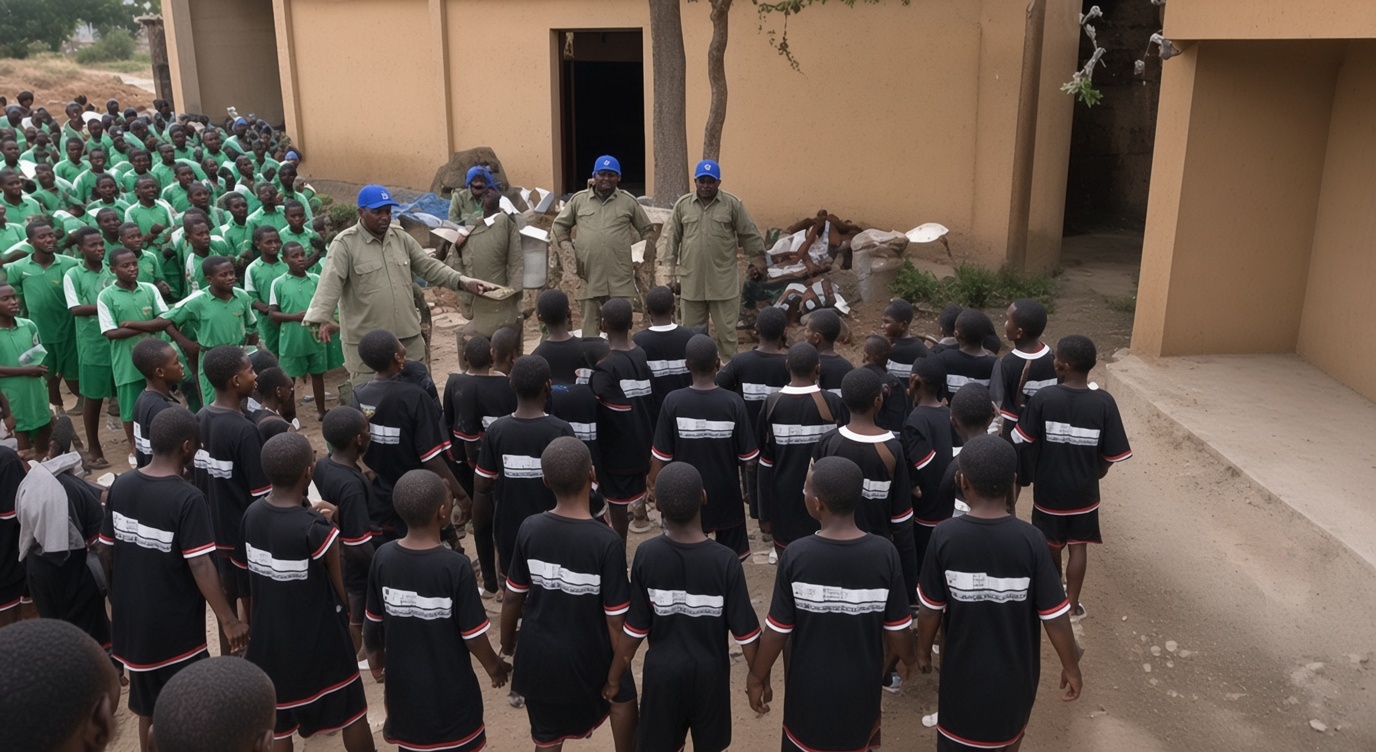
General Abdourahamane Tiani has recently inaugurated a training camp for over 300 young Nigeriens. Marketed as a civic engagement and national rebirth initiative, the program draws inspiration from the Burkinabè model championed by Captain Ibrahim Traoré. However, beneath the carefully crafted rhetoric celebrating the “engaged youth,” concerns arise regarding the true nature of this endeavor: a potentially ominous step toward early militarization under the guise of patriotism.
The formative years of a child or adolescent should not be spent within a militarized or semi-militarized environment. During this critical stage of development, priorities must remain focused on education, vocational training, sports, cultural activities, and active citizenship. Indoctrinating young minds with military discipline, unquestioning obedience, and perpetual mobilization risks normalizing the logic of confrontation and violence.
Political messaging through youth mobilization
The primary concern extends beyond the camp’s operational nature; it lies in the political message being conveyed to an entire generation. When a military regime frames youth mobilization as a patriotic duty, the danger emerges of prioritizing loyalty to the regime over critical thinking and civic responsibility. True civic engagement demands more than blind obedience it requires the ability to question, debate, and advocate for the common good.
The line between civic education and indoctrination blurs when young individuals are constantly exposed to a rhetoric of combat, sacrifice, and unwavering defense of the nation. While mobilized youth can undoubtedly contribute to national progress, they must never be reduced to a disposable resource serving the longevity of a military government.
Misdirected priorities in youth development
This initiative raises a pivotal question: why allocate substantial resources to ideological mobilization when thousands of Nigerien youths urgently require functional schools, vocational training, employment opportunities, and sustainable infrastructure? Patriotism, while commendable, cannot serve as a substitute for tangible economic and educational progress.
The rhetoric of “mandatory civic duty” can easily become a convenient political distraction. By promoting an image of disciplined, selfless youth, the regime may divert attention from pressing economic challenges, systemic educational deficiencies, youth unemployment, and the social repercussions of political instability.
Long-term implications of militarized youth engagement
Another critical consideration is the lasting impact of such a program. A generation raised in a culture of perpetual mobilization may come to view societal militarization as the norm. What is presented today as an extraordinary initiative could tomorrow evolve into an institutionalized model for political and paramilitary training among the youth.
The comparison with Burkina Faso warrants careful examination. While both nations face significant security challenges, an escalation into a competitive militarization of youth could prove counterproductive. National security is undeniably important, but it cannot be achieved by systematically conditioning an entire generation to embrace militarism as a way of life.
The Nigerien youth deserve more than being instrumentalized in the regime’s communication strategy. They deserve high-quality education, marketable skills, gainful employment, intellectual freedom, and the opportunity to engage in public life without being coerced into adhering to a specific political or military doctrine.
Youth enthusiasm should never serve as a moral shield to obscure governance failures. A strong state is not one that teaches its children to obey and fight as early as possible; it is one that empowers them with knowledge, freedoms, and opportunities to shape the country’s future.
True patriotism lies in nurturing citizens capable of building, innovating, reflecting, and defending their nation when lawfully required not in prematurely molding minds to accept military logic as their default framework. Niger must ensure that the fight against insecurity does not become a justification for the enduring militarization of its youth and children.