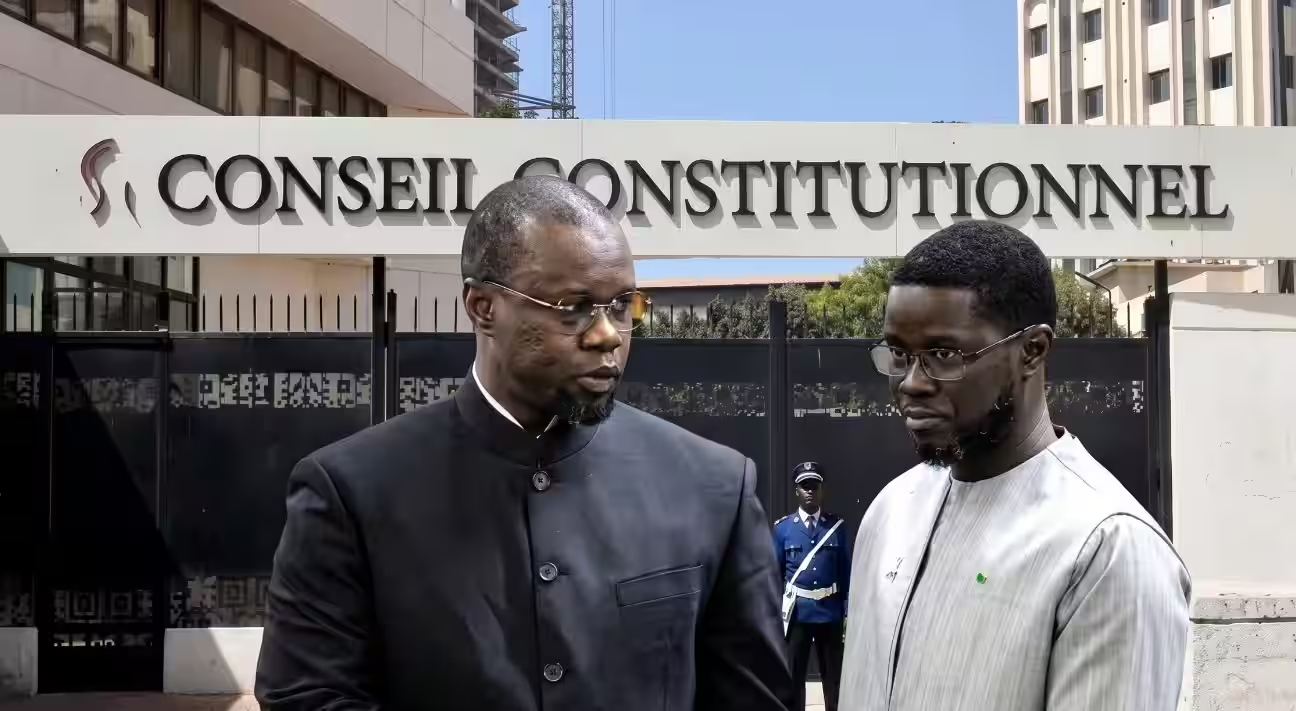
The recent judgment from the Conseil constitutionnel regarding the return of Ousmane Sonko to the Assemblée nationale has ignited a wave of critical analysis within the legal community of Sénégal. This decision, which hints at a possible change in judicial precedent, raises significant concerns about the stability and coherence of national institutions when facing major constitutional challenges.
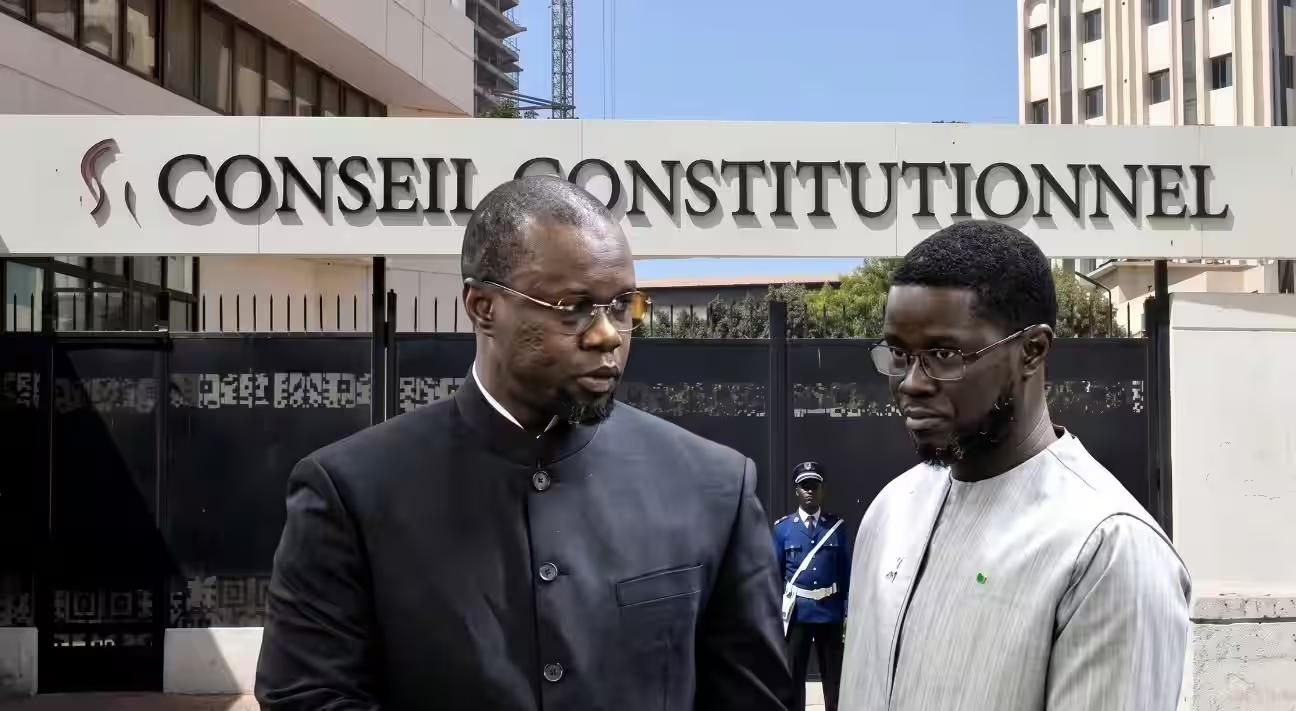
The ruling issued on June 17, 2026, continues to generate conflicting interpretations. While the court officially cited a lack of jurisdiction as the primary reason for its stance, many legal experts view this as a subtle retreat from previous judicial activism. The Conseil constitutionnel of Sénégal is now under the spotlight, as its current trajectory seems to deviate from the bold regulatory role it played during the institutional events of February 2024.
A shift from institutional regulator to procedural restraint
Critical reviews of the June 17 decision highlight a sharp divide between two different approaches to constitutional justice in Sénégal. In the past, the court acted as a safeguard for institutional balance and stability, taking an expansive view of its own authority. In contrast, this latest move suggests a more restrictive methodology, focusing strictly on the technical legal classification of the contested act rather than the broader implications for the Assemblée nationale.
This change in judicial philosophy remains at the heart of the ongoing controversy. Analysts are questioning whether the Conseil constitutionnel is maintaining a consistent path or if it is narrowing its scope in the face of sensitive political disputes. The reasoning behind this latest verdict continues to be a focal point for those monitoring the evolution of the rule of law and the rights of political figures like Ousmane Sonko.