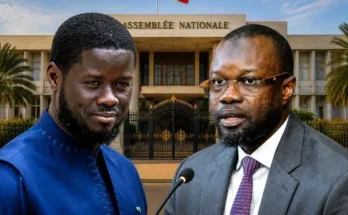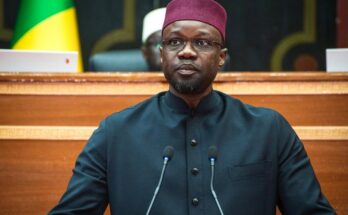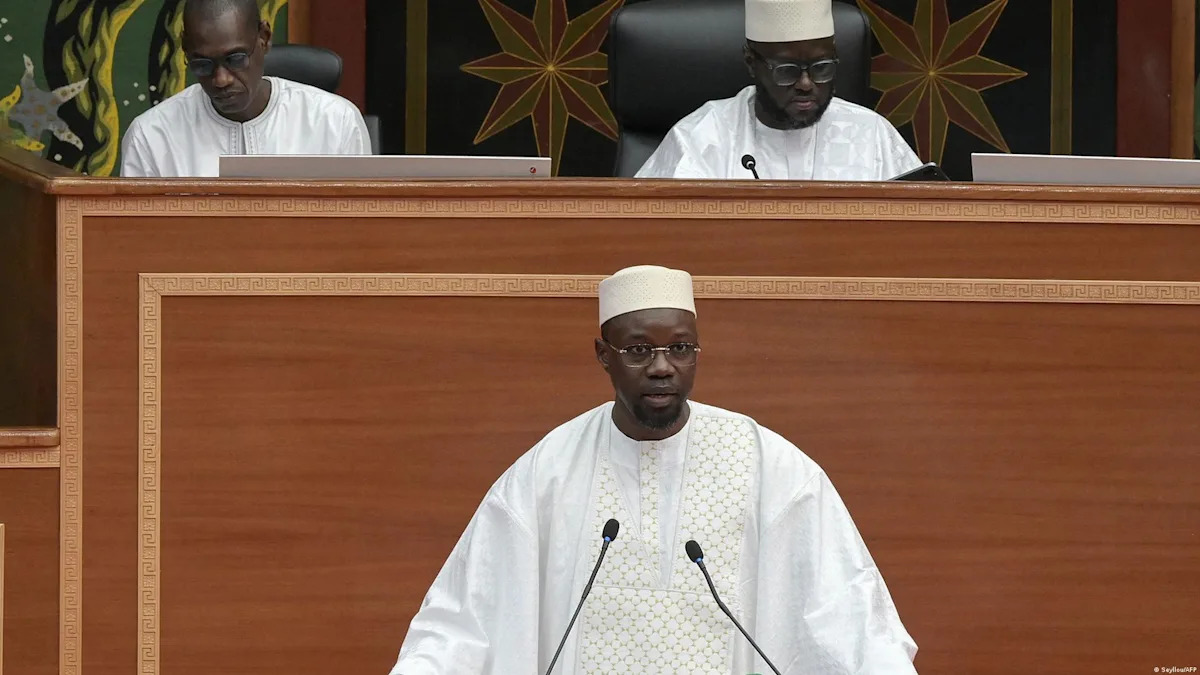
Ousmane Sonko has been elected President of Senegal’s National Assembly, marking a significant political milestone following his party’s sweeping victory in parliamentary elections.
Sonko’s election comes despite recent tensions between him and President Bassirou Diomaye Faye, both members of the same party. The vote was overwhelmingly in his favor, with 130 out of 165 parliamentary seats held by his party, the Pastef.
El Hadj Malick Ndiaye, the previous Assembly president, resigned on Sunday, setting the stage for Sonko’s rise to the second-highest position in the country. His election is expected to heighten political dynamics within the ruling party.
Political fallout and internal divisions
The appointment follows the dismissal of Sonko as Prime Minister by President Faye, a move that has sparked controversy. Supporters of Sonko, including party activist Nourdine Diallo, expressed deep disappointment, emphasizing the close ties between the two leaders during the election campaign.
“It was devastating to learn the President had removed the Prime Minister. We campaigned on the slogan ‘Diomaye is Sonko, Sonko is Diomaye,’ which was more than just words. We believed in their unity and shared vision for Senegal.”
Sonko’s dismissal came after he publicly criticized certain government decisions during a parliamentary session. The decision to remove him has intensified political friction, raising concerns about potential institutional conflicts.
Parliament convenes amid rising tensions
A special session of Senegal’s National Assembly is scheduled for Tuesday to address two critical issues: Sonko’s reinstatement as a deputy and the election of a new Assembly president. Sonko had temporarily suspended his parliamentary mandate to serve as Prime Minister.
Political analyst Malao Kanté warns that this development could escalate into a direct confrontation between the two former allies. With the opposition now holding a parliamentary majority, the situation poses risks to government stability, including potential motions of no confidence.
“Ousmane Sonko may now be seen as the new face of the opposition, but this opposition controls the majority in Parliament. The risks are real—starting with motions of no confidence against the next Prime Minister. This could paralyze the country’s governance.”
Legal challenges and constitutional concerns
The National Assembly’s opposition bloc, led by Aïssata Tall Sall, has rejected El Hadj Malick Ndiaye’s resignation, arguing it violates parliamentary rules. They have called on President Faye to refer the matter to the Constitutional Council, accusing Sonko’s potential reinstatement of being an unconstitutional power grab.
“If President Faye does not act, Ousmane Sonko will come for his seat next,” warned Aïssata Tall Sall, emphasizing the gravity of the situation.
Government reshuffle amid uncertainty
In response to the political turmoil, President Faye appointed Ahmadou Al Aminou Mohamed Lô as the new Prime Minister. A former central bank executive and longtime government minister, Lô has called for national unity during this critical juncture.
The political landscape in Senegal remains fluid, with Sonko’s election poised to reshape the balance of power in the West African nation.