Government intervention triggers backlash from poultry farmers
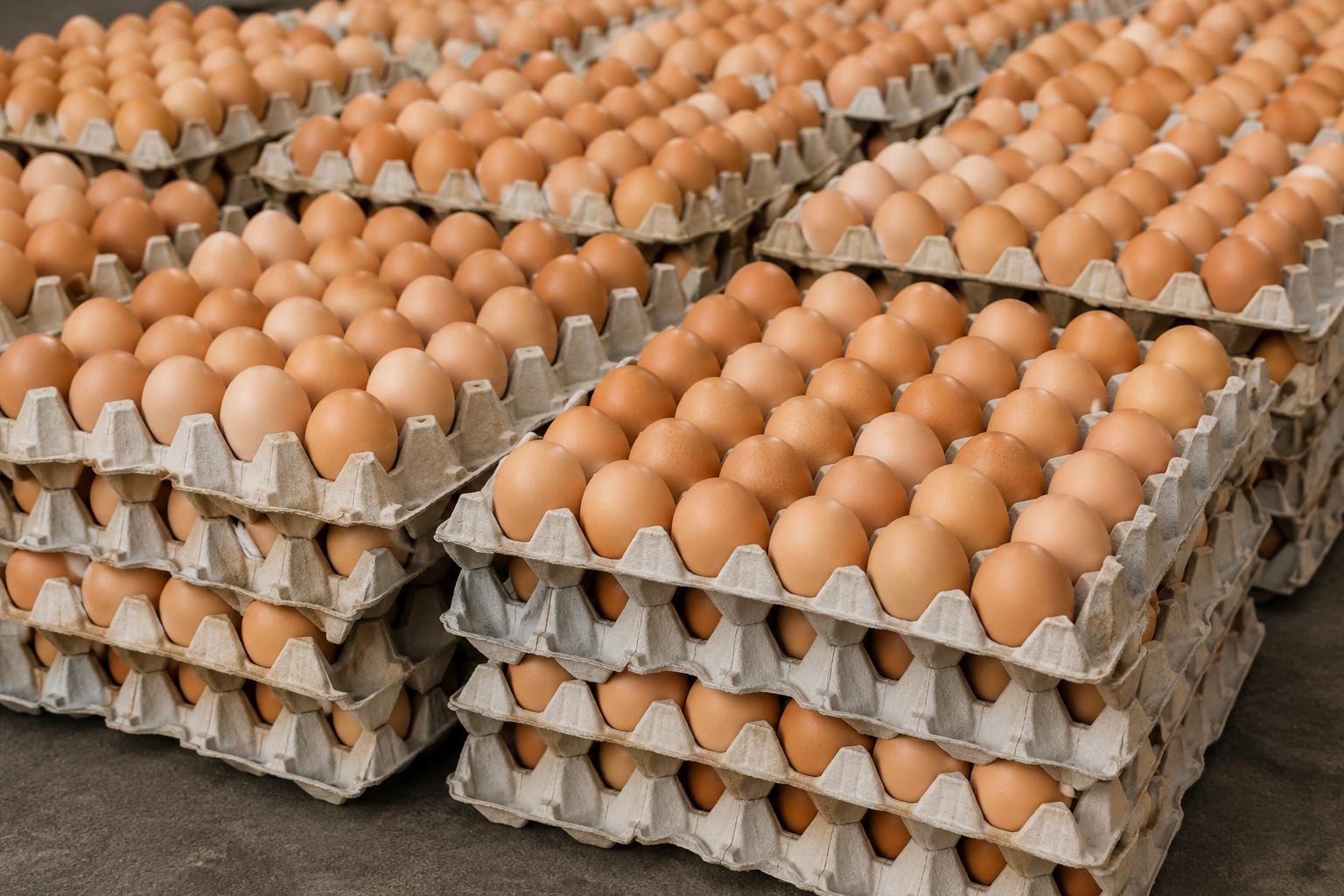
In a move that has sent shockwaves through Burkina Faso’s poultry industry, authorities recently set a maximum price of 100 F CFA per egg for consumers. The regulation, jointly announced by the Ministry of Trade and the Ministry of Animal Resources, also imposed a cap of 2,600 F CFA per tray for wholesalers and 2,750 F CFA for retailers. While framed as a measure to protect household purchasing power, critics argue it is crippling an already struggling sector by undermining business freedom.
The cost-price imbalance: a flawed economic logic
Setting a fixed price for a finished product without addressing the soaring costs of raw materials creates an unsustainable equation. Poultry farming in Burkina Faso relies heavily on feed—commonly known as provende—which includes maize, soybean and cottonseed meal, and mineral supplements. Over recent months, these inputs have seen their prices skyrocket due to inflation, rising transport costs, and supply chain disruptions.
By capping the retail price of eggs without subsidizing feed production, the government effectively pushes producers toward unprofitability. Operating at a fixed price that does not reflect true production costs forces farmers to sell at a loss or operate on razor-thin margins, jeopardizing the entire value chain.
Business freedom under threat
At the heart of a thriving market economy is the principle that businesses should set prices based on their own financial realities. When the state intervenes by dictating pricing policies, it doesn’t regulate—it suffocates. The egg price cap sends a chilling message to entrepreneurs: investing in poultry infrastructure, securing bank loans, and employing local workers may no longer be viable if revenue is arbitrarily capped below operational expenses.
Market distortions: scarcity and black markets ahead
History shows that artificial price controls rarely deliver the intended outcomes. In this case, the consequences could be severe:
- Small producers face collapse: Unlike large industrial farms, small-scale aviculturists lack the financial cushion to absorb losses. Many could be forced to shut down, eliminating thousands of jobs.
- Production decline: To cut losses, farmers may reduce flock sizes, leading to lower egg output.
- Black market emergence: As official supplies dwindle, eggs could reappear on the black market at prices far above the regulated 100 F CFA—ultimately punishing consumers more.
What’s the solution? A shift from control to support
Protecting consumers is essential, but not at the expense of producers. Instead of imposing price ceilings, policymakers should consider upstream interventions: subsidizing feed production, waiving import duties on poultry inputs, or expanding access to low-interest credit for farmers. These measures would stabilize costs without distorting the market.
Fixing the retail price of eggs without addressing the rising cost of feed is not just bad economics—it’s a dangerous precedent. It signals that business freedom in Burkina Faso remains hostage to top-down decrees disconnected from economic realities. To preserve the poultry sector and safeguard food sovereignty, the time has come to lift price controls and invest in sustainable production.