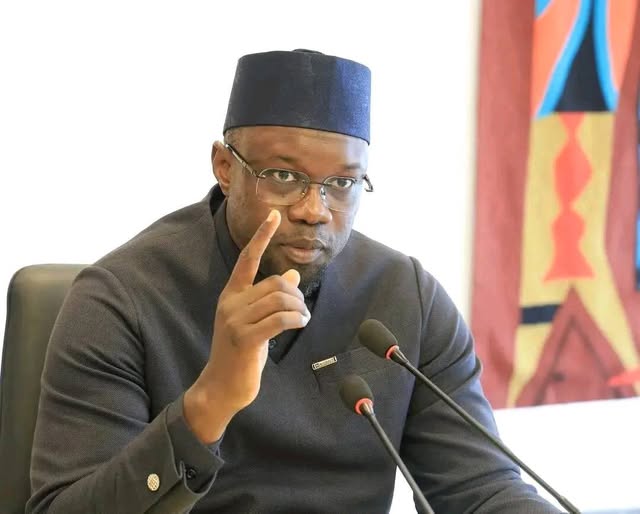
Prime Minister Ousmane Sonko of Sénégal issued a clear directive on Thursday, pressing government officials to expedite the finalization and operational launch of public infrastructure projects currently underway across the nation.
During an interministerial council meeting dedicated to infrastructure, held in Dakar, the head of government underscored the critical need to swiftly resolve administrative, financial, and technical hurdles that are impeding numerous strategic initiatives.
Addressing maritime and port infrastructure specifically, Prime Minister Sonko called upon the Minister of Fisheries and Maritime Economy to implement all necessary measures to ensure their prompt and efficient operation, particularly through robust public-private partnerships.
Key maritime facilities under scrutiny include the Port of Foundiougne-Ndakhonga, the Ndangane Sambou fishing quay, the developed landing point at Soumbédioune, and the processing sites in Rufisque. Additionally, the dredgers operated by the National Agency for Maritime Affairs, stationed in the regions of Kaolack and Fatick, are also part of this focused effort.
Overall, the government has identified a total of 62 infrastructure projects currently facing delays. This extensive list encompasses significant developments such as the Université du Sine-Saloum El Hadj Ibrahima Niass, various open digital spaces, regional airports in Saint-Louis, Matam, and Kolda, the container terminal at the Port of Ndayane, cold storage facilities, and the memorial for the ill-fated vessel “Le Joola.”
The reconstruction of the Aristide-Le-Dantec Hospital in Dakar also stands among the vital projects impacted by these operational blockages.
According to the Prime Minister, a dedicated committee will be established to inventory these infrastructures and monitor the implementation of decisions from the interministerial council. This body will be tasked with enacting the necessary financial, administrative, and legal steps to reactivate and bring these projects to fruition.
Prime Minister Sonko affirmed that the completion of these infrastructures would strictly adhere to all required quality and cost standards.
The head of government further emphasized the importance of integrating water, electricity, and telecommunications networks into the foundational planning of public projects. He instructed ministers to ensure improved consideration for technical equipment, operational models, and the long-term sustainable maintenance of these vital infrastructures.
Regarding the youth and citizenship centers under construction in several localities, including Tivaouane, Mbour, Linguère, Ranérou, Bambey, Diourbel, Kaolack, and Tambacounda, the Prime Minister set a deadline of November 30, 2026, for their complete equipping and commissioning.
The interministerial council also reviewed the progress of the “Naatangué” village farms and several agropoles currently being developed in Mpal, Adéane, Dioulacolon, and Mbellacadiao.
Ousmane Sonko directed the relevant ministries to collaborate with private partners to define sustainable operational models, ensuring both the profitability and social utility of these agro-industrial infrastructures.
Moreover, the Prime Minister explored various options for optimizing public infrastructures, such as leasing, long-term concessions, emphyteutic leases, or other public-private partnership arrangements designed to attract new investments.
National stadiums, sports facilities, national parks, natural reserves, and the real estate assets of Senegalese diplomatic missions abroad were also subjects of discussion during this governmental meeting.
Finally, the head of government instructed the pertinent public entities to propose mechanisms for the recycling and valorization of state-owned real estate and land assets, including those belonging to the armed forces, with the aim of maximizing their utilization in service of the national interest.