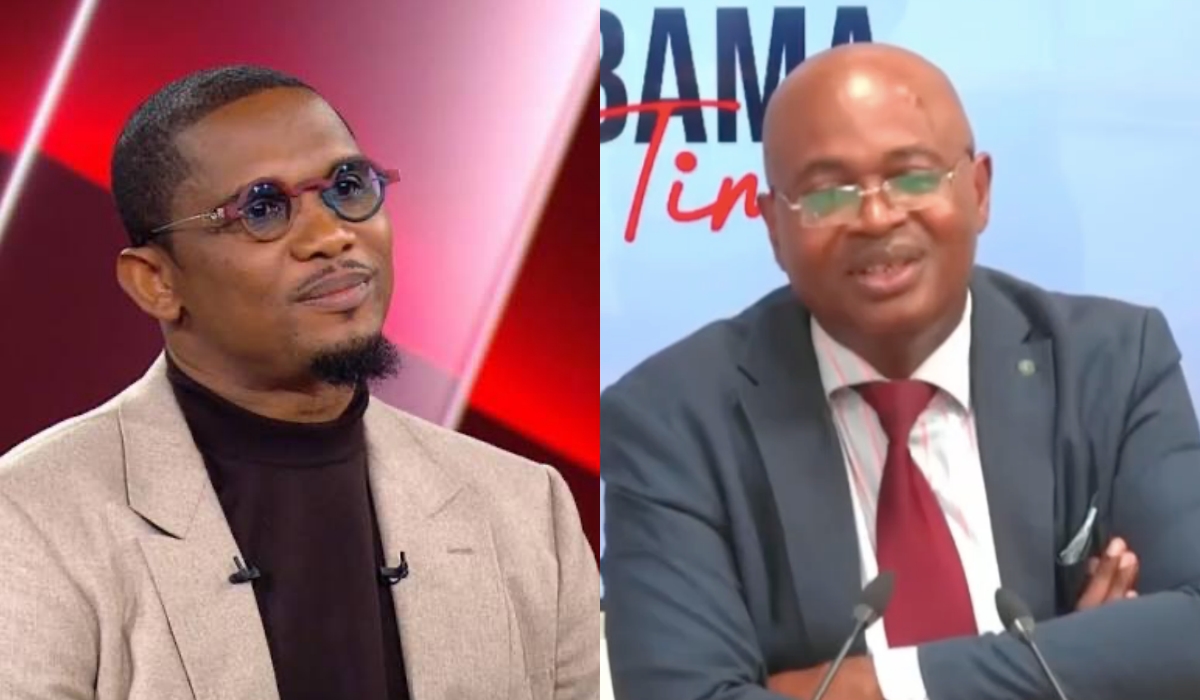
According to Jean Rodrigue Atemengue, in a nation where a cabinet reshuffle has been anticipated for months without action, the public arena should not be consumed by sports.
Citizens of Cameroun,
Our national team, the Indomptable Lions, will not be participating in the upcoming World Cup. We failed to qualify. Yet, despite this absence from the global stage, our collective attention remains trapped in endless disputes over football, federation politics, and matches that do not even involve us. Meanwhile, the wounds of our nation remain unhealed and ignored.
A vital question: are our priorities misplaced?
There is a deeply unsettling reality at play. Football, once the ultimate unifying force and a convenient distraction from national struggles, is itself in a state of decay. The very tool used for diversion is broken.
The sport in Cameroun, formerly a beacon of continental pride, has become a shadow of its former self. It is plagued by controversial management, internal power struggles, constant scandals, and a federation mired in perpetual conflict. Our infrastructure is failing, and young athletes are frequently left to fend for themselves. This failure to qualify is merely a symptom of a much larger rot.
We are not going to the World Cup, yet some insist on keeping football at the center of our national conversation. It is a bizarre paradox: the public is urged to remain obsessed with a sport that many see as being in significant decline.
This is not an attack on the game itself. Passion for the sport is natural and serves as a bridge across political and ethnic divides. Figures like Samuel Eto’o are rightly celebrated for their legendary careers. However, football must not serve as a screen that hides the critical issues determining our future, particularly when our team is absent from the world stage.
What should we really be discussing?
In a country where a government reshuffle has been expected for nearly a year but never materializes, the public discourse should be focused on governance, not a ball.
In a country where the Parliament held an extraordinary session to amend the Constitution and establish a vice-presidency—only for that position to remain empty months later—the functionality of our institutions should be our primary concern.
When years pass without a meeting of the Council of Ministers or the Higher Judicial Council, we must question the state of our institutional normalcy.
In a nation where ministers resign only to be replaced by temporary officials for extended periods, and where high-ranking public figures pass away without being replaced, our focus is clearly elsewhere.
When a magistrate issues an arrest warrant while administrative notes circulate telling police not to follow it, the rule of law is under threat. This should alarm us far more than any FIFA ranking.
When a court’s provisional release order is publicly dismissed as a forgery, the very integrity of our justice system is at stake and demands citizen mobilization.
In a land where roads are crumbling, public contracts are paid for but never finished, and access to clean water and electricity remains a luxury for many, football cannot be the main topic of conversation. When graduates face chronic unemployment and the rising cost of living crushes households, we must look at the reality on the ground.
Who benefits from this distraction?
Every time a football controversy consumes the headlines, vital questions about our economy, society, and institutions are pushed into the background. The challenges remain, but they lose the visibility required for change.
Intellectuals, journalists, and thought leaders have a heavy responsibility here. To dedicate the bulk of the public sphere to sporting drama while the nation faces profound institutional crises is to choose noise over thought and spectacle over meaningful debate.
We do not have to give up on football, but we must organize our priorities. Once our institutions are functional, our justice system is trusted, our roads are paved, and our youth have jobs, then we can talk about football as much as we like.
Today, making sport our primary concern is an act of looking away from urgent challenges. To debate a failing sport as if it were still our greatest triumph is to ignore the decline of the game and the deepening hardships of the nation.
Citizens of Cameroun,
We deserve a public debate that matches the scale of our struggles.
We deserve institutions we can trust, a judicial system with integrity, and a government that is accountable. We need a public space that informs rather than distracts.
History will remember those who dared to ask the difficult questions, not those who preferred to argue about a tournament we aren’t even playing in or a sport still searching for its lost glory.