Romuald Wadagni’s inauguration in Benin: a landslide victory amid opposition exclusion
On May 24, 2026, Romuald Wadagni was sworn in as Benin’s new president, securing 94% of the vote in an election where the main opposition party was barred from running. The former Finance Minister inherits a tightly controlled political landscape and a revised seven-year presidential term.

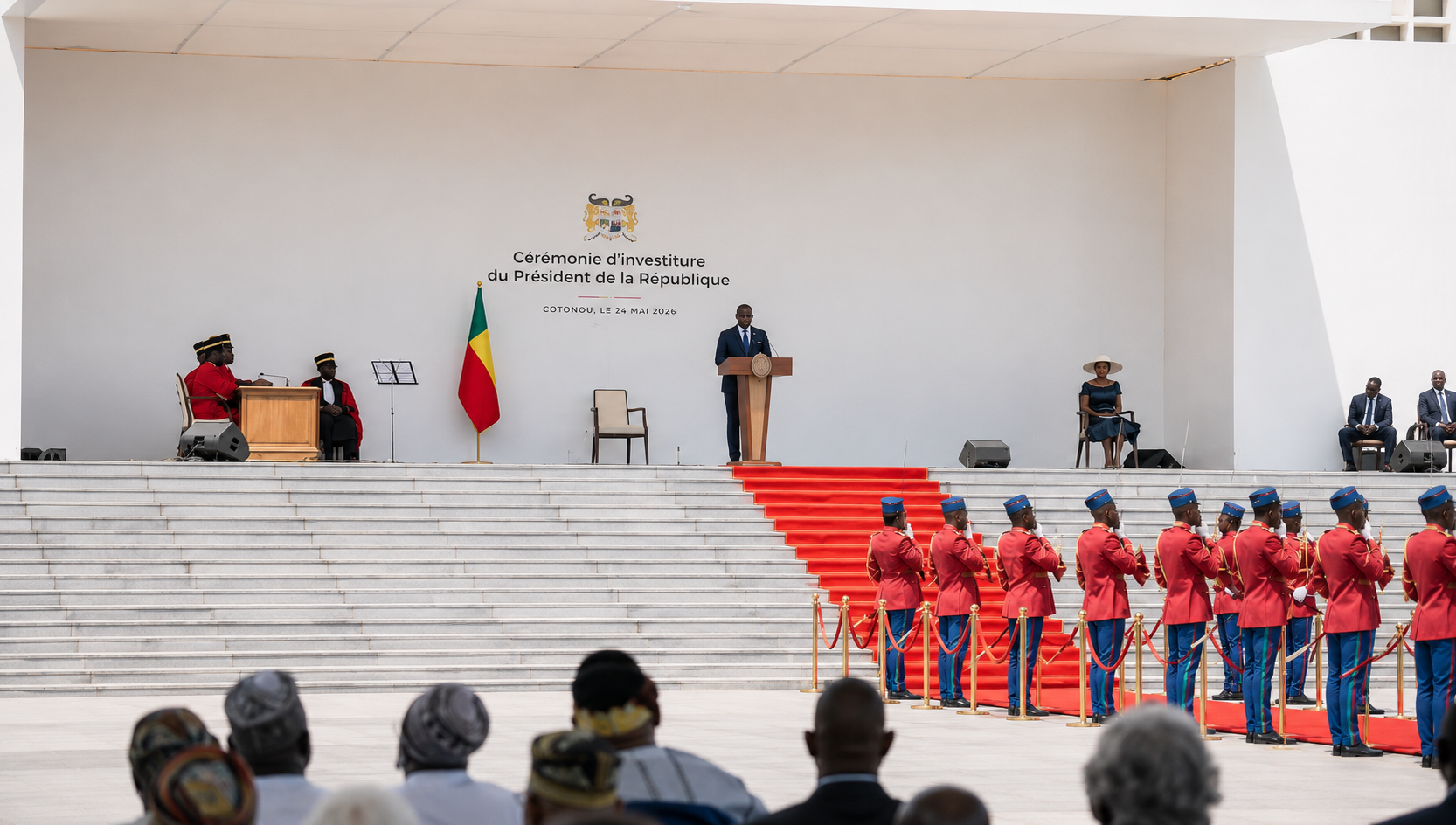
Benin’s political landscape has shifted dramatically with the inauguration of Romuald Wadagni, who secured an unprecedented 94% of the vote in an election where the opposition was systematically sidelined. The ceremony, held at Cotonou’s Palais des Congrès, marked the beginning of a seven-year term under revised constitutional rules that decouple presidential elections from legislative ones.
A technocrat at the helm, inheriting economic stability
At 49, Wadagni brings a decade of government experience, having served as Finance Minister under Patrice Talon since 2016. His expertise in financial strategy—including multiple successful sovereign bond issuances—positions him as a continuity candidate in a nation praised by international lenders for its economic resilience. Born in Lokossa, his rise from Deloitte consultant to presidential successor underscores a career built on technical governance rather than political spectacle.
The election itself was a foregone conclusion. With the opposition’s primary party, Les Démocrates, disqualified in October 2025 due to technicalities—including a last-minute withdrawal of parliamentary sponsorship—the vote became a referendum on Wadagni’s unchallenged mandate. His sole opponent, Paul Hounkpè, represented a marginalized faction, while the vice-presidential ticket paired with Mariam Chabi Talata further solidified the ruling coalition’s dominance.
A ceremony of precision, amid political narrowing
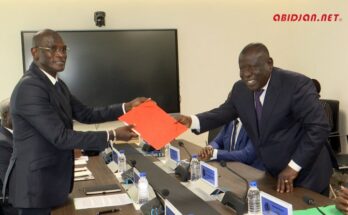
The inauguration unfolded with military precision. Patrice Talon, the outgoing president, formally transferred presidential regalia in a private meeting before the constitutional swearing-in at 11:10 AM. Over 6,000 guests, including former heads of state Nicéphore Soglo and Thomas Boni Yayi, attended the meticulously organized event. Observers noted the flawless logistics, yet the ceremony’s exclusivity—marked by the absence of major opposition figures—highlighted the shrinking space for political dissent in Benin.
Opposition suppression: a decade-long trend
The disqualification of Les Démocrates followed a pattern of institutional barriers erected against dissent. High registration fees, controlled compliance certificates, and a 2025 threshold requiring parties to secure at least 20% of votes per constituency to retain seats effectively marginalized opposition representation. In January 2026, the party failed to win a single seat in legislative elections, a stark contrast to its previous influence. High-profile opposition figures like Reckya Madougou and Joël Aïvo remain imprisoned under controversial terrorism-related charges, while others have fled into exile. The CRIET, a special tribunal established in 2016, continues to face criticism for its selective prosecutions.
Diplomatic overtures: a shift in regional alliances?
Wadagni’s inauguration speech introduced a notable diplomatic pivot, particularly toward the Sahel. For the first time in years, delegations from Mali, Burkina Faso, and Niger—the Alliance of Sahel States (AES)—were prominently represented, with Niger’s Prime Minister Ali Mahaman Lamine Zeine drawing prolonged applause. This gesture broke from Benin’s previous diplomatic frostiness toward Niamey, especially following the 2023 coup and repeated border closures affecting Niger’s oil exports via the Beninese pipeline. France’s participation, though modest with a junior minister present, signaled cautious engagement.
The new president’s address emphasized two pillars: inclusive economic growth and regional security. Wadagni pledged to translate macroeconomic gains into tangible benefits for Beninese families, targeting youth, women, rural communities, and the middle class. On security, he vowed a firm state response to armed groups operating in northern Benin since 2022. His repeated address—« To you, I say »—reinforced a message of unity, notably toward women, diaspora communities, and descendants of the transatlantic slave trade, whom he invited to « return home » to Benin.
Key milestones to watch in the coming months
Several early indicators will reveal Wadagni’s agenda. The composition of his cabinet, expected within days, may signal whether he broadens the ruling coalition beyond Talon’s inner circle. The fate of imprisoned opposition leaders—particularly calls for their amnesty—could redefine Benin’s political climate. Equally critical will be the trajectory of relations with the AES, hinging on concrete diplomatic gestures such as an official visit to Niamey, Bamako, or Ouagadougou.
Benin now enters a seven-year term under an electoral framework fundamentally reshaped by its predecessor. The question looming over this inauguration is not one of stability, but of pluralism: a nation lauded for its economic stewardship yet increasingly constrained in its democratic freedoms.