Russian-backed Africa Corps pivots focus to Bamako after setbacks in northern Mali
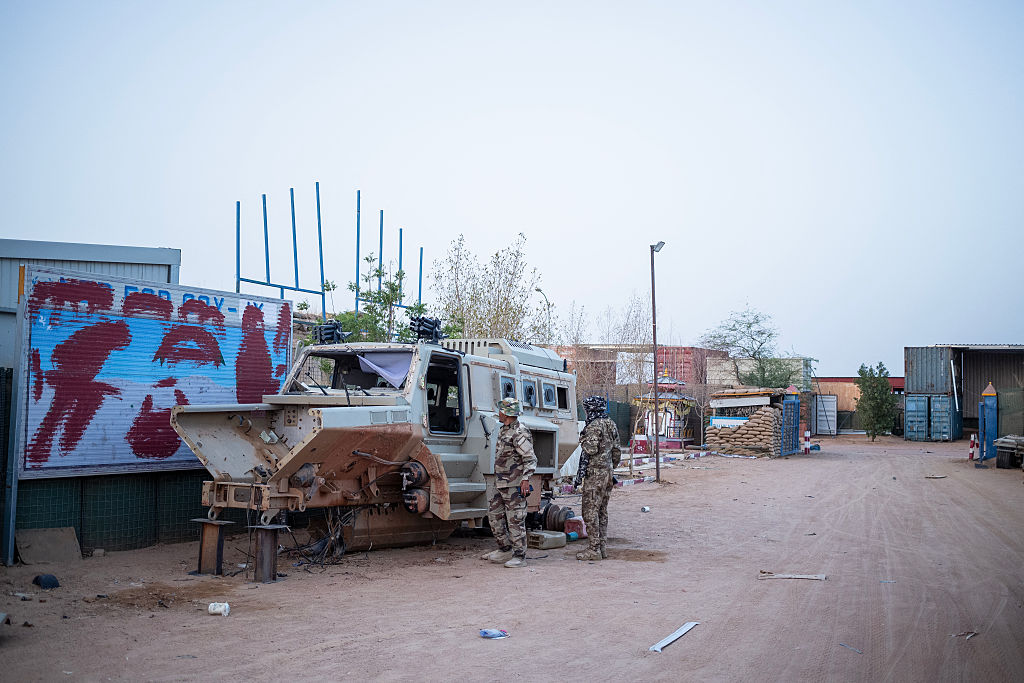
Russia’s Africa Corps has shifted its operational focus away from Mali’s northern regions, prioritizing the protection of the capital Bamako and the ruling junta while providing aerial support and intelligence to Malian forces on the frontlines.
Analysts note that the group has adopted a more cautious approach, scaling back direct combat roles to avoid further losses. «They’re doing everything possible to prevent more casualties,» remarked Benedict Manzin, lead Middle East and Africa analyst for Sybiline Intelligence. «Their strategy now revolves around minimizing personnel exposure while maximizing damage output.»
From Wagner to Africa Corps: a tactical retreat
The Africa Corps, an official unit under Russia’s Ministry of Defense, replaced the infamous Wagner Group in Mali by mid-2024. This transition followed heavy losses suffered by Wagner fighters in an ambush coordinated by the Front de Libération de l’Azawad (FLA) near Tin Zaouatine, close to the Algerian border. The Africa Corps currently deploys around 2,000 personnel—many former Wagner mercenaries—marking a significant reduction in numbers compared to its predecessor.
The strategic withdrawal from northern Mali gained momentum after the FLA and the Group for Support of Islam and Muslims (GSIM) reclaimed the city of Kidal in late April. This reversal prompted the Africa Corps to consolidate its forces near Bamako, the junta’s stronghold.
Aerial strikes and propaganda campaigns
In response to the loss of Kidal, the Africa Corps conducted retaliatory airstrikes, targeting infrastructure and displacing local residents. These operations aimed to bolster the Malian Armed Forces (FAMa), which now spearhead ground operations in the north. «Their reliance on air power has become unmistakable,» noted Manzin, pointing to recent strikes involving Russian-made cluster munitions in the Kidal region—a violation of Mali’s obligations under international conventions banning such weapons.
«They can’t afford to squander resources,» Manzin added. «Deploying them in small northern communities risks losing them without achieving strategic gains.» The group’s shift in focus has also included a surge in propaganda, with over 500 posts published across Telegram and other platforms in the weeks following the Kidal withdrawal, according to analyst Jacob Boswall.
Navigating economic blockades and drone warfare
Beyond combat operations, the Africa Corps has played a key role in countering economic blockades imposed by the GSIM. Russian-backed fighters now escort supply convoys entering landlocked Mali from neighboring countries like Côte d’Ivoire, Guinea, and Senegal, shielding them from GSIM attacks.
However, the Africa Corps faces its own challenges. GSIM has deployed drones to target Russian positions, as evidenced by recent social media videos showing strikes on Africa Corps bases in Sévaré. In retaliation, the Africa Corps has launched armed drone strikes against GSIM logistics, including a fuel depot in the Tombouctou region.
High costs, diminishing returns
Since late 2021, Mali has invested nearly $1 billion in Wagner and later the Africa Corps. Yet, analysts warn that the strategy has backfired. The loss of northern territories and the expansion of GSIM influence across the Sahel can be partly attributed to the brutal tactics employed by Russian-backed forces and Malian troops against civilian populations in the north.
«The Malian government’s approach is not only ineffective but threatens long-term stability,» Manzin concluded. «By pushing communities into the arms of extremist groups, they risk exacerbating the very threat they seek to eliminate.»