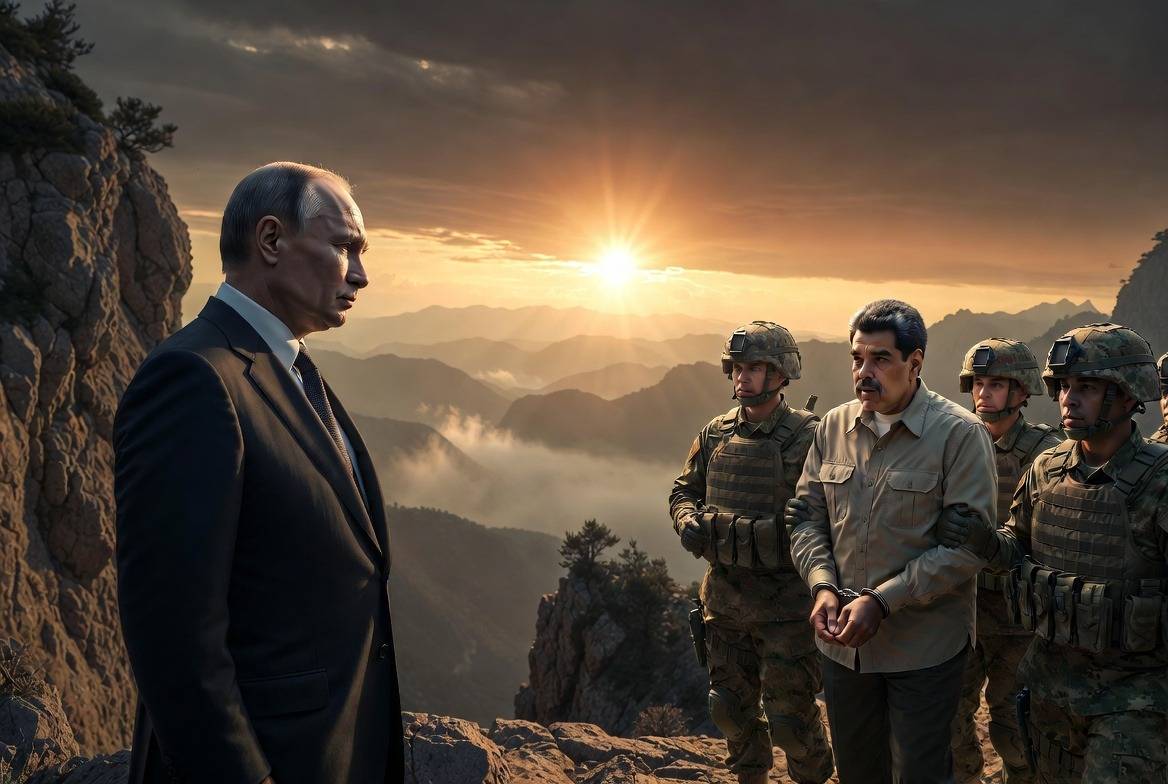
The weight of silence often speaks louder than words, and hollow condemnations can camouflage nothing short of geopolitical surrender. When a seismic political upheaval rocked Caracas in early 2026—defined by large-scale U.S. military intervention and the dramatic capture of Nicolás Maduro—the Russian Federation responded with a baffling passivity. For a nation that once positioned itself as Venezuela’s staunchest guardian against supposed “Yankee imperialism” and a defender of sovereignty, Moscow’s retreat into mere diplomatic statements amounted to operational muteness.
From rhetoric to retreat: where did Russian resolve vanish?
Where once stood the bold assertions of Moscow, now only hollow declarations remain. The Russian Ministry of Foreign Affairs issued formal condemnations of an “armed aggression” and demanded the release of the deposed president. Foreign Minister Sergei Lavrov reiterated Russia’s commitment to bilateral agreements. Yet beyond this recycled diplomatic language, what concrete action did the Kremlin take? Virtually none. A belated naval maneuver involving a submarine escorting a sanctioned oil tanker, and a public plea for Washington to “respect international law”—that was the extent of Moscow’s response.
This was not restraint; it was surrender in plain sight. By failing to mount a meaningful counter-move in the United Nations Security Council or deploy any tangible deterrent, Russia allowed its most loyal ally in Latin America to be extradited to a New York prison without so much as a protest. Russian intelligence, typically quick to anticipate Western maneuvers, appeared blind and deaf, leaving Caracas defenseless against a reinvigorated Monroe Doctrine. The harsh truth emerged: the 2025 strategic partnership treaty was nothing more than a paper shield. At the first real test of strength, Russia’s protective stance shattered, exposing severe limitations in Moscow’s global power projection.
The trap of strategic exhaustion
Moscow’s factual silence was not a calculated tactic—it was a grim reflection of exhaustion. Entangled for years in a costly conflict and crippled by a “death economy” that drains financial and human resources, the Kremlin no longer possesses the capacity to sustain its global ambitions. Venezuela became an involuntary bargaining chip—or worse, collateral damage—of Russia’s growing isolation. By limiting its reaction to perfunctory statements, Russia sent a chilling message to partners worldwide: its protective umbrella ends where its own difficulties begin.
Geopolitical betrayal and the end of a myth
In abandoning Venezuela’s political transition to a transitional government under pressure and tacitly accepting the American fait accompli, Russia committed a grave error. It consigned the Venezuelan people to a new era of external tutelage without offering a single credible alternative. This Russian silence is not diplomacy—it is the admission of strategic failure. By cloaking itself in polite impotence, Moscow did more than lose a key ally and access to some of the world’s largest oil reserves; it forfeited its standing as a global counterbalance. In Caracas, the curtain fell—and the vaunted Slavic protector wasn’t even on stage.