Laurent Gbagbo re-elected as leader of ivoirian political party
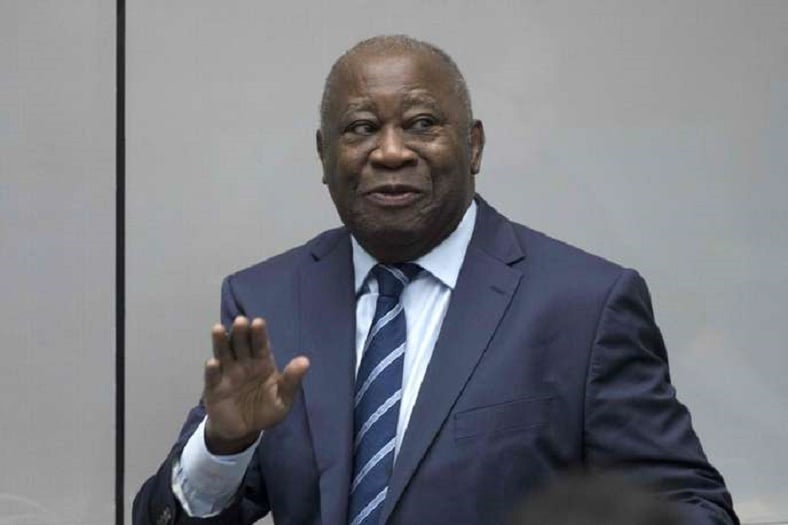
Despite earlier intentions to step aside, former Ivorian President Laurent Gbagbo has been re-elected as head of his political party, the Parti des peuples africains – Côte d’Ivoire (PPA-CI), during its first ordinary congress.
The 80-year-old leader, who governed Côte d’Ivoire from 2000 to 2011, continues to command strong support from his base, even as the party faces challenges following multiple electoral boycotts. His return to the helm comes after he had publicly expressed his desire to withdraw from political life by late 2025.
Political setbacks and party struggles
Gbagbo’s inability to run in the October 2025 presidential election—due to a criminal conviction that barred him from voter registration—left his party without a candidate or official endorsement. The PPA-CI subsequently boycotted the December legislative elections, resulting in the loss of parliamentary representation and a significant reduction in local leadership, with only a handful of mayors remaining.
Congress reaffirms Gbagbo’s leadership
At the close of the party’s first ordinary congress, delegates overwhelmingly reaffirmed Gbagbo as president, following a day of enthusiastic acclamations. Upon his arrival at the Treichville Congress Palace in Abidjan, he was greeted with warm applause from supporters. In a brief statement, he expressed gratitude, saying, “I am happy to be in this warm atmosphere; thank you.” He is scheduled to deliver a speech the following day in Songon, a southern suburb of Abidjan.
Gbagbo, who will turn 81 on May 31, had previously announced his intention to step down from party leadership and refrain from holding political office. However, his re-election underscores his enduring influence within the PPA-CI.
Party divisions and international stances
The congress also saw strong support for a motion backing the Alliance of Sahel States (AES)—a coalition including Burkina Faso, Mali, and Niger, all governed by anti-French military juntas with strained relations with Côte d’Ivoire. Additionally, disciplinary actions were taken against party members accused of defiance. Ahoua Don Mello, who ran against party directives in the 2025 presidential race, was expelled, while Stéphane Kipré, who participated in the legislative elections as an independent, received an 18-month suspension.
The once-unified left-wing movement that Gbagbo led during his presidency has since fragmented, with key figures such as his ex-wife Simone Ehivet Gbagbo, former ally Charles Blé Goudé, and former Prime Minister Pascal Affi N’Guessan distancing themselves from the PPA-CI.
Future prospects hinge on legal status
Gbagbo’s political future remains closely tied to his eligibility to run for office again. Reinstating his voter registration would require an amnesty from President Alassane Ouattara, who succeeded him in 2011 after a violent post-election crisis. The path forward for the veteran politician will depend heavily on resolving his legal and electoral standing in the coming months.