The ongoing blockade of Bamako is inflicting unacceptable hardships on civilians, threatening their access to food, healthcare, and safety, as humanitarian groups urge the Groupe de soutien à l’islam et aux musulmans (GSIM) to comply with international humanitarian law.
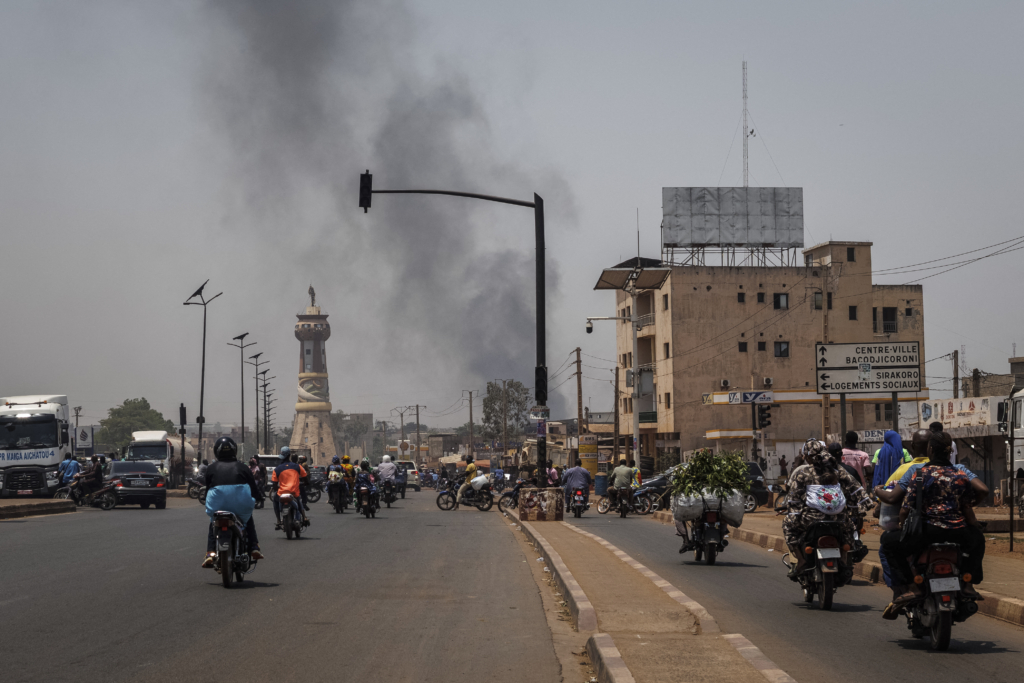
Since April 28, three major routes leading to the Malian capital have been cut off following a GSIM announcement declaring a blockade of Bamako. On May 6, the armed group targeted a civilian convoy transporting goods—including fresh produce—between Bamako and Bougouni. According to verified reports, the trucks carried no military equipment or personnel and were unescorted by security forces.
« Attacks on civilian vehicles with no military purpose violate international humanitarian law, » stated Marceau Sivieude, Amnesty International’s Regional Director for West and Central Africa. « All parties in a conflict must distinguish between civilians and combatants. Strikes targeting civilians or civilian infrastructure—including essential supplies—are strictly prohibited. »
Blockades must not strip civilians of their fundamental economic and social rights.
Marceau Sivieude, Regional Director, Amnesty International for West and Central Africa
Blockade violates wartime conventions
The GSIM’s blockade, announced via an online video on April 28, differs from the September 2025 restrictions—then limited to fuel tankers—which now appear to target all commercial trucks entering Bamako. By May 15, at least three of the six primary supply routes linking the capital to regional ports were disrupted, exacerbating shortages of essential goods. Residents and media sources report soaring prices for staple items.
« Blockades cannot justify breaches of civilians’ economic and social rights, » Sivieude emphasized. « The GSIM must uphold international humanitarian law, ensuring Bamako’s population retains uninterrupted access to clean water, food, and medical supplies. »
On May 5, the UN Human Rights Office urged an immediate halt to hostilities, reinforcing the obligation of all parties to protect civilians and civilian infrastructure under international law.
In a May 6 statement, the GSIM announced a partial easing of the blockade, permitting medical evacuations into Bamako. However, independent verification of these measures remains pending.
GSIM’s deadly assault on a civilian fuel convoy
Survivors of a January 2026 ambush provided firsthand accounts of a GSIM attack on a military-escorted fuel convoy between Diboli and Kayes. The assault left multiple drivers and apprentices executed after attempting to flee. « We were ambushed by over 200 jihadists on motorcycles 20 kilometers from Diboli, » recounted one survivor. « Reinforcements arrived, but the soldiers were killed; the attackers torched the trucks. At least 12 drivers were captured, forced to dig graves for fallen jihadists, then slaughtered. »
« The GSIM’s indiscriminate violence against civilians breaches international law, » Sivieude asserted. « Authorities must investigate these potential war crimes. Survivors and victims deserve truth, justice, and reparations. »
Context of escalating violence
On April 25, coordinated GSIM and Front de libération de l’Azawad (FLA) attacks struck Bamako, Kati, Mopti, Sévaré, Gao, and Kidal, hitting military camps and the homes of political and military leaders. In Kati, Defense Minister Sadio Camara and family members were killed by an improvised explosive device.
On May 6, GSIM fighters raided the villages of Kori Kori and Gomassagou in central Mali, killing at least 40 people and leaving several missing, per local reports.