A shift from judicial bravery to institutional avoidance
On February 15, 2024, the Constitutional Council of Sénégal surprised observers with its firm stance. Acting as the true guardian of the Constitution, it stepped up to resolve a major institutional crisis, ensuring the proper functioning of the nation’s democratic framework. However, fast forward to June 17, 2026, and the same body appears to have taken a step back.
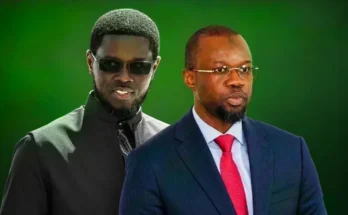
When presented with a challenge regarding the Assemblée nationale Bureau’s decision to reinstate Ousmane Sonko as a deputy, the Council declined to rule on the actual substance of the case. Instead, it issued a declaration of incompetence. While this might seem like a technicality, it raises a vital question: how does the Council currently perceive its own role and legal precedents?
The legal challenge was not merely based on the Council’s role in overseeing national elections under Article 92. The petitioners also pointed to the organic law governing the Council and cited its own landmark rulings from 2017 and 2024. Their logic was clear: the Council is both the judge of parliamentary election regularity and the regulator of institutional stability.
A missed opportunity for institutional regulation
The Council’s silence on its regulatory role is particularly striking. In its June 17, 2026 decision, the court focused strictly on the electoral aspect, arguing that its jurisdiction ends once election results are finalized. Since the contested reinstatement occurred long after the November 2024 legislative elections, the Council deemed itself powerless. While legally coherent on the surface, this reasoning fails to address the core of the problem.
The dispute over the May 24, 2026 reinstatement of Ousmane Sonko involved fundamental democratic pillars: the separation of powers, the rules regarding ministerial and parliamentary incompatibilities, and the internal legality of the Assemblée nationale. These are areas where the Council’s regulatory function is essential. By ignoring its own 2024 precedent—which stated that the Council must always be able to exercise its power to preserve the stability of institutions—the court has chosen to retreat into a formalist shell.
This strategy of avoidance resolves a sensitive political issue through a procedural exit rather than a substantive answer. It leaves the underlying constitutional questions completely unresolved.
The irony of the defense
Adding to the complexity of the case is the position taken by Ousmane Sonko in his response. He argued that the Council should only intervene in cases explicitly and strictly defined by the Constitution and organic laws. This restrictive interpretation is surprising coming from a side that previously criticized the Council for declaring itself incompetent to avoid protecting the Rule of Law.
For years, those now in power stood with civil society and legal experts to demand a more proactive and courageous judiciary. It is a stark paradox to see those same voices now advocating for a return to a culture of judicial non-interference. The real issue here was never just about a single parliamentary seat; it was about whether the Constitutional Council would continue its progressive evolution or return to a restrictive past.
Ultimately, the decision of June 17, 2026, marks a concerning reversal. When serious constitutional hurdles threaten the balance of power, the refusal of the highest court to intervene leaves a dangerous void. This moment will be remembered as a turning point for Sénégal‘s constitutional justice—a moment where a giant leap forward in 2024 was followed by two steps back in 2026.