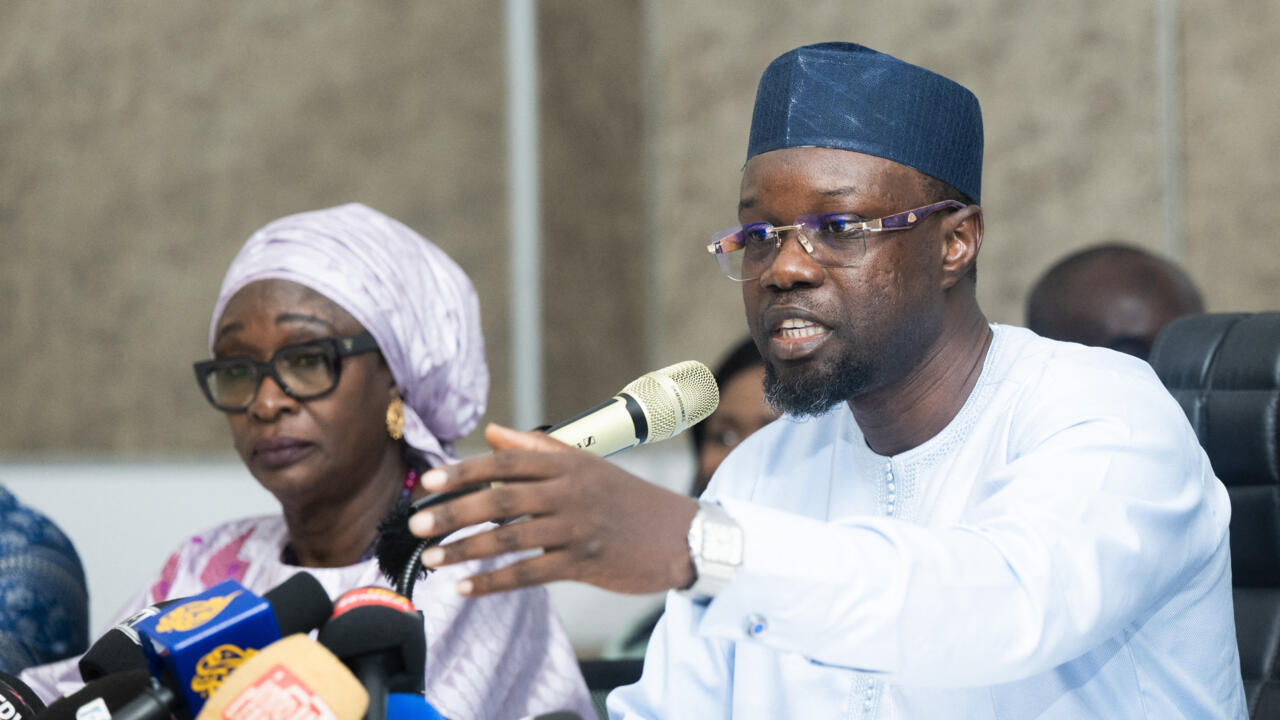
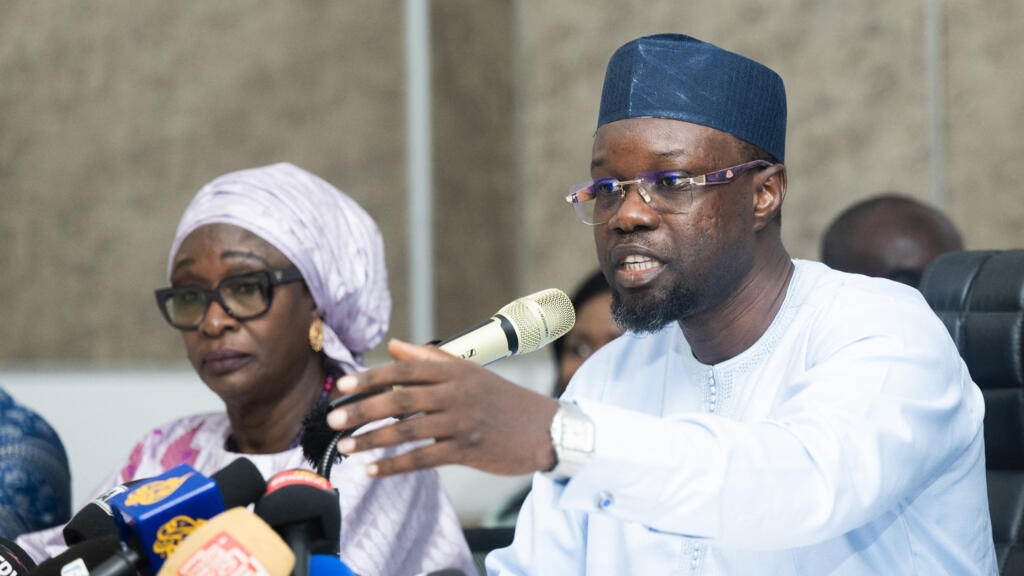
Just days after his dismissal as Prime Minister by President Bassirou Diomaye Faye, Ousmane Sonko made his move. During a press conference held in Dakar on Tuesday, June 2, the former head of government and leader of the Pastef party unleashed a sharp critique of the current administration. While affirming his commitment to institutional stability, he emphasized that his party’s parliamentary majority grants it the power to challenge the government through a vote of no confidence.
«The situation we face resembles a form of political cohabitation,» Sonko declared. He further revealed that he had warned the President about this possibility for months, only to be ignored.
Direct accusations against the government
According to reports from the local press, Sonko spared no harsh words in describing the government led by Prime Minister Al Amine Lô. In his eyes, the executive lacks fundamental political legitimacy. «We have a government with no political foundation,» he stated, dismissing the coalition touted by the presidency as insignificant. «That so-called coalition they keep mentioning represents nothing,» he asserted, adding that labeling the administration as a «technocratic government» merely exposes its political isolation.
Sonko went on to claim that Pastef holds the exclusive mandate of popular legitimacy within the majority, asserting that the party, as the country’s leading political force born from the ballot box, remains the true voice of the people. «To govern without us is to govern without the people,» he emphasized.
A fragile presidency
The absence of Pastef from the government presents a significant political challenge for the Diomaye Faye camp, as highlighted by observers. The party remains the dominant political force in the country and holds a comfortable majority in Parliament. This dynamic sets the stage for a complex form of cohabitation within the presidential majority itself. While Bassirou Diomaye Faye retains the constitutional powers of the presidency, the implementation of his agenda hinges on his ability to maintain trust with Pastef’s lawmakers.
Analysts warn that beyond the government’s composition, the broader question of political stability looms large. Doubts persist over the executive’s capacity to pass legislation and advance reforms without direct involvement from the majority party in governance.
«President Bassirou Diomaye Faye has severed the ties that once defined his political identity,» noted one analyst. «Today, he governs in a peculiar space—a formally legitimate power, yet narratively adrift. Legitimate because it is constitutional, but orphaned because it has cut itself off from the historical narrative that once gave it meaning beyond mere statecraft.»
In contrast, Ousmane Sonko stands ready at the National Assembly with 130 deputies, his party’s voice and memory intact, wielding overwhelming popular legitimacy. He is not merely an ordinary opponent but the guardian of the movement’s founding story—a narrative he can assert at any moment: «We were here first, and we will remain here.»
A historic rupture, not cohabitation
Political analysts describe the unfolding scenario in Senegal as unprecedented. «This is not a typical cohabitation—opposition between a president and a hostile parliamentary majority—but something far more intricate and perilous: a rupture within the same movement, between a head of state and a party that controls 130 of the 165 parliamentary seats and refuses to participate in government,» explained one observer from Bamako.
The question now is: How can a technocratic government without its own parliamentary base govern when faced with a Pastef that holds an absolute majority in the Assembly, led by Sonko himself, while simultaneously mobilizing a million-member national movement? The answer, or lack thereof, will unfold in the coming weeks and months on the streets, in institutions, and within the corridors of the Presidential Palace.