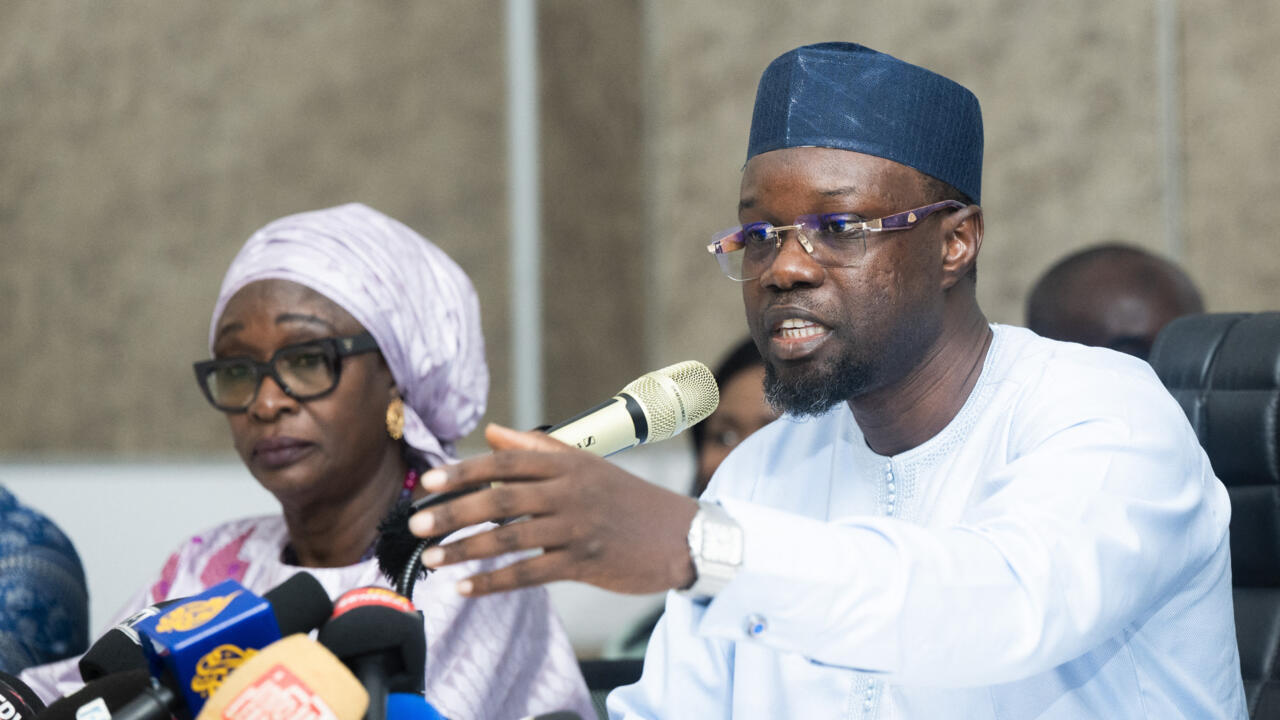
In a bold move that has sent shockwaves through Senegal’s political landscape, Ousmane Sonko, the recently dismissed Prime Minister and leader of the Pastef party, has launched a scathing critique of President Bassirou Diomaye Faye’s new government. Speaking at a press conference in Dakar on June 2, Sonko made it clear that the political fallout from his removal would not go unchallenged.
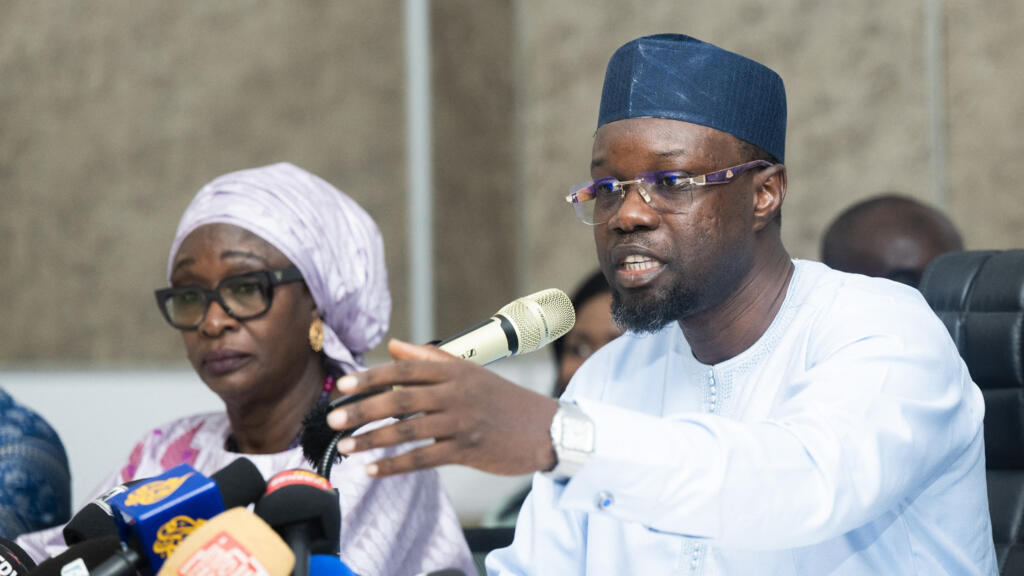
Sonko’s unfiltered critique of the new government
Addressing reporters, Ousmane Sonko did not mince his words. He accused President Bassirou Diomaye Faye of sidelining the Pastef party, despite its overwhelming parliamentary majority. Sonko warned that his party retains the power to topple the government through a no-confidence motion, though he insisted his intention was not to destabilize institutions. He further revealed that he had repeatedly cautioned the president about this political deadlock, but his concerns were ignored.
The dismissed Prime Minister went on to dismiss the legitimacy of the new cabinet led by Prime Minister Al Amine Lô, describing it as a government lacking fundamental political grounding. “We have a government with no political base,” Sonko declared, dismissing the coalition touted by the presidency as meaningless. “This so-called coalition represents nothing,” he stated, adding that labeling the government as “technocratic” was merely an admission of political isolation. Sonko emphasized that Pastef remains the country’s primary political force, with a mandate directly from the electorate, and governing without it equates to governing without the people.
A presidency under siege
The political maneuvering following Sonko’s dismissal has left President Bassirou Diomaye Faye’s administration in a precarious position. Analysts highlight that the absence of Pastef from the government presents a significant challenge, given the party’s 130-seat majority in the 165-member Parliament. This creates an unusual dynamic where the ruling party’s legislative dominance exists outside the executive branch, raising questions about the government’s ability to push through reforms.
Political observers warn that the situation could lead to a prolonged standoff. With Pastef controlling the National Assembly and its leader, Sonko, maintaining a strong grassroots following—including a reported mobilization of one million supporters—the government’s capacity to govern effectively is increasingly in doubt. The question now is how a technocratic-led administration can navigate a parliament dominated by an opposition party that refuses to engage in governance.
Is this cohabitation or a deeper political rupture?
Some analysts argue that the current scenario is unprecedented in Senegal’s political history. Unlike traditional cohabitation, where opposing parties share power, this situation reflects a fracture within the same movement. President Faye’s government, though constitutionally legitimate, lacks the narrative and historical ties that once anchored it. In contrast, Sonko’s Pastef party represents the original vision that propelled the president to power, positioning it as the guardian of that legacy.
Senegal now stands at a crossroads. The coming weeks and months will determine whether the government can regain stability, whether Pastef will push for early legislative elections, or if the streets will become the battleground for political survival. One thing is certain: the political temperature in Dakar is rising, and the stakes could not be higher.