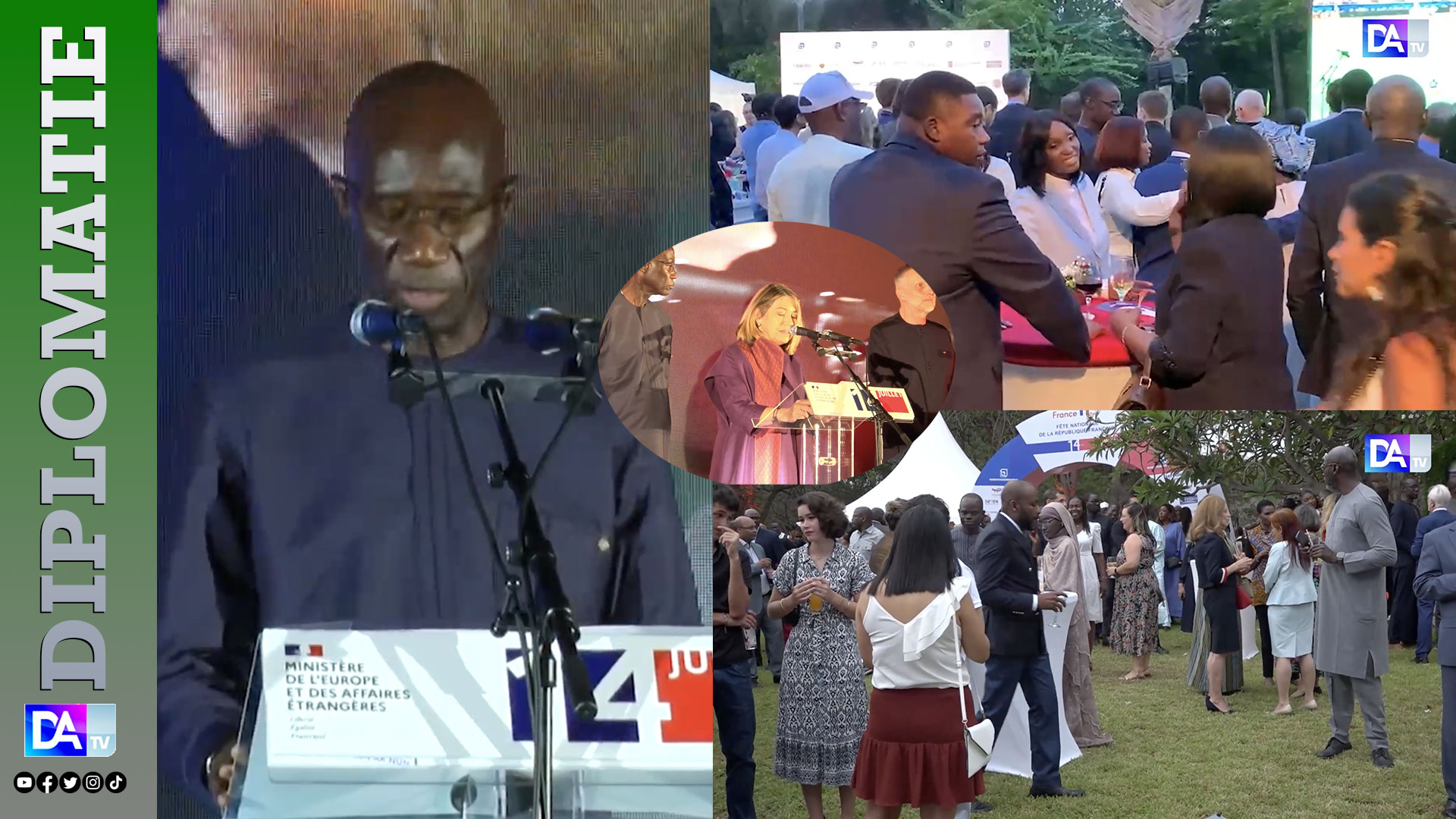
As France celebrated its National Day, Senegal’s Minister of Foreign Affairs, Moussa Sarr, emphasized the evolving nature of the longstanding relationship between Dakar and Paris. Describing the ties between the two nations as “historical, deep-rooted, and multifaceted”, he highlighted the strong bonds forged in human connections, culture, economy, science, and education. However, he noted that the relationship is now entering a “new phase”, marked by a “demanding, transparent, and constructive dialogue” to align their cooperation with the evolving aspirations of their peoples and the shifting regional and global landscape.
Me Moussa Sarr outlined the core principles guiding this renewed partnership: mutual respect, reciprocal trust, active listening, equal partnership, and shared interests. These values, he argued, form the foundation for a balanced and future-oriented collaboration between Senegal and France.
The minister underscored the strategic sectors where bilateral cooperation is most impactful: education, vocational training, healthcare, infrastructure, transportation, agriculture, energy, sanitation, regional development, research, and innovation. He praised the progress in higher education and vocational training initiatives, as well as efforts in decentralized cooperation and diaspora engagement through the Programme d’appui aux initiatives de solidarité pour le développement. Senegal’s Minister also recognized France’s role as the top destination for Senegalese students abroad, expressing gratitude for France’s support in preparing for the 2026 Youth Olympic Games, particularly in logistics, security, and emergency response.
A significant portion of the discussion centered on the sensitive issue of historical memory. Me Moussa Sarr reported “positive progress” in ongoing discussions regarding access to archives, declassification of historical documents, and joint training programs for archivists and heritage professionals. He also mentioned French experts assisting in archaeological excavations at undisclosed historical sites.
The Minister addressed broader international challenges, including security, climate change, energy transition, food sovereignty, global economic governance, mobility, peace, and stability. He advocated for a “renewed multilateralism” and balanced partnerships to tackle these global issues. Emphasizing the strength of high-level exchanges between the two countries, he announced upcoming bilateral meetings, such as intergovernmental seminars, to set priorities for a forward-looking partnership.