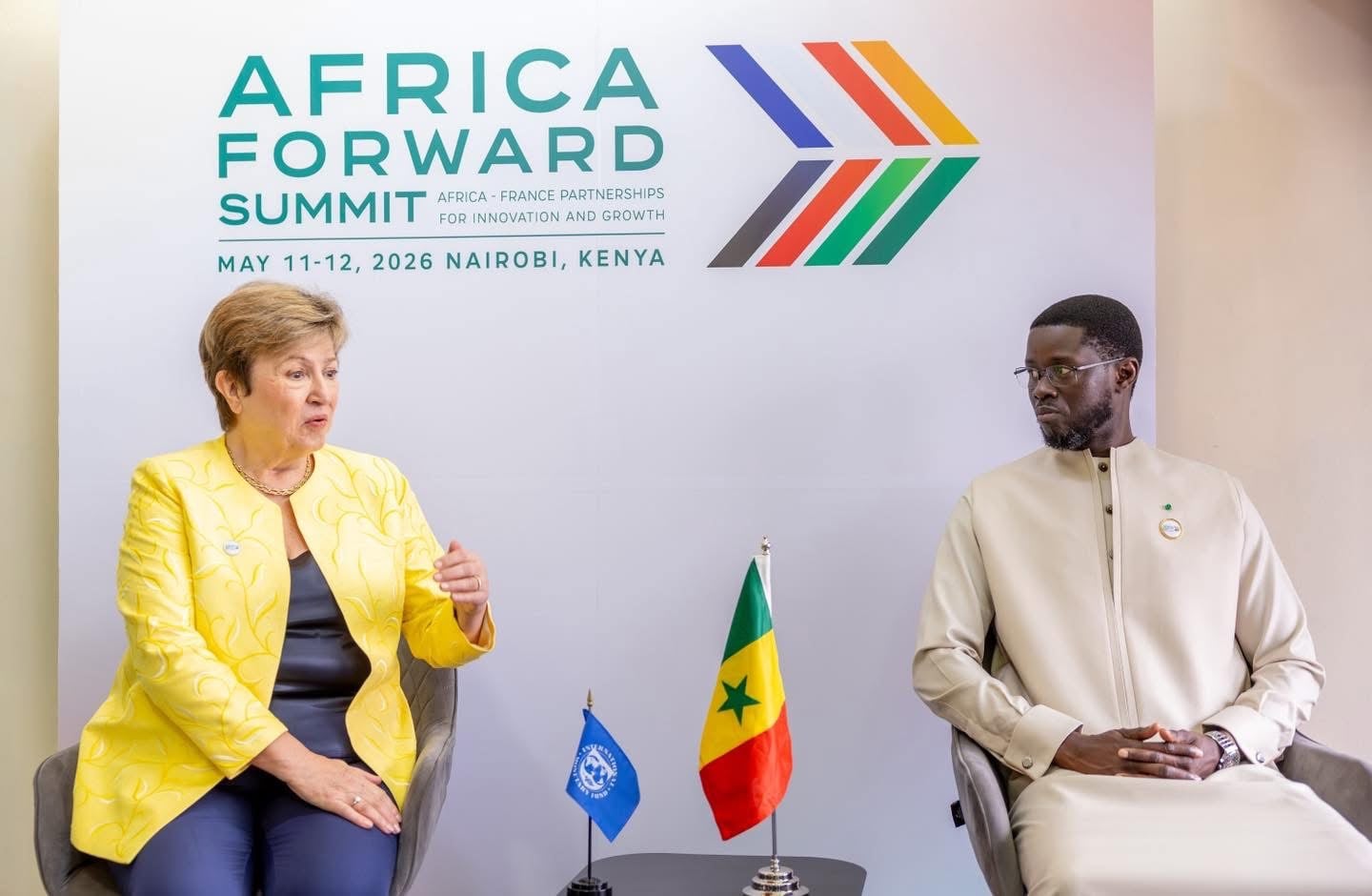
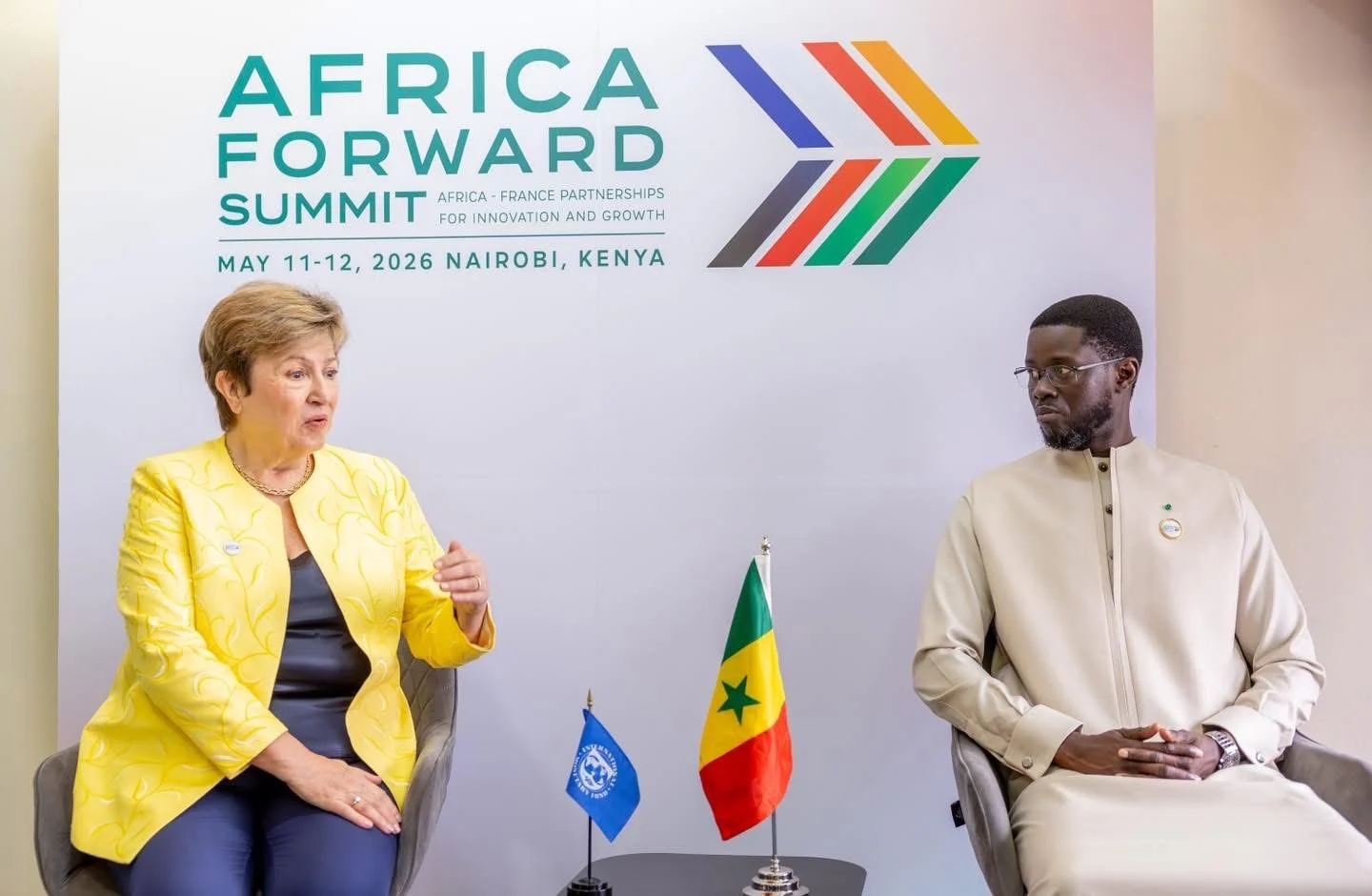
The Managing Director of the International Monetary Fund (IMF), Kristalina Georgieva, held a pivotal meeting with Senegalese President Bassirou Diomaye Faye to address pressing economic challenges, including debt sustainability and critical reforms. While the discussions signaled progress, the West African nation continues to await concrete developments in its financial program amid a volatile global economic landscape.
Key economic priorities take center stage
During their engagement, Georgieva and President Faye explored several economic priorities, with debt management and transparency emerging as focal points. The IMF chief emphasized the importance of structural reforms and sustainable fiscal policies to bolster Senegal’s economic resilience.
« We discussed reform priorities, debt management, and the critical role of transparency in Senegal’s economic trajectory, » Georgieva stated in a post-meeting statement on X (formerly Twitter).
IMF’s commitment to Senegal under scrutiny
While the IMF reaffirmed its support for Senegal, no definitive announcements were made regarding the new financial program requested by Dakar over the past two years. The delay in negotiations has raised questions about the institution’s next steps.
Earlier this year, IMF Africa Director Abebe Aemro Selassie highlighted the challenges posed by the current financial market instability. He noted that assessing Senegal’s debt sustainability requires careful consideration of economic outlooks and market access conditions.
« In this unpredictable environment, where countries face limited market access, thorough analysis and strategic foresight are essential. Rushing into irreversible decisions is not the optimal path, » Selassie remarked.
Building a credible economic strategy
The IMF underscored the need for Senegal to develop a robust, credible economic strategy—one that balances fiscal sustainability with social welfare. The institution has chosen to allow the Senegalese government additional time to refine its approach, ensuring policies avoid excessive austerity measures.
« We believe in giving the government space to craft a strategy that is both financially viable and socially responsible. This process demands careful deliberation, and it is ultimately the government’s responsibility to lead these discussions, » Selassie added.
The IMF also acknowledged the significant debt burden inherited by Senegal’s new leadership, stressing that the priority now lies in identifying the most effective measures to address this economic reality.