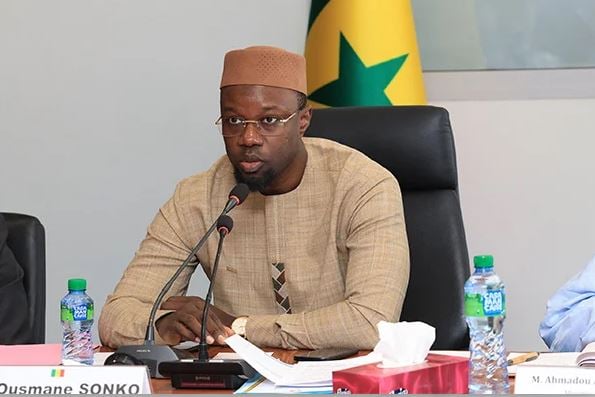
During a pivotal meeting of Senegal’s Council of Ministers, Prime Minister Ousmane Sonko rolled out a sweeping agenda to transform the nation’s economic landscape. The reforms target three critical sectors: revitalizing public markets, bolstering agricultural output, and accelerating the digital transformation of government services. With a substantial investment package of 57.5 billion FCFA earmarked for implementation over the next four years, the government is positioning itself to tackle long-standing structural challenges head-on.
Revitalizing market infrastructure through comprehensive restructuring
Senegal’s market system has long grappled with outdated infrastructure and safety hazards, many of which date back to the 1970s. The Prime Minister highlighted the alarming frequency of market fires—53 incidents between 2013 and 2024—as a clear indicator of the sector’s vulnerabilities. To address these issues, the government is launching the Market Modernization and Management Program (PROMOGEM), which outlines a bold five-year strategy to overhaul 528 existing markets while constructing 67 new, state-of-the-art facilities.
The reforms extend beyond physical upgrades. The Prime Minister emphasized the need for institutional strengthening within PROMOGEM, advocating for greater administrative and financial autonomy to enhance operational efficiency. This strategic pivot is backed by a 57.5 billion FCFA investment, drawn from the national public investment plan, signaling a decisive commitment to sustainable market development.
Strengthening agricultural resilience through transparency and technology
With preparations underway for the 2026-2027 farming season, the government is prioritizing transparency and digital innovation to boost agricultural productivity. While acknowledging progress in certified seed and fertilizer production—thanks to contributions from the Institut Sénégalais de Recherches Agricoles (ISRA) and Centres d’Expérimentation et de Production de Semences (ICS)—critical gaps remain. Key challenges include incomplete seed autonomy, uneven distribution of agricultural inputs, limited access to farm credit, and insufficient storage infrastructure.
The Prime Minister underscored the urgency of scaling up digital solutions already being tested in pilot zones such as Tivaouane and Nioro. He called for standardized pricing mechanisms for agricultural inputs and a nationwide distribution network to ensure equitable access for farmers. These measures aim to enhance efficiency, reduce waste, and ultimately drive food security.
Preventing flood risks ahead of the rainy season
As the rainy season approaches, the government is mobilizing ministries to mitigate flood risks through targeted interventions. Key priorities include clearing drainage systems, reinforcing riverbanks, and deploying emergency response teams. The Prime Minister has instructed local authorities to update communal emergency plans, strengthen early warning systems, and conduct a cross-ministerial simulation exercise before mid-June 2026. These proactive steps are designed to protect communities and safeguard critical infrastructure.
Accelerating the Senegal Connect Park project
The Senegal Connect Park, a flagship digital project, has reached 95% physical completion but faces financial and contractual hurdles that threaten its timely finalization. Recognizing its strategic importance for national digital sovereignty and economic growth, the Prime Minister has directed relevant agencies to finalize a realistic completion timeline and expedite negotiations with the African Development Bank (BAD) and West African Development Bank (BOAD). The government is also reviewing concession terms to unblock the project and ensure its full operationalization without further delays.