VOS QUESTIONS – Sénégal : à qui profitera la rupture politique?
Publié le :
This report examines pressing global developments, including significant political shifts in Senegal, Russia’s deployment of a formidable missile in Ukraine, the confirmed legal verdict against Succès Masra in Chad, and the ongoing debate surrounding the European Union’s increasing imports of Russian gas.
Senegal: who benefits from the political rupture?
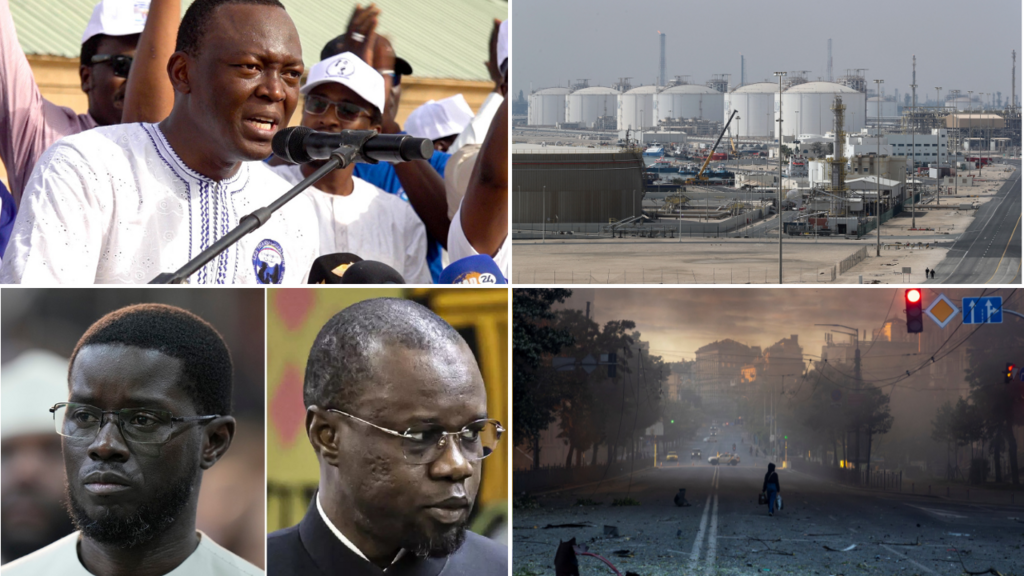
Following months of escalating tensions within the Senegalese executive, President Bassirou Diomaye Faye has removed Ousmane Sonko from his position. With Pastef, led by the now former Prime Minister, holding an overwhelming majority in the National Assembly, the Head of State faces the challenge of navigating this new political landscape. The critical question remains: who, between Diomaye and Sonko, stands to gain power from this significant executive split?
War in Ukraine: what do we know about the Orechnik missile, described as “invincible” by Putin?
Over the weekend, Russia executed a massive bombardment of Ukraine, deploying nearly 600 drones and 90 missiles, including the advanced Orechnik. This hypersonic ballistic missile is widely regarded as the most sophisticated in the Russian arsenal, believed to be virtually impossible to intercept with current defense systems. Its deployment raises serious concerns across Europe, prompting an examination into whether its use is a mere show of force or a fundamental shift in the Kremlin’s offensive strategy.
Chad: is a presidential pardon for Succès Masra on the horizon?
Former Prime Minister Succès Masra, arrested a year ago in May 2025, has suffered another legal setback. The Supreme Court in N’Djamena has rejected the appeal filed by the opposition leader’s legal team, thereby confirming his 20-year prison sentence. This conviction stems from charges including “disseminating racist and xenophobic messages,” “criminal association,” and “complicity in murder.” The question now is whether any further legal avenues remain open. Claudia Hoinathy, Vice-President for female engagement and leadership within Les Transformateurs party, has publicly expressed hope for a “political solution,” such as a presidential pardon or amnesty. The viability of these options at this juncture is under close scrutiny.
Russian gas: why do EU imports continue despite sanctions?
Europe’s struggle to reduce its dependence on Russian gas persists. During the first quarter, the European Union’s imports of Russian liquefied natural gas (LNG) surged by 16%, reaching a new record since the onset of the war in Ukraine in 2022. Notably, France imported more Russian LNG than any other European nation. This raises crucial questions: how can this increase be explained given the existing sanctions and political commitments to diminish Europe’s reliance? Furthermore, with the 27 member states aiming for a complete ban on Russian gas by autumn 2027, the credibility of this deadline is now being seriously questioned.