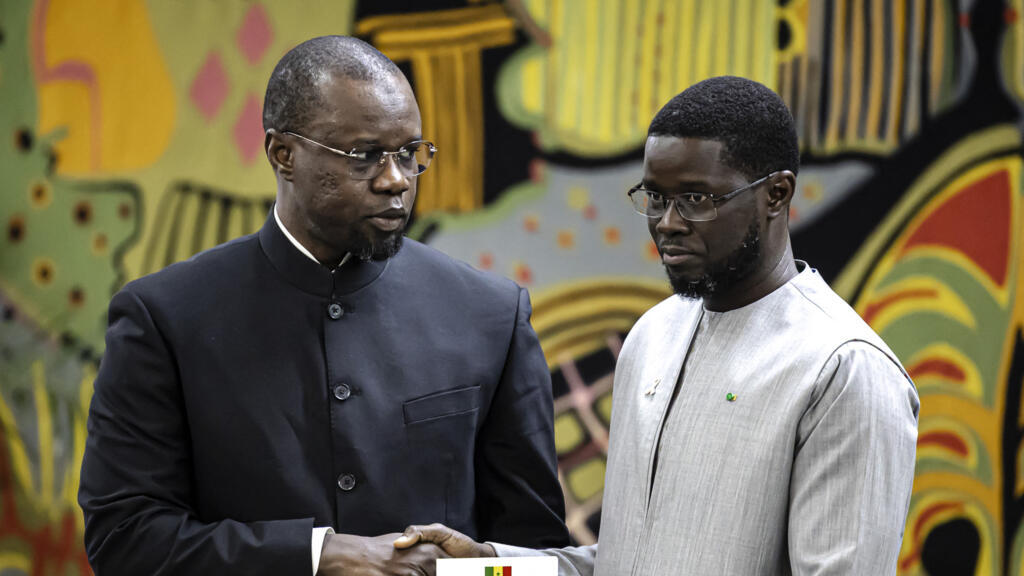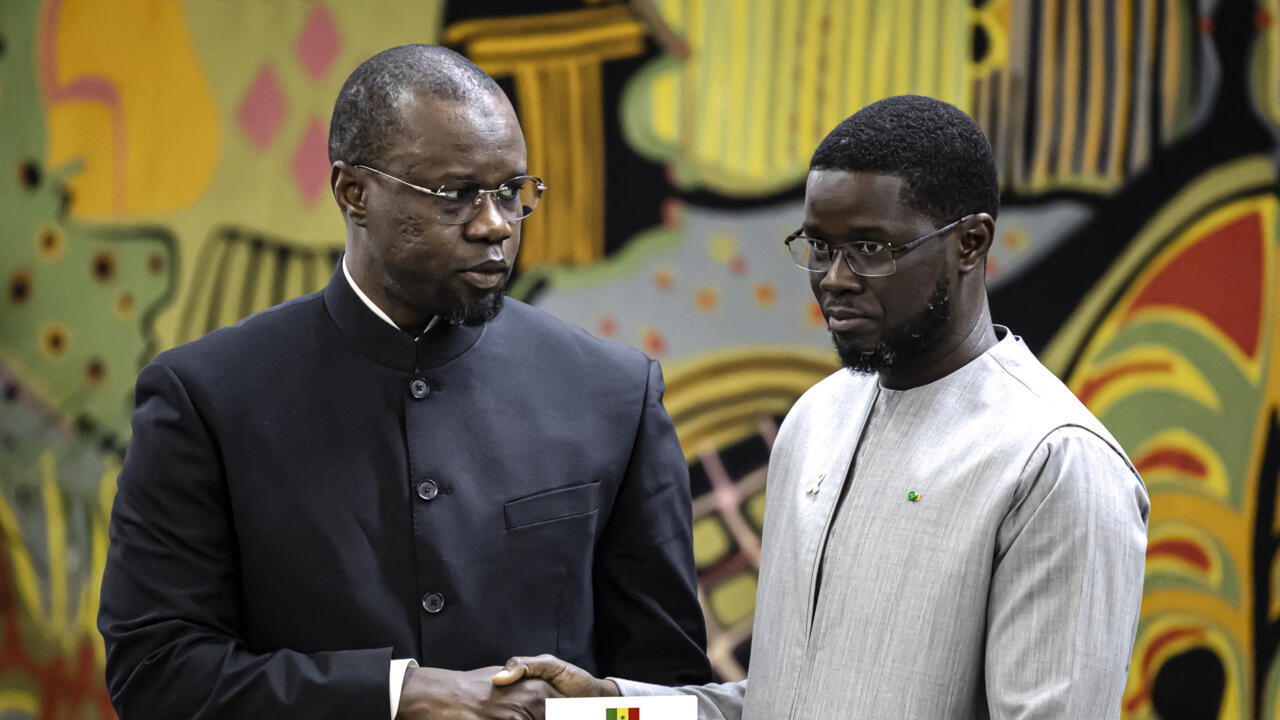
After just two years in office, the Diomaye-Sonko partnership has collapsed. President Bassirou Diomaye Faye has removed Ousmane Sonko from the Prime Minister’s position. Now serving as President of the National Assembly, Sonko secured a landslide re-election as leader of the Pastef party, which holds a parliamentary majority but remains excluded from government. How did this political rupture occur? Will the president and assembly leader manage to coexist under these strained circumstances? Could these escalating tensions overshadow the pressing needs of the Senegalese people?
From allies to adversaries
The once-united front between President Faye and former Prime Minister Sonko has fractured, leaving observers to question the future of governance in Senegal. Sonko, now a dominant political figure in the legislature, commands significant influence over national policy despite his absence from the executive branch. His return to the Pastef leadership signals a strengthening of his base, but it also underscores the widening rift between the presidency and parliament.
This divide raises critical questions about the viability of their cohabitation. With Sonko’s party holding the majority yet remaining sidelined in government, the risk of legislative gridlock looms large. Can the president’s administration navigate this power struggle while maintaining legislative support, or will political infighting derail national priorities?
Impact on governance and public priorities
The political schism between the executive and legislative branches threatens to divert attention from Senegal‘s most urgent challenges. Economic recovery, social welfare, and security remain top concerns for citizens, yet the escalating tensions risk delaying or derailing essential reforms. As the government and opposition navigate this turbulent period, the question arises: will the nation’s development agenda take a backseat to political maneuvering?
With Sonko’s party controlling parliament but excluded from power, the potential for legislative obstructionism grows. The president’s ability to implement policies may hinge on his capacity to reconcile with the assembly leader or find alternative alliances. Failure to do so could leave key initiatives in limbo, further straining the government’s credibility.
Key figures at the center of the crisis
- Abdoulaye Tine, Minister Counselor and Spokesperson for the Presidency, representing the government’s stance.
- Amadou Ba, Former Culture Minister and Pastef Secretary for Communication, articulating the opposition’s perspective.
- Babacar Ndiaye, Political Analyst and Director of Research at Wathi think tank, providing expert insights into the unfolding dynamics.