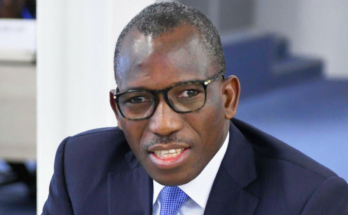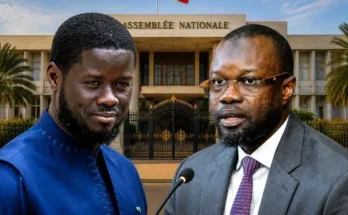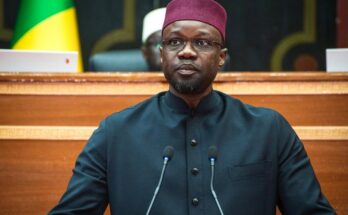
The relationship between Senegalese President Bassirou Diomaye Faye and Prime Minister Ousmane Sonko has become a focal point for opposition scrutiny. Abdou Mbow, a prominent figure in the Takku Wallu parliamentary group and member of the former president Macky Sall’s Alliance for the Republic (APR), has publicly framed the situation as a political standoff coupled with an institutional crisis. His assessment highlights growing contradictions in the executive branch’s messaging over recent weeks.
An executive partnership under strain
Elected together on a shared platform of systemic change in March 2024, Faye and Sonko were initially hailed as a dynamic duo by the Pastef party. The fluid division of responsibilities between the presidency and prime minister’s office—once presented as seamless—now shows visible cracks. Disagreements have surfaced over reform implementation, handling of judicial cases from the previous regime, and government communications strategy.
Mbow’s interpretation goes beyond mere political noise. He perceives a latent power struggle between two competing centers of authority, each pushing its own agenda. The debate over the de facto political primacy of the Prime Minister—leader of Pastef and victorious head of the November 2024 legislative list—against the President’s constitutional monopoly over supreme executive power, lies at the heart of this dispute.
Opposition seizes on executive discord
The APR, founded by former President Macky Sall, is leveraging these tensions to regain political relevance. After losing both the presidential and early legislative elections, the party is reframing itself as a guardian of institutional integrity. The Takku Wallu group, the main opposition bloc in the National Assembly, has intensified public statements to recast internal executive divisions as a systemic risk.
By invoking an institutional crisis, Abdou Mbow shifts the narrative from partisan politics to national stability. This tactic exposes potential weaknesses in public decision-making at a time when critical projects—such as renegotiating mining and oil contracts, restoring fiscal health, and advancing the Senegal 2050 Agenda—demand unwavering coherence between the presidency and prime minister’s office.
Dyarchy tested by economic pressures
The fiscal environment amplifies the consequences of any executive fracture. Recent audits ordered by the new administration revealed public debt figures exceeding earlier official estimates, prompting tense negotiations with the International Monetary Fund. Managing this debt burden, alongside potential revisions to hydrocarbon fiscal frameworks, requires a unified policy direction.
Yet, conflicting signals have emerged. Ousmane Sonko’s assertive rhetoric toward economic, media, and judicial actors often contrasts with President Faye’s more measured institutional posture. Analysts observe that this previously complementary division of roles is now becoming a political liability in the eyes of the opposition.
Neither the presidency nor the prime minister’s office has acknowledged an open rift. The executive maintains a united front in cabinet meetings and public appearances. Mbow’s remarks thus represent part of a narrative battle—where the APR seeks to embed the idea of a weakened executive partnership in public perception, while Pastef insists on a coordinated and complementary leadership model.
The stakes for Dakar extend far beyond domestic politics. The ability of this executive duo to dispel uncertainty will directly influence investor confidence and international donor relations—especially as Senegal navigates new financing agreements and structures revenue streams from the GTA and Sangomar oil fields.