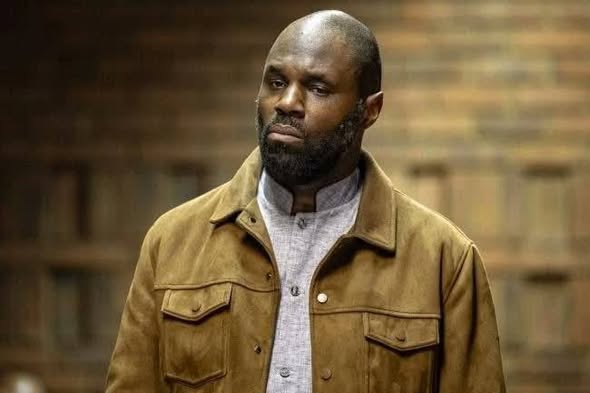
The imminent verdict in Kémi Séba’s case—currently awaiting trial in South Africa after his arrest in April—has reignited debates about the true essence of modern panafricanism. With 1.5 million social media followers, the Béninois activist’s trial spotlights a critical question: is Séba truly a torchbearer of panafrican ideals, or merely a controversial figure reshaping the movement’s narrative?
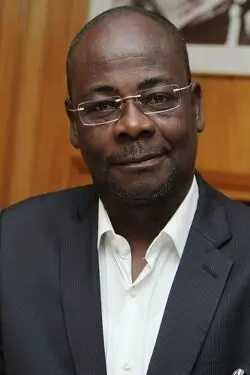
Kémi Séba, whose real name is Stellio Gilles Robert Capo Chichi, holds Béninois citizenship and a Nigerian diplomatic passport. His recent arrest in South Africa—alongside his 18-year-old son and François Van der Merwe, a white South African apartheid nostalgiaist—raises eyebrows. Séba, founder of the Urgences Panafricanistes NGO, is infamous for his fiery anti-French rhetoric, opposition to the franc CFA, and antisemitic remarks, which led to the revocation of his French nationality. Authorities in the Bénin charge him with “apologia for state security crimes and incitement to rebellion” for a video endorsing soldiers involved in a failed December coup, prompting an international arrest warrant.
Russia’s propaganda allies and Sahel dictatorships
Kémi Séba, Franklin Nyamsi, and Nathalie Yamb dominate Francophone Africa’s panafricanist discourse, spearheading opposition to French influence. Yet their alignment with Russian propaganda and support for the Alliance of Sahel States (AES)—led by Mali’s Assimi Goïta, Burkina Faso’s Ibrahim Traoré, and Niger’s Abdourahamane Tiani—paints a troubling picture. Does this new panafricanism entail replacing French domination with Russian control while endorsing undemocratic regimes that suppress freedoms?
To understand this shift, we must revisit panafricanism’s origins. Born in early 20th-century Black American and Caribbean intellectual circles, it evolved into a driving force for anticolonial struggles on the continent. Icons like Kwame Nkrumah of Ghana, Sékou Touré of Guinea, and Patrice Lumumba of Congo galvanized the movement. The Fédération des Étudiants d’Afrique Noire en France (FEANF), founded in 1950, became a hub for decolonization advocacy, despite facing French repression through reduced scholarships and surveillance. The FEANF was dissolved in 1980.
from unity to fragmentation
The independence of Ghana in 1957 and most African nations by 1960 was hailed as panafricanism’s triumph. The creation of the Organisation de l’Unité Africaine (OUA) in 1963 marked a step toward continental unity, but micro-nationalisms soon fractured progress. Conflicts like Eritrea’s secession, Sudan’s division, and Biafra’s attempted breakaway exposed the movement’s fragility. In 2002, Libyan leader Muammar Gaddafi attempted to revive the dream of a united Africa by transforming the OUA into the African Union (AU), but the effort stalled. The AU launched the New Partnership for Africa’s Development (NEPAD) in 2001 to accelerate integration, yet the initiative faded into obscurity.
the illusion of panafricanism today
Today, panafricanism is often a political slogan rather than a lived reality. Leaders across Africa—from Côte d’Ivoire’s Laurent Gbagbo, who founded the Parti des Peuples Africains-Côte d’Ivoire (PPA-CI), to Senegal’s Parti des Patriotes Africains du Sénégal pour le Travail, l’Éthique et la Fraternité (PASTEF)—proclaim allegiance to the movement. Yet actions belie these claims: African nations either wage internal conflicts (as in the Horn of Africa or the Great Lakes region) or turn on each other, as seen in the Sahel’s tensions with the Communauté Économique des États de l’Afrique de l’Ouest (CEDEAO). Meanwhile, countries like South Africa routinely target African migrants, undermining the movement’s core principles.
a diluted movement
The loudest panafricanist voices today—Kémi Séba, Franklin Nyamsi, and Nathalie Yamb—are Francophones who claim persecution for their anti-Western stances. Séba, stripped of his French citizenship, and Nyamsi, under scrutiny from Paris, alongside Yamb, sanctioned by the European Union, argue they face oppression for their activism. But where does panafricanism stand when these figures openly serve Russian interests or align with authoritarian regimes that jail dissenters? Séba himself, in a leaked phone call, accused Nyamsi and Yamb of being opportunists in the pay of Faure Gnassingbé, Togo’s president. Séba’s alleged nostalgia for his lost French nationality further exposes the contradictions in this so-called panafricanism. It is, at best, a distorted echo of the movement’s founding ideals.
As global power dynamics shift, Africa’s survival may hinge on reclaiming panafricanism’s original vision: unity, self-determination, and collective progress. Without this, the movement risks becoming a hollow slogan exploited by political opportunists.