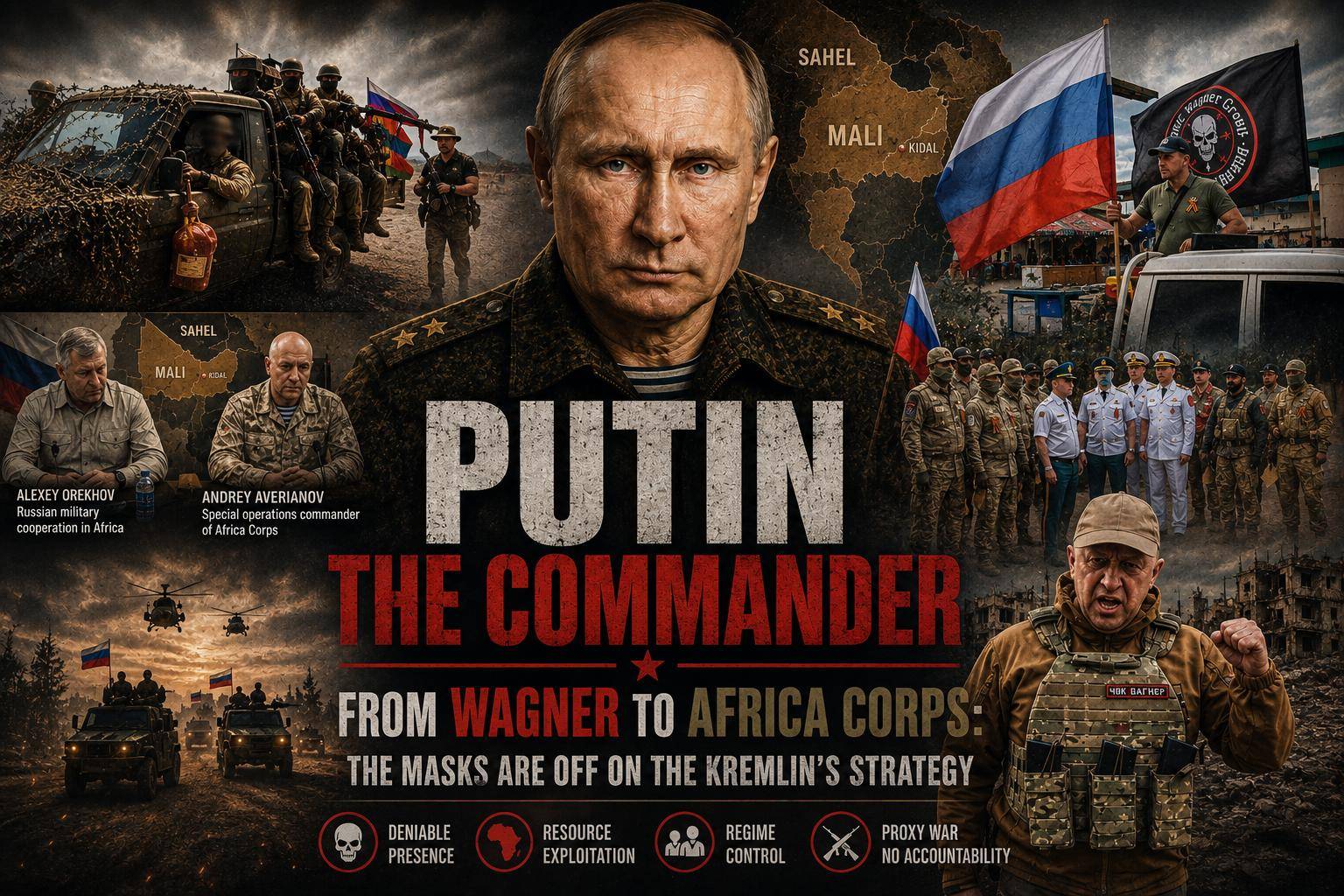
The once-unstoppable expansion of Russian influence across Africa, driven by mercenary forces, disinformation campaigns, and anti-Western populism, now faces an unmistakable reversal. What began as a decade-long push to reshape the continent’s security landscape has faltered under the weight of unmet promises, military setbacks, and growing public disillusionment. The notion of a waning Russian imperialism in Africa is no longer speculative—it is unfolding in real time.
The hollow promise of Russian security guarantees
During the mid-2010s, as traditional powers like France receded from the Sahel and other regions, Russia positioned itself as the continent’s new security guarantor. Through the Wagner Group—later rebranded as Africa Corps—Moscow marketed a no-questions-asked approach to military support, free from the constraints of human rights oversight. Cities from Bamako to Bangui, Ouagadougou to Niamey, became key battlegrounds in this geopolitical gambit.
Yet the results have been far from transformative. The security situation in the Sahel has not merely stagnated; it has deteriorated sharply. The illusion of Russian invincibility was shattered in brutal fashion during the Tinzawatane border clash, where dozens of Russian mercenaries and Malian soldiers perished. The message was clear: Moscow’s presence was not about peacekeeping, but about securing access to mineral wealth—gold, diamonds, uranium—in exchange for political cover.
Three structural factors driving Russia’s retreat
A closer examination reveals three fundamental weaknesses undermining Russia’s African strategy:
1. The Ukrainian quagmire
The relentless war in Ukraine has drained Russia’s resources—both financial and military. Elite troops previously deployed in Africa have been redeployed to the Eastern Front, while heavy weaponry once shipped to the continent is now reserved for domestic wartime needs. The Kremlin’s ability to sustain parallel military operations across two continents has evaporated.
2. The absence of an economic model
Russia’s strengths lie in military force and narrative power, not economic development. With a GDP comparable to that of Spain, it cannot match the European Union’s development aid or China’s infrastructure investment capacity. Once the initial political honeymoon fades, African juntas and governments realize that emergency wheat shipments and social media disinformation campaigns do not feed populations or build roads.
3. The rise of African nationalism
Russia’s rhetoric of “second decolonization” has lost its appeal. The continent’s digitally savvy youth, increasingly assertive in their demands for sovereignty, reject foreign domination—whether under the French tricolor or the Russian tricolor. The perceived shift from one foreign flag to another is no longer seen as liberation, but as a cynical sleight of hand.
Shifting alliances and a multipolar future
The decline of Russian influence does not imply a return to Western dominance in Africa. Instead, the continent is entering a more pragmatic phase, where partnerships are evaluated on tangible benefits rather than ideological alignment.
China continues to expand its economic footprint, prioritizing long-term infrastructure projects over the Kremlin’s boastful military posturing. Meanwhile, Turkey and the United Arab Emirates are emerging as alternative partners, offering advanced drone technology and financial investments without the geopolitical baggage that accompanies Moscow’s involvement.
The end of geopolitical shortcuts
Russia’s imperial adventure in Africa, though intense, has proven ephemeral. It has underscored a critical truth: influence cannot be sustained through mercenaries and propaganda alone. For African leaders, the lesson is unequivocal—security and prosperity cannot be outsourced to foreign actors, regardless of their origin. The fading of Russia’s grip may signal the beginning of an Africa that seeks not masters, but genuine partners.