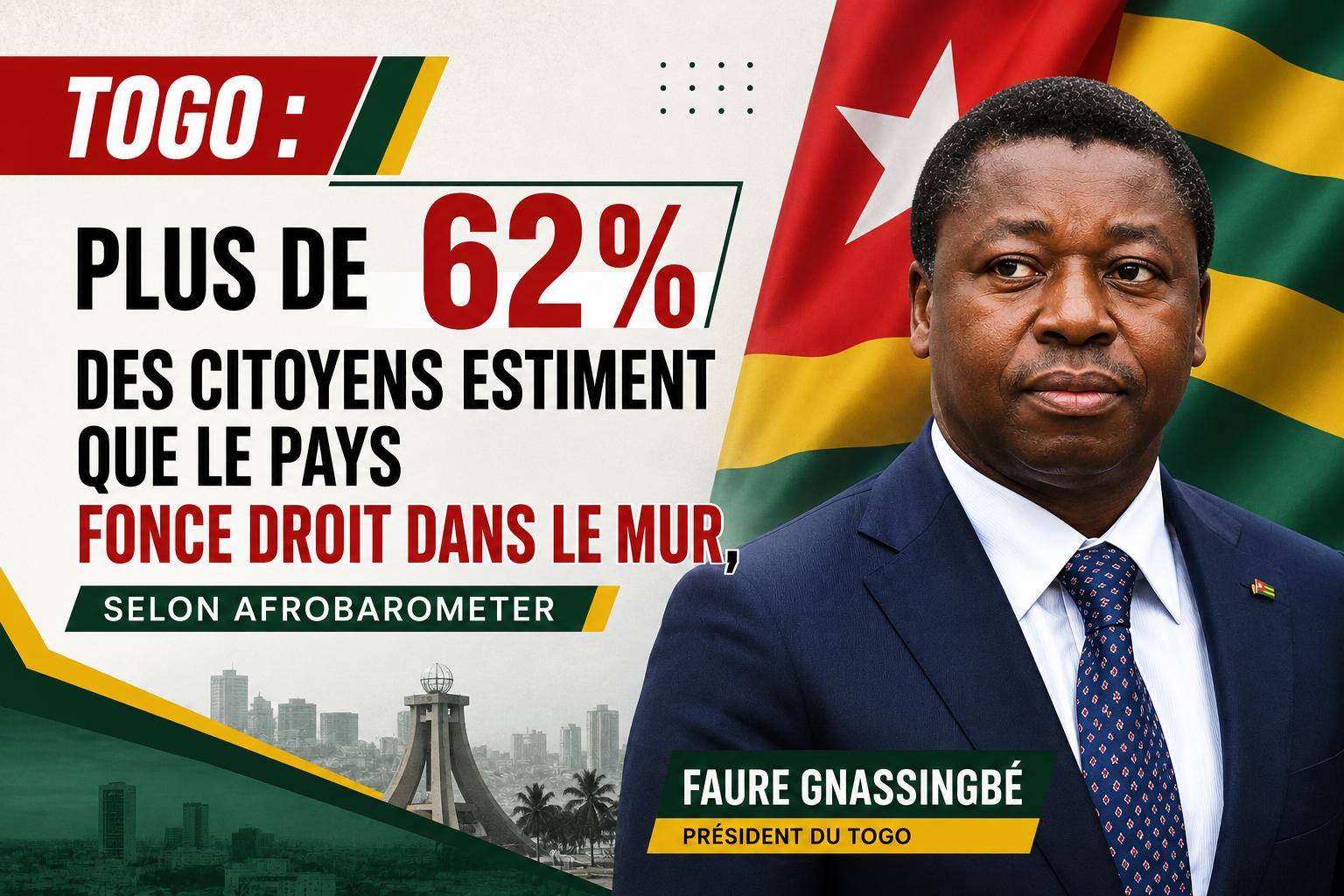
Despite official declarations praising the National Development Plan and stable macroeconomic growth, ground realities in Togo tell a different story. Recent Afrobarometer findings expose a nation grappling with deepening despair, where over 62% of citizens believe the country is heading in the wrong direction under President Faure Gnassingbé’s leadership.
Growing disillusionment among Togolese citizens
The latest survey results have delivered a harsh verdict to policymakers in Lomé. A staggering six out of ten Togolese now view their nation’s trajectory as bleak, marking an 11-point surge in pessimism since 2021. This widespread discontent isn’t fleeting—it reflects profound frustration with economic management that 63% of citizens now rate as either poor or very poor. The sentiment stems from relentless erosion of purchasing power and the absence of opportunities for the country’s youthful, energetic population.
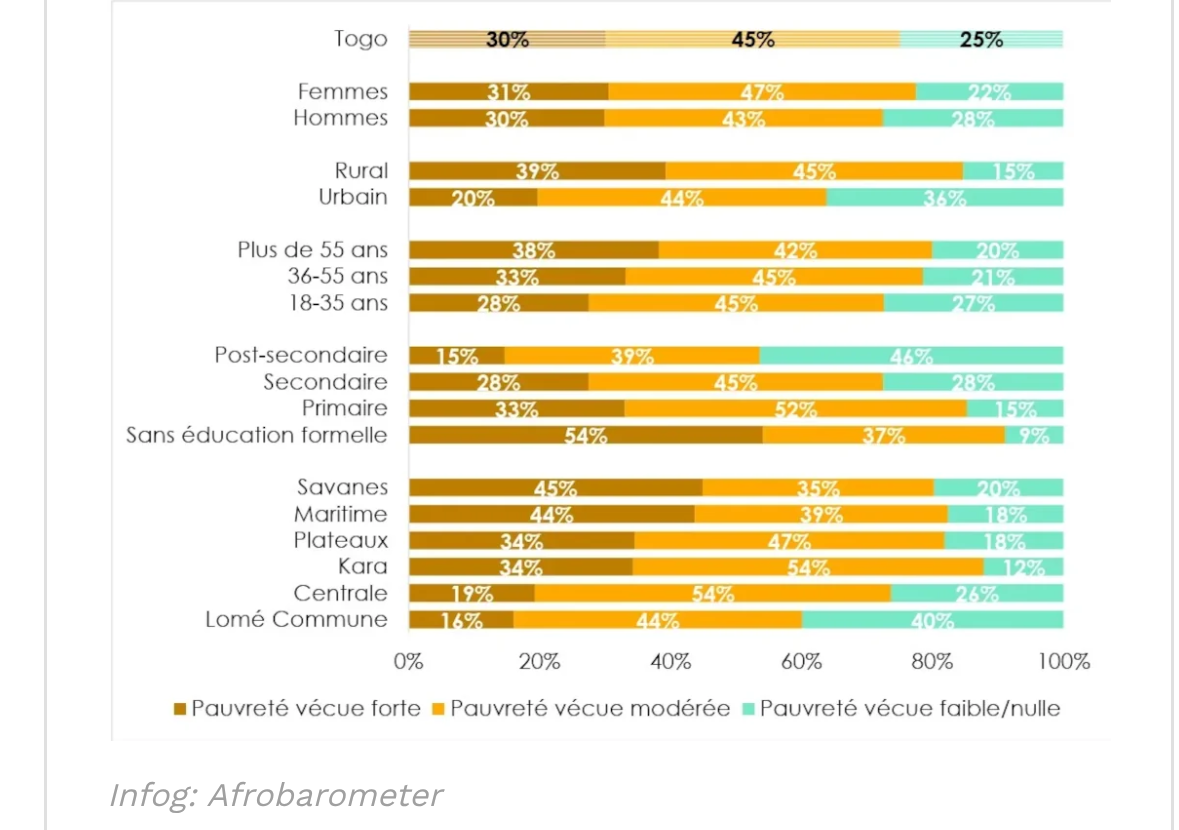
Beyond the government’s polished GDP statistics, the survey delved into the harsh realities of poverty that families confront daily. The findings are stark: most respondents describe their living conditions as subpar, while more than half report their financial situations have worsened over the past year. Currently, three-quarters of Togolese live in moderate to severe poverty, proving that economic growth benefits rarely trickle down to average citizens. For most, survival has become a daily struggle marked by shortages of cash, basic healthcare, and even clean drinking water.
Uneven poverty: the case of Kara region
The study also uncovers glaring territorial disparities in poverty levels. Contrary to expectations, the Kara region—a historical stronghold of the ruling elite—emerges as the nation’s poverty hotspot, with 88% of its population experiencing severe hardship. This revelation undermines the government’s claims of balanced regional development. Meanwhile, women and rural residents remain the hardest hit, as education—once a pathway to stability—no longer guarantees a decent livelihood in a job market riddled with favoritism and scarcity.
Systemic failures and widening inequality
The chasm between Togo’s political elite and ordinary citizens has never been more pronounced. While a privileged minority flaunts ostentatious wealth, communities outside the capital face crippling deprivation. Critics argue that the regime has prioritized grandiose infrastructure projects over tangible investments in human capital. The Afrobarometer data paints a society on the brink, where institutional trust erodes as fundamental rights slip further out of reach.
The time for cosmetic economic indicators has passed. When a majority of a nation’s people believe their country is veering off course, it signals a fundamental crisis of governance. The so-called Togolese economic miracle rings hollow for millions struggling at the base of the pyramid. Without a radical shift toward inclusive policies that place people first, Togo risks sinking deeper into instability. The message from citizens is clear: they are weary of mere survival. The question remains whether leaders in Lomé will heed this cry for change.