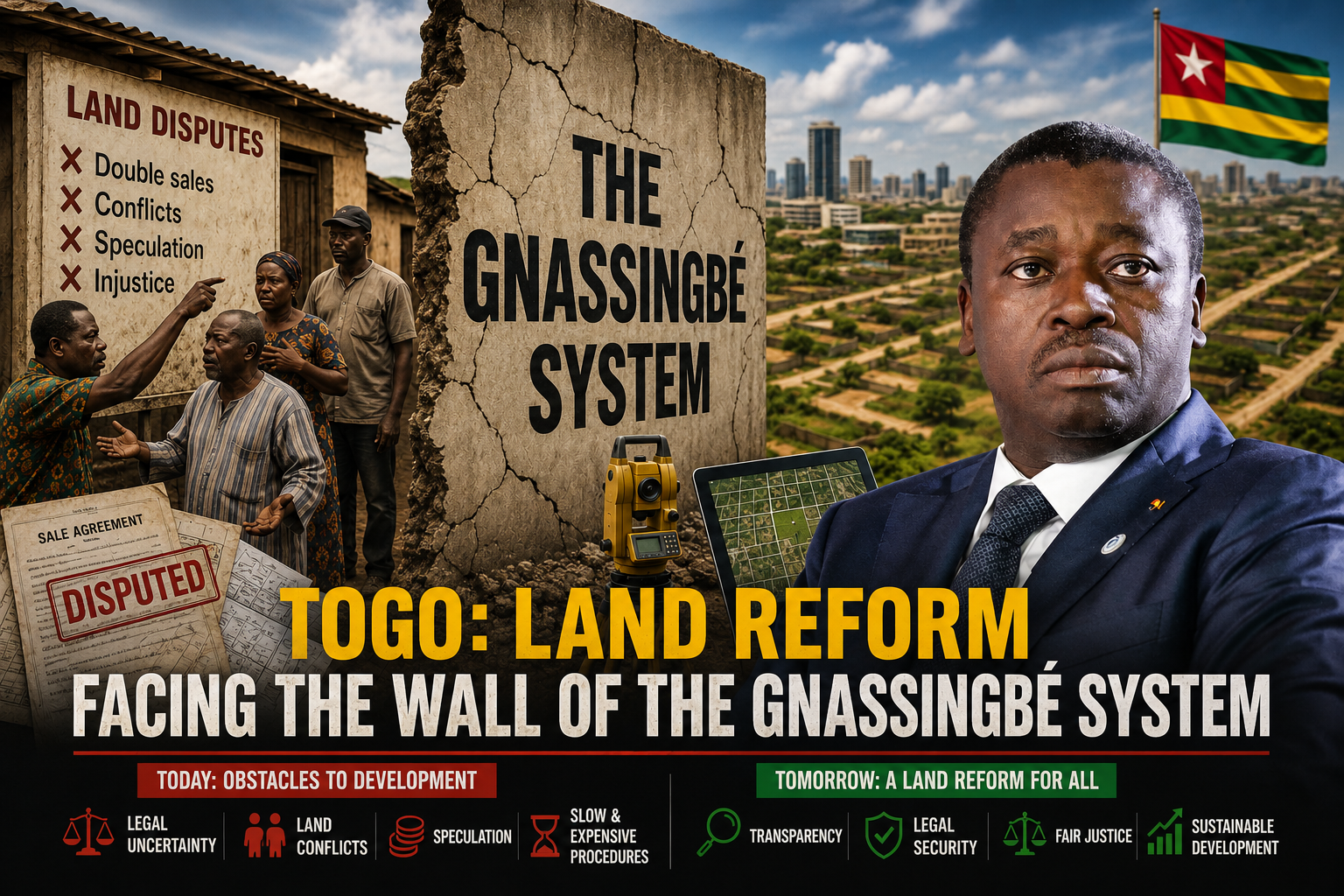
Despite six decades of inconsistent land governance, Togolese authorities are advancing a bold vision to position the land sector as a cornerstone of economic advancement. Yet, this undertaking, though ambitious, faces formidable obstacles in its practical implementation. Observers caution that without addressing foundational structural flaws, this initiative may follow the fate of previous reforms announced but ultimately unfulfilled.
Persistent Disputes: The Core of Land Insecurity
The most pressing challenge lies in the persistent prevalence of land disputes, a recurring issue for Togolese citizens. These conflicts often stem from unethical practices such as duplicate sales, contested ownership claims, poor record-keeping, and opaque transaction processes. The inability to guarantee property rights through official documents like titles or deeds creates an environment of perpetual legal ambiguity. When a single parcel of land can be claimed by multiple parties, buyers face immense uncertainty, deterring investments, eroding personal savings, and turning land ownership into a high-risk financial endeavor.
The Administrative Quagmire: Obstacles to Access and Transparency
Administrative inefficiencies further exacerbate these issues. Lengthy, costly, and complex procedures hinder access to land information, disproportionately favoring individuals with financial means, connections, or advanced knowledge of the system. For meaningful reform to succeed, it must prioritize clear, verifiable documentation that allows every citizen to trace the historical and legal background of a parcel before making a purchase.
The Role of the Judiciary: Ensuring Fair and Timely Resolutions
Land disputes that languish in the judicial system for years do more than delay resolutions they destabilize families, block inheritances, and stall economic ventures. A fair and expeditious land justice system must function independently, without undue influence from social, political, or financial pressures. Without such a system, no administrative reform can yield meaningful, lasting change.
Political and Institutional Challenges: Navigating Vested Interests
The land sector is a complex web involving customary owners, families, intermediaries, surveyors, government agencies, local officials, and community leaders. When certain actors maintain close ties with influential political or economic networks, conflicts of interest and favoritism become entrenched. Genuine reform must aim to dismantle these systemic issues rather than perpetuate them under new pretenses.
The Impact of Speculation on Vulnerable Populations
In rapidly urbanizing areas, rising land values have spurred speculative practices, including land grabbing and multiple sales. Marginalized communities often bear the brunt of these practices, as they lack the resources or knowledge to navigate a market that increasingly treats land as a speculative asset rather than a shared heritage. This shift undermines the social fabric and exacerbates inequality.
Social Tensions: Resolving Inheritance and Community Disputes
Land disputes frequently extend beyond mere legal matters, igniting familial and intergenerational conflicts over inheritance or shared resources. As long as customary rights remain poorly integrated with modern legal frameworks, such tensions will persist. A robust reform should incorporate mediation mechanisms, conflict prevention strategies, and public education on legal rights and procedures.
Digital Transformation: A Tool, Not a Panacea
Digitization offers a promising avenue for reform, but it must not be reduced to a superficial administrative exercise. A dependable, user-friendly, and continuously updated land database could significantly reduce the risks of duplicate sales and streamline verification processes. However, digital solutions alone cannot resolve systemic issues if the underlying data is inaccurate, vulnerable to manipulation, or inaccessible to the broader population.
Demanding Accountability: The Path to Transparency
Transparency must extend to every aspect of land management. Clarity is needed on who allocates parcels, the criteria for allocation, oversight mechanisms for transactions, penalties for irregularities, and safeguards for citizens challenging administrative decisions. Without clear answers to these questions, skepticism will persist, and each new reform will be met with justified doubt.
The Economic Imperative: Land as a Catalyst for Growth
Secure land ownership fosters investment, enables businesses to thrive, allows banks to extend credit, and empowers the State to plan sustainable territorial development. Conversely, land insecurity immobilizes capital, inhibits project execution, and perpetuates an economy built on mistrust. The stakes are high, as the future of land governance in Togo extends far beyond property owners—it directly influences the nation’s ability to attract and retain investments.
The critical question is not whether Togo can implement another land reform, but whether it is prepared to embrace the transformative changes required to make it effective. A meaningful overhaul demands enhanced transparency, strict enforcement against fraudulent practices, a more efficient judicial system, rigorous administrative oversight, and heightened protection for vulnerable citizens.
Without unwavering political will to dismantle entrenched interests, uphold the rule of law, and ensure equitable justice in land matters, any new legislation or reform initiative risks becoming a hollow gesture. As long as narrow interests overshadow the principles of transparency and equality, land will continue to be a source of conflict rather than the catalyst for economic progress it is meant to be.