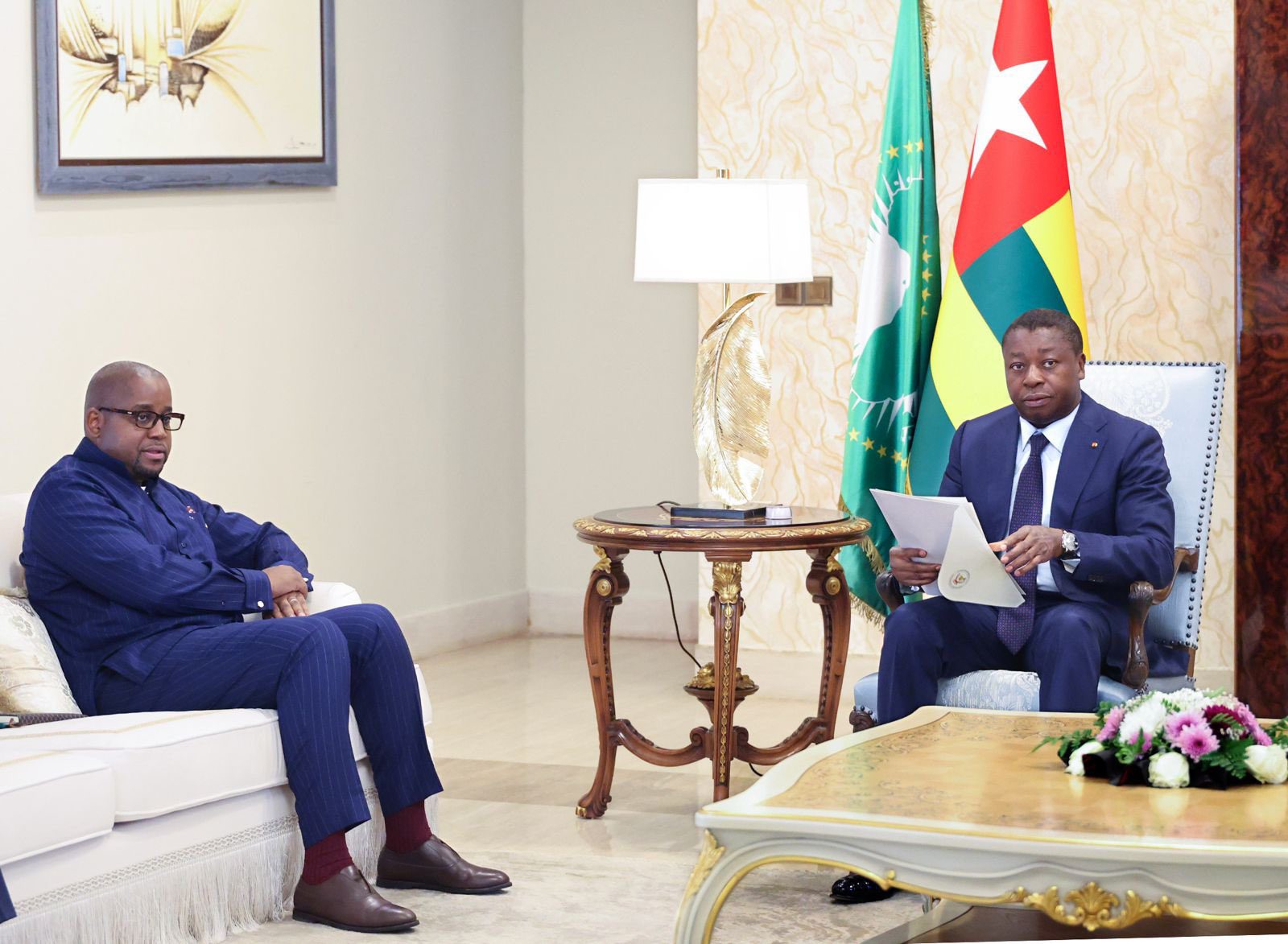
On Tuesday, September 29, 2026, the president of the Togolese Council, Faure Gnassingbé, granted an audience in Lomé to the Democratic Republic of Congo’s minister of regional integration, Floribert Anzuluni, who was on an official visit to Togo.
The Congolese envoy, who came to hand the Togolese Council president a written communication from his counterpart in the Democratic Republic of Congo (DRC), Félix-Antoine Tshisekedi Tshilombo, said after the meeting: “We were dispatched to the president of the Council to deliver a particular message from President Félix-Antoine Tshisekedi. This letter concerns the pacification process in eastern DRC, in which His Excellency Faure Gnassingbé plays a central role as African Union mediator.”
The Congolese minister took the opportunity to lay out a detailed overview of recent progress on programs to demobilize armed groups, a crucial step taken by Kinshasa to establish a lasting climate of peace in the country’s eastern part.
This audience fits squarely within Togo’s diplomatic commitments to support pacification and the restoration of lasting stability in the DRC and across the wider Great Lakes region.
The deeper logic behind Lomé’s quiet diplomatic role
Appointed African Union mediator in April 2025 to address this regional crisis, Faure Gnassingbé has since stepped up diplomatic exchanges and consultations with the various stakeholders. Under his stewardship, the Togolese capital has hosted several summits and strategic meetings bringing together African facilitators. These concerted efforts aim to advance political dialogue, consolidate ceasefire commitments and harmonize peace initiatives in favor of a definitive resolution of the conflict.
Why this meeting matters beyond the handshake
Behind the formalities of a diplomatic audience, the dynamics at play reveal how mediation networks operate in practice. The written message from Kinshasa is not merely a courtesy note; it signals that the DRC continues to view Lomé as a trusted channel for advancing its peace agenda. The fact that a senior minister was dispatched in person, rather than relying on routine diplomatic correspondence, underscores the weight Kinshasa attaches to Togo’s facilitation role.
What the demobilization update tells us
The minister’s briefing on disarmament and demobilization programs offers a window into the root causes that keep the peace process fragile. Without credible reintegration pathways for combatants, ceasefires remain reversible and armed groups can regroup. By sharing this assessment directly with the mediator, Kinshasa is effectively aligning its technical progress with the political track that Togo is stewarding.
The regional context shaping these efforts
Togo’s involvement is not happening in a vacuum. The Great Lakes region has long been shaped by overlapping conflicts, cross-border militias and competing external interests. Faure Gnassingbé’s mediation mandate therefore carries a structural challenge: harmonizing the many peace initiatives already on the table so they do not undermine one another. The consultations hosted in Lomé are designed to keep facilitators and stakeholders on the same page.
What to watch in the coming months
Observers following the process will look for signs that the written message from Kinshasa translates into concrete follow-up: renewed ceasefire monitoring, further demobilization milestones, and continued high-level engagement with the African Union mediator. The audience on September 29 did not produce a public roadmap, but it reinforced the pattern of sustained, behind-the-scenes diplomacy that has defined Togo’s approach since April 2025.