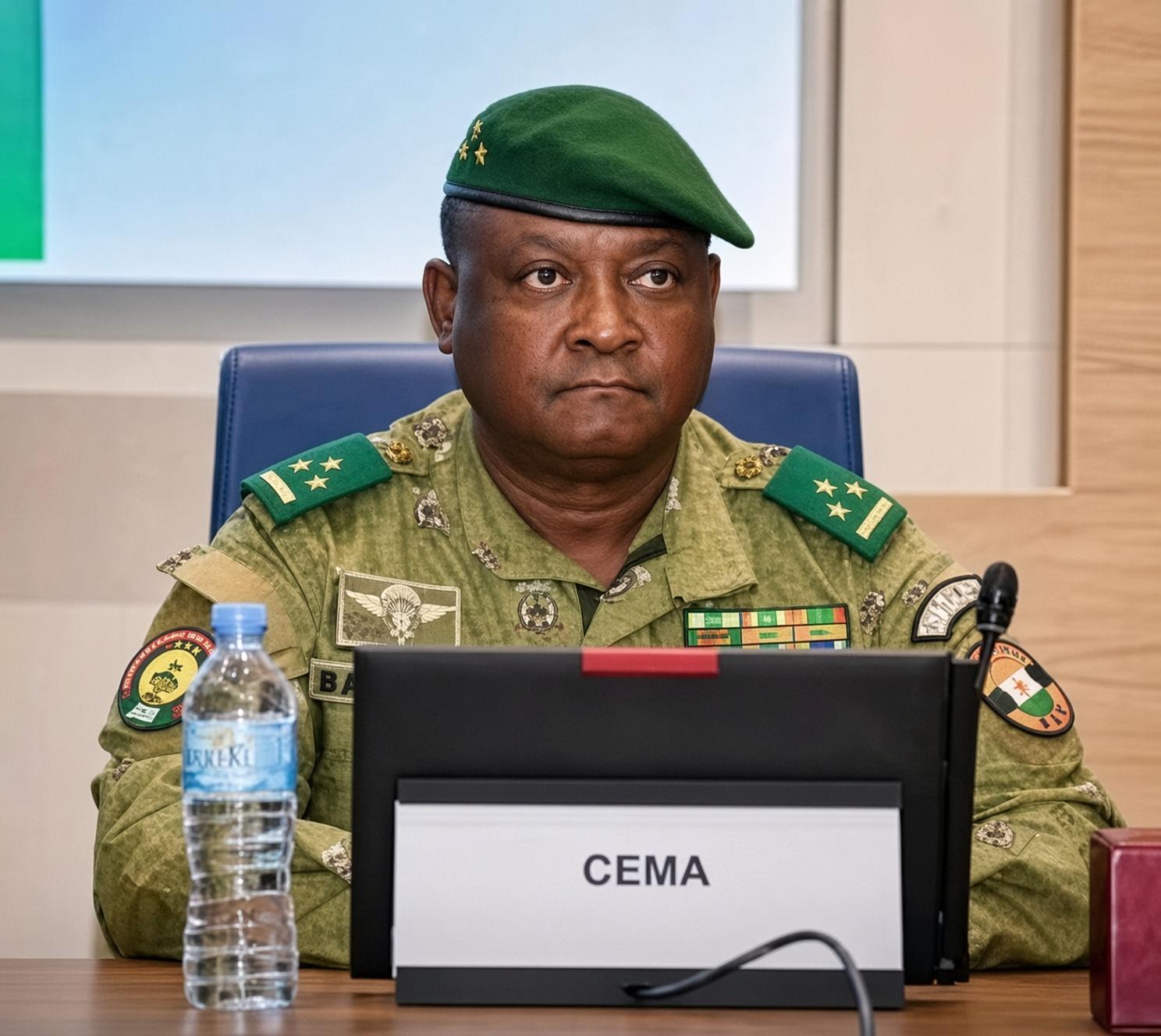
General Barmou’s abrupt fall marks a turning point in Niamey’s junta
Niger’s military leadership has executed a dramatic u-turn this week, removing one of its most trusted generals from power. Divisional General Moussa Salaou Barmou, who once stood as the backbone of the Niamey junta, now faces house arrest at his residence following his abrupt dismissal as Chief of Staff of the Nigerien Armed Forces on September 11, 2026. This decisive action comes barely two weeks after the failed mutiny at Niamey’s Air Base 101 during August 28-29.
From coup architect to political prisoner
General Barmou’s trajectory mirrors the volatility of the Nigerien junta. As a key figure in the 2023 coup that ousted President Mohamed Bazoum, he personified both the regime’s continuity and the ruthlessness of the special forces. Recent events at Air Base 101, however, shattered this once-solid facade.
The junta formally severed Barmou’s military career through presidential decree, accusing him of alleged involvement in the mutiny—but without presenting concrete evidence to date. The move aligns with the junta’s tightening security protocols, particularly after pro-coup factions within the military demonstrated unexpected resistance at the air base.
Niamey tightens its iron grip on security forces
The junta’s immediate response places General Abdourahamane Tiani firmly in control. Tiani replaced Barmou with Brigade General Mamane Sani Kiaou, a commander previously leading the Land Forces, signaling a deeper shift in the military’s power structure. This restructuring follows closely on the heels of joint operations between Nigerien forces and Russian Africa Corps units, which successfully quelled the mutiny.
The episode reveals something more unsettling: a military apparatus that appears increasingly fractured. Analysts warn that the junta’s aggressive purge strategy may be backfiring, creating a climate of fear rather than cohesion. In a political system built on military loyalty, eliminating senior officers risks undermining the very foundations of the regime.
A junta consuming its own leaders
The general’s rapid downfall has sent shockwaves through Niamey’s political circles. Rumors swirl around Barmou’s real motivations, but one fact remains clear: the junta has abandoned one of its original architects. This internal purge underscores a harsh reality of military regimes: alliances forged in coup culture often dissolve in power struggles.
Barmou’s case serves as a stark warning to other officers. In a political landscape where constitutional order has collapsed, loyalty yesterday offers no protection today. The junta’s zero-tolerance policy toward dissent suggests that no one—regardless of past service—is immune from suspicion.
What’s next for Niger’s military leadership?
With the dust settling on the mutiny, Niamey faces the challenge of restoring stability to an institution that appears dangerously divided. The replacement of key commanders, though intended to project strength, may instead expose deeper fissures within the armed forces.
Whether the junta can reverse its isolation, both domestically and regionally, remains uncertain. But one thing is clear: the purge of General Barmou marks a new chapter in a crisis that shows no sign of abating. For the military regime in Niamey, survival may now depend on how it navigates its own internal contradictions.
