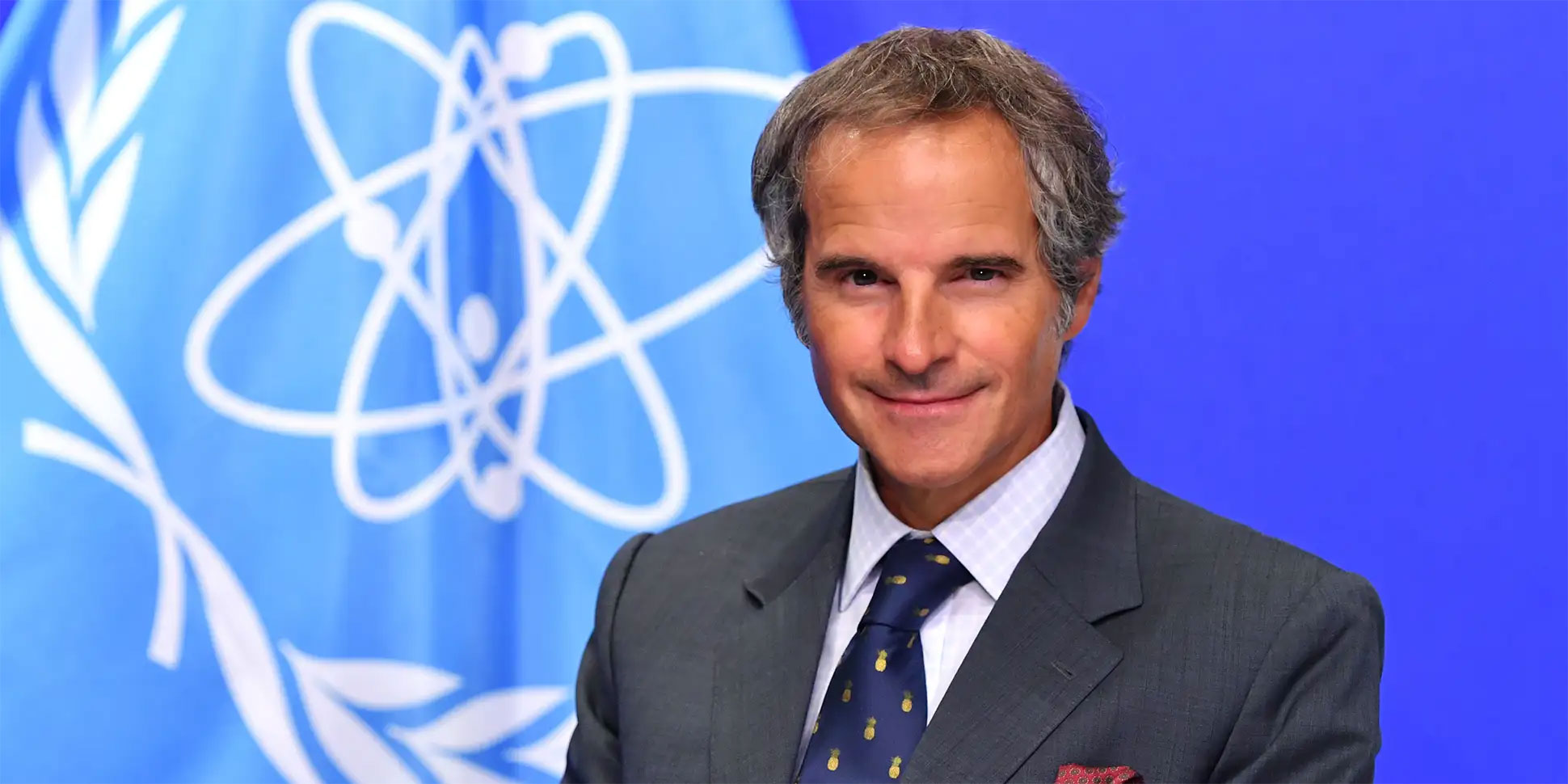
The Argentine government has formally requested Morocco’s support for Rafael Grossi’s candidacy to succeed António Guterres as United Nations Secretary-General. This diplomatic overture was made during the eighth session of the joint commission and sixth round of political consultations between Argentina and Morocco, held on June 11 in Buenos Aires.
Under President Javier Milei’s administration, Argentina is positioning Grossi—current Director General of the International Atomic Energy Agency (IAEA)—as a strong contender for the UN’s top role. The country now seeks to secure Morocco’s endorsement, recognizing the North African nation’s significant diplomatic influence across Africa and within multilateral forums. According to Argentina’s foreign ministry, Rabat’s backing could elevate Grossi’s candidacy beyond bilateral relations.
The Argentine delegation was led by Roberto Salafia, Under-Secretary for International Economic Negotiations and Integration, and Juan Manuel Navarro, Under-Secretary for Foreign Policy. On Morocco’s side, Fouad Yazourh, Director General of International Political Affairs at the Ministry of Foreign Affairs, headed the delegation. Discussions covered bilateral relations, global issues, and areas for expanded cooperation.
Buenos Aires has framed Grossi’s candidacy as «a diplomatic priority for Argentina within the multilateral system, backed by a leader experienced in navigating international crises, fostering dialogue among major powers, and mastering the mechanisms of global organizations.» This outreach to Morocco marks a strategic move to strengthen Argentina’s campaign in Africa, where securing votes in the UN Security Council and General Assembly will be critical.
Morocco’s pivotal role in the Security Council race
Since assuming leadership of the IAEA in 2019, Rafael Grossi has built an international reputation for his work in nuclear safeguards, negotiations over Iran’s atomic program, and efforts to ensure the safety of Ukrainian nuclear facilities during the Russia-Ukraine war. Argentina officially launched Grossi’s candidacy in late 2025, followed by a global diplomatic campaign targeting governments across multiple regions.
Morocco’s selection as a key ally reflects careful strategic planning. The kingdom maintains an active presence in international institutions, boasts a robust diplomatic network in Africa, and engages with major global decision-making centers. Argentina believes «Moroccan support could bolster Grossi’s credibility across Africa and foster alliances with states that wield significant influence in both the Security Council and the General Assembly.»
The race features several prominent candidates, including former Chilean President Michelle Bachelet (backed by Brazil), UNCTAD Secretary-General Rebeca Grynspan (Costa Rica), Ecuador’s María Fernanda Espinosa, and former Senegalese President Macky Sall. This competitive field has pushed Argentina to seek alliances beyond its regional sphere.
Argentina emphasizes Grossi’s technical and political credentials. His tenure at the IAEA has positioned him at the heart of high-stakes negotiations on nuclear proliferation, safety, and armed conflicts. Buenos Aires portrays him as «a diplomat capable of engaging with great powers, maintaining dialogue in times of crisis, and restoring the UN’s political decisiveness.»
In this context, Morocco holds a unique position. Its influence in the Maghreb, strong ties with African nations, active role in multilateral bodies, and partnerships with Europe, the United States, and Global South powers make it a sought-after partner. Rabat’s support would provide Argentina with a critical political foothold in a region where vote consolidation could prove decisive.
Bilateral trade reaches $1.092 billion in 2025
The Buenos Aires consultations also advanced economic discussions. Trade between Argentina and Morocco reached $1.092 billion in 2025, positioning Morocco as Argentina’s second-largest export market in Africa. Delegations explored ways to boost high-value product trade and expand cooperation in new sectors.
Key areas of focus included agriculture, energy, healthcare, tourism, food safety, and aviation. Officials emphasized «the need to strengthen bilateral trade structures, align relevant administrations, and launch joint projects in sectors where both economies offer immediate complementarities.»
For Argentina, Morocco serves as both a market and a gateway to Africa, while also acting as a political partner. The kingdom’s automotive industry, fertilizer sector, aerospace capabilities, and textile manufacturing have reinforced its role in regional production chains. Buenos Aires views this industrial base as an opportunity for trade agreements, technical collaborations, and greater Argentine corporate presence on the continent.
Morocco, in turn, sees Argentina as a major agricultural supplier and a partner to expand its ties with South America. Discussions covered sanitary conditions for agri-food products, energy expertise exchanges, and the establishment of direct air links to reduce commercial and diplomatic distances between the two continents.
The Argentine delegation underscored that «the relationship with Rabat now transcends trade, offering a platform for political coordination on global balances, South-South cooperation, and enhanced representation of Global South nations in international institutions.»