In the heart of the Sahel, a troubling new reality is taking shape. A fragile security landscape, already strained by years of instability, is now witnessing the emergence of a dangerous crisis arc stretching from Mali to Nigeria. This shifting dynamic is not merely a regional concern—it signals deepening fragmentation that could redefine the future of security in West Africa for years to come.

the widening security gap in the Sahel
The Sahel region has long been a hotspot for instability, but recent developments suggest a qualitative shift in the threat landscape. Militant groups operating across borders are no longer isolated actors—they are increasingly interconnected, forming a transnational web of influence that exploits weak governance and porous borders. This evolution is reshaping the way security challenges are perceived and addressed in West Africa.
Analysts tracking these trends point to a fragmentation of traditional security structures, where state responses are struggling to keep pace with the adaptability of armed factions. The result? A growing power vacuum in areas where central authority has faltered, allowing extremist networks to consolidate control and expand their operations.
militant groups and their evolving strategies
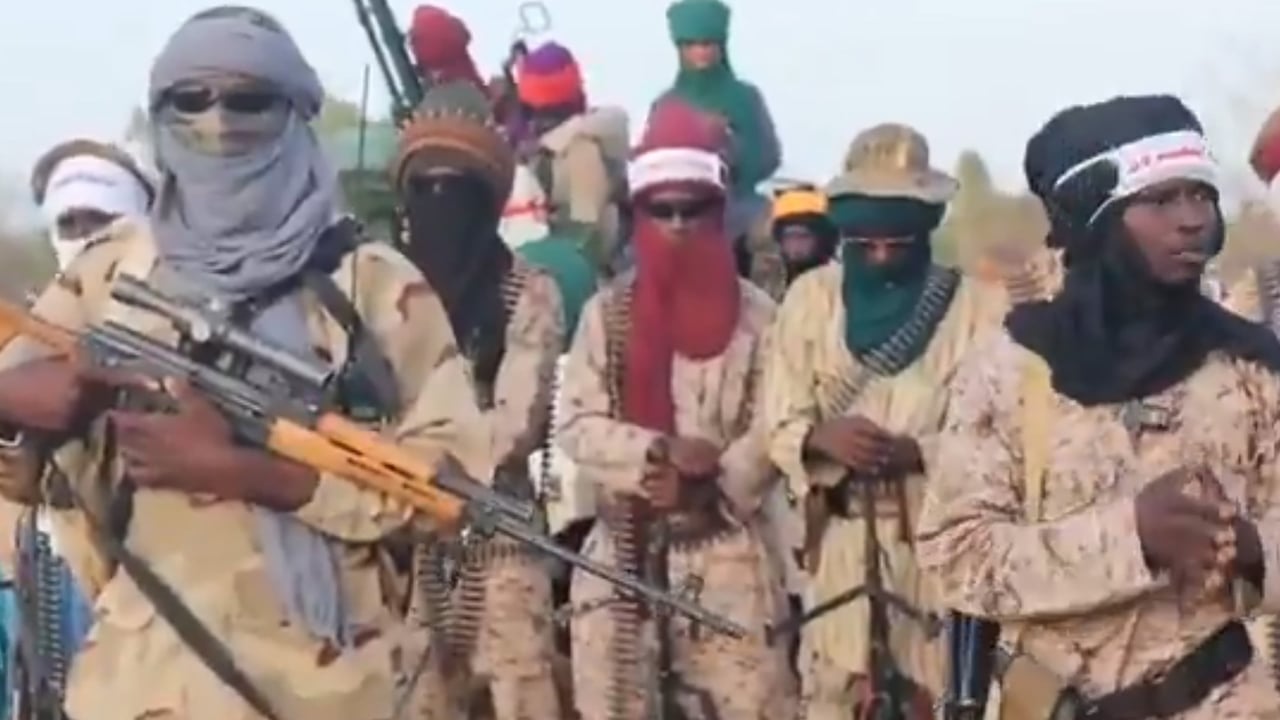
Among the most active factions shaping this new arc of crisis is Jnim, a coalition of armed groups whose propaganda efforts have intensified in recent months. Their messaging, disseminated through digital platforms, reveals a deliberate strategy to undermine local institutions and rally support by framing their violence as a form of resistance against perceived state failures.
This shift in militant tactics is not happening in a vacuum. It reflects broader geopolitical realignments, including changing alliances among regional actors and shifting priorities of international partners. The interplay between these dynamics is creating a complex and volatile environment where traditional security measures are proving insufficient.
regional spillover and the threat to west africa
The expansion of this crisis arc is not confined to the Sahel. Its ripple effects are being felt across West Africa, with neighboring countries facing mounting pressure to respond. From Burkina Faso to Nigeria, governments are grappling with a dual challenge: containing internal unrest while preventing the spillover of violence from adjacent territories.
In Nigeria, for instance, the insurgency in the northeast has already crossed into neighboring Chad and Niger, exacerbating regional instability. Meanwhile, Burkina Faso’s struggle to maintain control over its northern territories highlights the regional nature of this threat. These interconnected struggles underscore the need for a coordinated, multi-country response—one that goes beyond national borders.
what lies ahead for the Sahel?
The path forward is fraught with uncertainty. As militant groups continue to adapt, so too must the strategies employed to counter them. Military interventions alone are unlikely to suffice; a holistic approach that includes governance reform, economic development, and community engagement will be essential to addressing the root causes of instability.
Yet, the road ahead is daunting. The Sahel’s security landscape is evolving rapidly, and the choices made today will determine the stability—or instability—of the region for decades. Without decisive action, the risk of further fragmentation looms large, threatening to unravel years of progress and plunge millions into deeper uncertainty.
key takeaways for policymakers and analysts
- Transnational threats require transnational solutions. Isolated national responses will not suffice in addressing the interconnected nature of modern insurgencies.
- Governance gaps are fueling extremism. Weak institutions and lack of service delivery create fertile ground for militant groups to exploit.
- Community resilience is critical. Engaging local populations in counter-radicalization efforts can help disrupt militant recruitment and support networks.
- Long-term stability depends on development. Economic opportunities and social services are vital to reducing the appeal of extremist ideologies.