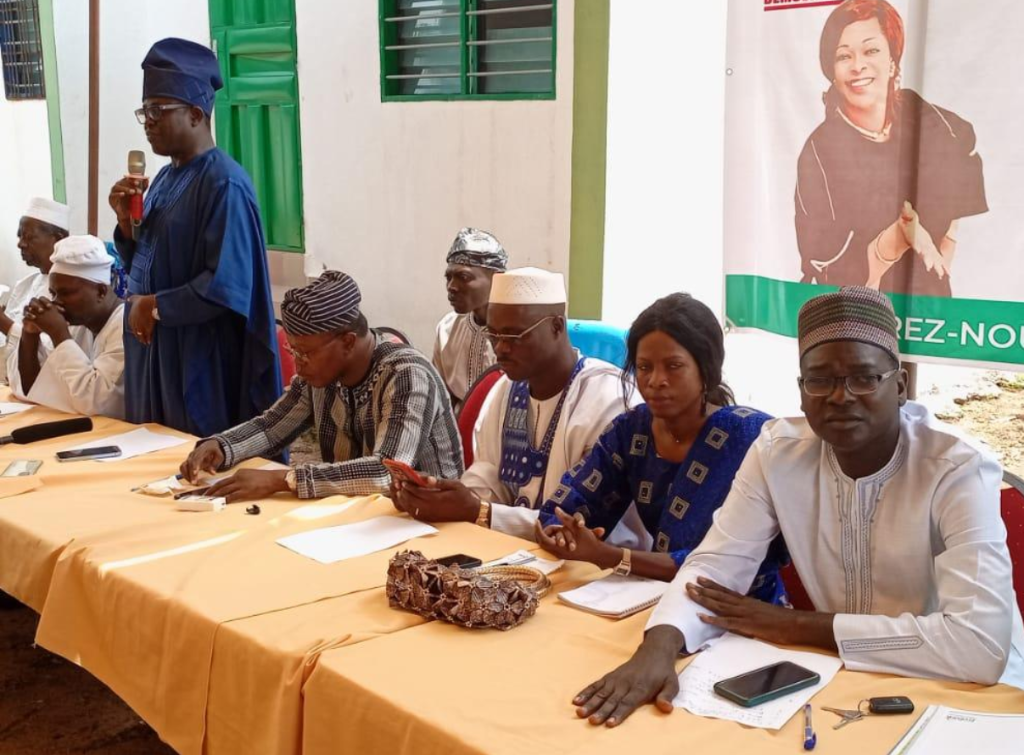
The appeal hearing in the Houndété-Atchadé dispute—stemming from the contested succession of Thomas Boni Yayi as leader of Benin’s Les Démocrates party—has been postponed to 14 January 2027. Amid ongoing legal proceedings and internal restructuring, the party’s ordinary congress on 11 October 2026 elected Nourénou Atchadé as president, adding a new layer to the leadership crisis crippling Benin’s main opposition party.
Leadership standoff drags on despite political moves
The power struggle within Les Démocrates shows no signs of resolution. While both factions hoped for judicial clarity, the appeal case between Éric Houndété and Nourénou Atchadé’s camps has now been delayed until early 2027. This latest postponement extends the uncertainty over party leadership, already weakened by deep internal divisions.
Yet as the courts stall, political manoeuvring continues. On 11 October 2026, Atchadé’s faction held an ordinary congress, formally electing him as party president. This bold political step came even as the legal challenge from Houndété’s side remains unresolved.
One pressing question emerges: how can a political party solidify its leadership when the very legitimacy of that succession is still under judicial scrutiny?
From succession battle to full-blown crisis
The conflict began in March 2026 when Thomas Boni Yayi stepped down as party president due to health concerns. His departure triggered a transition period that swiftly escalated into a bitter succession struggle.
Éric Houndété, the party’s vice president and initial interim leader, found himself at the centre of the dispute after Nourénou Atchadé was appointed to take over. Houndété’s camp challenged the process, alleging violations of the party’s internal statutes. Meanwhile, Atchadé’s faction sought to legitimise the new leadership and consolidate the party’s structure around him.
What started as a disagreement over procedural rules soon evolved into a broader crisis. The Houndété-Atchadé case now symbolises deeper questions about internal governance: who has the authority to represent the party, how leaders should be selected, and which body can officially commit the organisation?
First ruling favours Atchadé—but battle rages on
On 29 April 2026, the Cotonou Court of First Instance ruled in favour of Nourénou Atchadé, validating the contested leadership transition. This marked an initial legal victory for Atchadé’s faction. However, the conflict persisted.
Houndété’s legal team immediately filed an appeal, keeping the dispute alive in the courts. Since then, repeated adjournments have delayed a final resolution. After multiple postponements throughout 2026—including scheduled hearings in June and October—the new date of 14 January 2027 only prolongs the uncertainty.
For both sides, the stakes are high. The case isn’t just about who holds the presidency; it’s about which authority can legitimately represent Les Démocrates and make binding decisions for the entire party.
A congress that shifts the political landscape
While the appeal process drags on, Atchadé’s camp made a decisive political move. On 11 October 2026, they held an ordinary congress, electing Atchadé as party president. This event marked a significant turning point in the crisis, demonstrating their intent to strengthen the party’s organisation and assert control—regardless of the judicial outcome.
However, political momentum does not equate to legal resolution. The congress and Atchadé’s election do not automatically resolve the dispute. Houndété’s camp retains the right to pursue its challenge through the appeal process. The legal validity of the congress’s decisions—and their alignment with the ongoing case—will ultimately depend on the applicable party statutes and court rulings.
Thus, the party finds itself in a paradox: a leadership solidified by internal political action, even as a pending legal challenge could still overturn the status quo.
Opposition at risk amid internal fractures
Beyond the leadership battle, the broader implications of this crisis worry observers of Benin’s political scene. Les Démocrates, already struggling after the 2026 elections and with a weakened institutional presence, now face the fallout of internal divisions.
A prolonged crisis risks demoralising activists, diluting the party’s political message, and weakening its stance against rivals. It could also disrupt local and national operations at a time when unity is critical for any opposition movement.
The issue has transcended the original question of Thomas Boni Yayi’s succession. Now, it tests the ability of party leaders to preserve unity and rebuild trust between now-opposing factions—both politically and legally.
14 January 2027: a make-or-break date?
The appeal’s postponement to 14 January 2027 extends the waiting period once more. This hearing is now seen as a critical milestone in resolving the legal dispute.
Yet uncertainties remain: will the appeals court finally examine the merits of the case, or will procedural hurdles trigger another delay? In the meantime, the 11 October congress and the ongoing appeal illustrate two parallel dynamics: Atchadé’s political consolidation and Houndété’s legal resistance.
For Les Démocrates, the challenge is twofold: ending the legal limbo and healing internal divisions that threaten their cohesion. Regardless of the court’s eventual ruling, rebuilding political unity will be essential for the party to reclaim its role in Benin’s democratic debate.
The Houndété-Atchadé dispute is no longer just a leadership battle—it has become a defining test for the party’s internal governance, credibility, and future as Benin’s leading opposition force.