Bénin’s democratic succession: Romuald Wadagni takes presidential oath
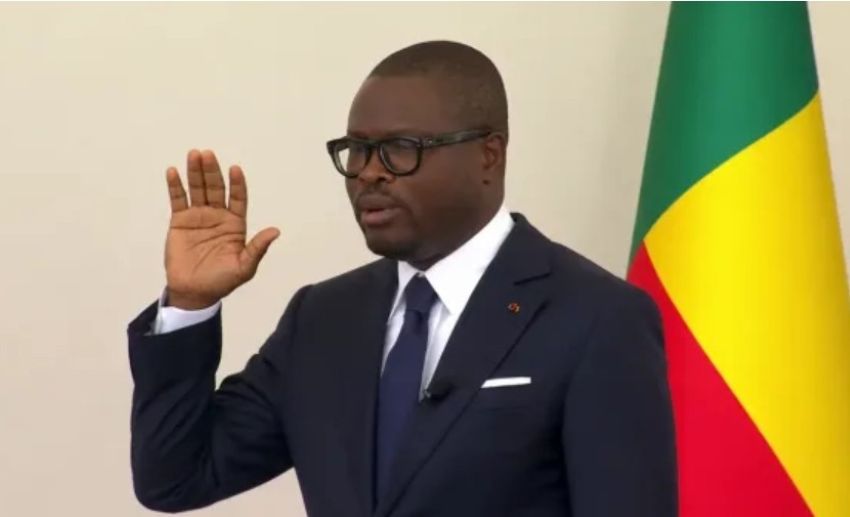
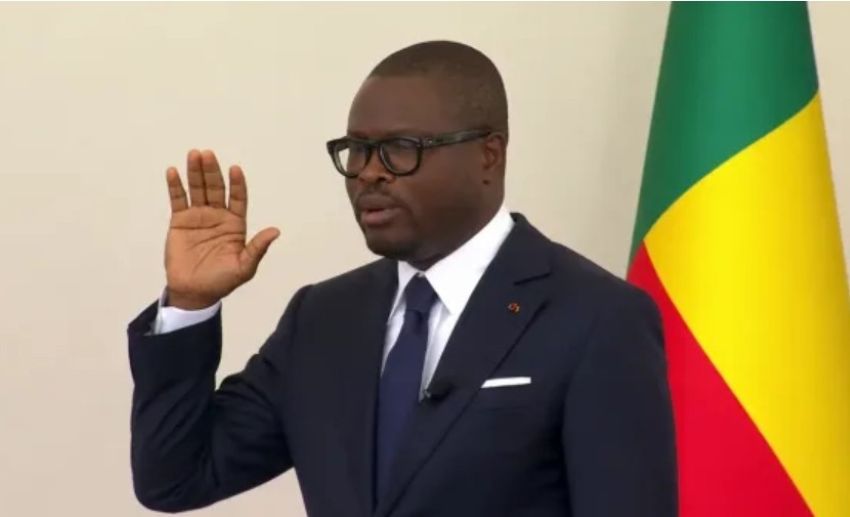
Cotonou, Sunday, May 24, 2026 – Bénin delivered one of Africa’s most compelling political images this year. On this Sunday, Romuald Wadagni officially took the oath of office as the new President of the Republic in an atmosphere of republican solemnity rarely witnessed across the continent. He succeeds Patrice Talon, who concluded two mandates in strict adherence to constitutional provisions.
Beyond the formal ceremony, a profound political message resonated throughout West Africa and beyond: a commitment to peaceful, organized, and institutionally managed transitions of power.
At 49 years old, the former Minister of Economy and Finance ascends to the highest office at a time when political transitions across Africa frequently face fragility, contention, or military intervention. The images of Patrice Talon calmly overseeing the installation of his successor, surrounded by living former Béninois heads of state, immediately gained significant symbolic weight. They depicted a reality that has become scarce in many African regions: a government willing to relinquish power in favor of robust institutions.
A transition boosting confidence in African democracy
The inauguration ceremony held in Cotonou quickly transcended national boundaries. Diplomats, African political leaders, institutional representatives, and international observers viewed this transition as a potent political signal, particularly as several African democracies navigate turbulent periods.
For several years, West Africa has grappled with a series of institutional crises, military coups, and tensions surrounding presidential successions. Within this unstable regional climate, the peaceful handover of power between Patrice Talon and Romuald Wadagni stands out as a valuable and exceptional political event.
Patrice Talon’s voluntary departure after two terms represents a crucial benchmark. While some leaders on the continent have opted to amend constitutions to prolong their tenure, the outgoing Béninois president respected the limits imposed by the institutional framework.
This decision significantly enhances Bénin’s reputation as one of Francophone Africa’s most stable democracies. It also re-establishes the nation as a regional exemplar for institutional stability and republican continuity.
In the streets of Cotonou and across African social media platforms, images of this transition garnered widespread praise, hailed as a “democratic lesson” during a period of significant political realignment on the continent.
Romuald Wadagni faces consolidation challenges
Romuald Wadagni’s assumption of power initiates a new political chapter for Bénin. A respected technocrat, former Finance Minister, and architect of numerous economic reforms implemented under Patrice Talon, the new president inherits a nation engaged in profound economic transformation but confronting substantial social challenges.
In his inaugural address, the new head of state emphasized the continuity of structural reforms while pledging to accelerate policies aimed at improving the living conditions of the populace.
His profile attracts considerable attention within African and international economic circles. Educated in major financial institutions, Romuald Wadagni embodies a new generation of African leaders more identified with economic management, administrative modernization, and public efficiency than with traditional political dynamics.
However, this image of a technocratic reformer also presents a challenge. Beyond macroeconomic performance, social expectations remain high. Youth employment, the cost of living, infrastructure development, access to public services, and reducing inequalities will be key tests for the new administration.
The Béninois president must also achieve a delicate balance: preserving the institutional stability inherited from the Talon presidency while progressively asserting his own political vision.
The political message sent to the continent
Romuald Wadagni’s inauguration today extends beyond Bénin’s borders. It occurs in an Africa grappling with profound questions about the future of democratic models, the credibility of institutions, and the capacity of states to organize peaceful transitions.
Perhaps the most powerful symbol of this day was not the oath itself, but the calm and assured presence of Patrice Talon, witnessing the transfer of power without tension or political ambiguity.
In numerous African nations, this image was interpreted as a demonstration that an alternative political path remains viable on the continent. A trajectory where institutions take precedence over individuals, and stability rests on adherence to rules rather than the personalization of power.
Bénin has thus reaffirmed a rare political distinctiveness: that of an African state capable of organizing a presidential succession within republican continuity, free from major crisis or institutional rupture.
In an Africa seeking new democratic benchmarks, this moment could leave a lasting impression on the continent’s political imagination.