Human Rights Watch reports that Burkina Faso’s military junta detained three journalists on March 24, 2025, in connection with their coverage of the government’s escalating crackdown on media outlets.
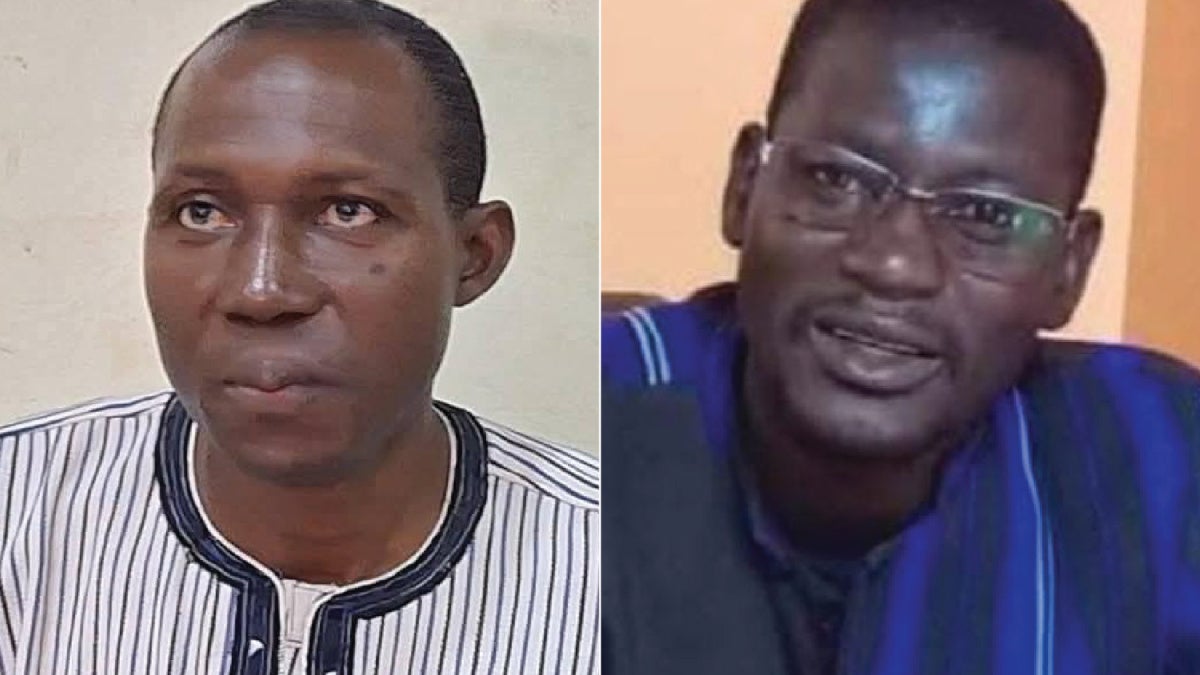
In Ouagadougou, the nation’s capital, authorities apprehended Guezouma Sanogo and Boukari Ouoba, who serve as president and vice-president of the Association of Journalists of Burkina (AJB), alongside Luc Pagbelguem, a journalist from the private television channel BF1. The current whereabouts of these three individuals remain undisclosed, raising serious concerns about potential enforced disappearances.
“The arbitrary arrests and subsequent disappearance of these three journalists underscore the Burkina Faso junta’s desperate attempts to control information and ensure military authorities can perpetrate abuses without accountability,” asserted Ilaria Allegrozzi, a senior Sahel researcher at Human Rights Watch. She further urged, “The military junta must take immediate steps to locate and release these three journalists.”
Since seizing power in a 2022 coup, President Ibrahim Traoré’s military junta has consistently suppressed media outlets, political opposition, and peaceful dissent. Amidst a growing Islamist insurgency, the junta has utilized a sweeping emergency law to silence critical voices and unlawfully conscript critics, journalists, civil society activists, and even magistrates into the armed forces.
On March 21, the AJB organized a press conference to condemn the military junta’s restrictions on free expression and demand the release of arbitrarily detained journalists. Three days later, on March 24, plainclothes individuals identifying as Burkinabè intelligence police officers arrested Guezouma Sanogo and Boukari Ouoba. Separately, two intelligence agents detained Luc Pagbelguem for reporting on the AJB’s press event. The following day, the Minister of Territorial Administration and Mobility officially dissolved the AJB.
Colleagues of Guezouma Sanogo and Boukari Ouoba reported that legal representatives fruitlessly searched for them across various police stations and gendarmerie posts in the capital, with authorities providing no official response to inquiries. On March 25, intelligence services reportedly took Sanogo and Ouoba to their homes for police searches before relocating them to an undisclosed location, according to their peers.
BF1 channel stated that agents from the National Security Council had assured them they “only wished to question our colleague,” yet Luc Pagbelguem’s whereabouts remain unknown. The television channel subsequently issued a formal apology for broadcasting the press conference.
In a separate recent incident, on March 18, individuals claiming to be gendarmes apprehended prominent political activist and journalist Idrissa Barry in Ouagadougou. His location also remains undisclosed. Barry is affiliated with the political group Servir et Non se Servir (SENS), which, just four days prior to his arrest, had released a statement condemning “deadly attacks” by government forces and allied militias against civilians near Solenzo, in western Burkina Faso, on March 11.
In June 2024, security forces detained Serge Oulon, the distinguished director of the investigative newspaper L’Événement, along with television commentators Adama Bayala and Kalifara Séré. Authorities initially denied their detention until October 2024, when they eventually acknowledged that the three men had been conscripted into military service. Their current whereabouts also remain unknown.
In April 2024, Burkina Faso’s media regulatory body, the Conseil supérieur de la communication (CSC), suspended the French television channel TV5 Monde and several other news outlets for two weeks. This action followed their reporting on a Human Rights Watch report alleging that the army had committed crimes against humanity targeting civilians in the Yatenga province. The CSC further blocked Human Rights Watch’s website within the country.
Due to their professional activities, dozens of journalists have been compelled to flee Burkina Faso, facing threats of imprisonment, torture, enforced disappearance, and forced conscription.
Following Idrissa Barry’s arrest, one journalist confided to Human Rights Watch, “I have departed Ouagadougou and have no intention of returning. Free media is defunct in this nation; all that remains is government propaganda.”
This recent surge in the crackdown on independent media has unfolded amidst escalating nationwide conflict. Over the past fortnight, the Al-Qaïda-affiliated Group for the Support of Islam and Muslims (GSIM, also known as Jama’at Nusrat al-Islam wa al-Muslimeen or JNIM) launched assaults on military positions across several regions, resulting in casualties among both soldiers and civilians. Local reports indicate that on March 15, GSIM fighters attacked the Séguénéga military base in the country’s north, killing seven civilians and at least four soldiers who were fighting alongside local militias. Human Rights Watch independently verified a video depicting GSIM combatants storming a fortified hilltop compound in central Séguénéga.
A Burkinabè journalist in exile lamented, “Burkina Faso’s relentless descent into widespread violence is not receiving the national attention and media coverage it warrants, primarily because independent media has been silenced. Recent incidents, such as the deadly assault on civilians in Solenzo and other locations, are either entirely ignored by pro-government media or reported with a distinct bias.”
International human rights law expressly prohibits arbitrary restrictions on freedom of expression, a principle that extends to the detention or enforced disappearance of journalists. Burkina Faso, as a state party to the International Convention for the Protection of All Persons from Enforced Disappearance, is bound by its definition: enforced disappearance constitutes the arrest or detention of an individual by state officials or their agents, followed by a refusal to acknowledge the deprivation of liberty or to disclose the person’s fate or whereabouts.
Ilaria Allegrozzi emphasized, “The necessity for independent media in Burkina Faso has never been more critical. Authorities must reverse course and cease their brutal crackdown on journalists, dissidents, and political opponents.”