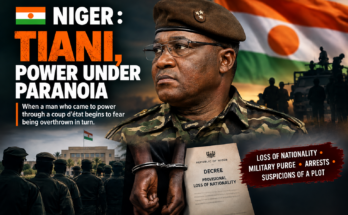
The Nigerien military regime, which seized power in July 2023, continues to tighten its grip on the country eighteen months later. A new report by Amnesty International, published in March, documents a disturbing escalation in human rights violations, including forced arrests, arbitrary detentions, media crackdowns, and the suspension of political parties. The organization’s findings highlight widespread abuses of civil and political rights between July 2023 and January 2025, as dissenting voices and former officials face systematic repression.
The National Council for the Safeguard of the Homeland (CNSP), which justified its coup with claims of deteriorating security and poor governance, had pledged to uphold the rule of law. Yet, as the report reveals, these assurances have been abandoned, and the legal framework has eroded significantly. Marceau Sivieude, Amnesty International’s interim West and Central Africa director, states, «Despite the new authorities’ commitments, human rights have been trampled both in law and practice. The legislative retreat is glaring.»
Eroding democratic institutions and legal safeguards
Following the coup, the military suspended the 2010 Constitution and dismantled key institutions, including the National Human Rights Commission. Replacements have been slow to materialize, centralizing power under the CNSP. Governance now relies on restrictive decrees, further weakening democratic norms.
One of the most contentious measures is the reinstatement of the 2019 cybercrime law, which now criminalizes defamation, insults, and the dissemination of content deemed disruptive to public order. The vague wording allows authorities to target critics and opponents. An even more alarming decree, issued in August 2024, broadens the definition of terrorism offenses and enables the state to compile blacklists of individuals and groups. Those listed risk asset freezes and even the revocation of their citizenship.
As of October 2024, 21 individuals—including former ministers from President Bazoum’s administration—have already been affected. Hamid Ngadé, former communications advisor to the presidency, shared his ordeal: «I only hold Nigerien nationality, and this provisional revocation could render me stateless. I have no intention of contesting it because there is no longer any rule of law in Niger.» Amnesty International condemned these measures, with researcher Ousmane Diallo warning, «This decree strips citizens of their rights based on dissenting opinions.»
Political pluralism has effectively vanished. Since the coup, political parties have been suspended, eliminating institutional checks on power and silencing opposition voices.
Crackdown on civil society and independent media
The military regime has intensified repression against civil society and the press, using claims of national sovereignty and public order to justify its actions. The Directorate General for State Security (DGSE) has been implicated in enforced disappearances, arbitrary arrests, and prolonged detentions, despite official denials.
Moussa Tchangari, a prominent civil society leader, was violently arrested at his home on December 3, 2024. Held in secret detention for several days, he now faces charges of terrorism advocacy, endangering state security, and criminal association—offenses carrying up to a decade in prison. His case exemplifies the broader pattern of harassment, including arrests at workplaces or homes, constant threats, and intimidation tactics targeting critics of the regime.
The government has stoked societal divisions, labeling critics as «stateless» and fostering a climate of fear. A Niamey-based civil society leader explains, «We live under a state of exception, which poses a grave challenge to civil society organizations. People fear speaking out or organizing activities seen as critical of the authorities.» Once vibrant platforms for dialogue and mobilization, civil society networks are now fragmented and weakened by divisions.
Media under siege: censorship and persecution
The CNSP has systematically targeted press freedom, replacing the Press House with a pro-government interim committee in January 2024. Surveillance of media outlets has intensified, with international broadcasters like RFI and France 24 suspended as early as August 2023, followed by the BBC in December 2024 for three months.
Journalists face severe repercussions for their work. Ousmane Toudou, a former advisor to President Bazoum, and Soumana Maïga, a newspaper editor, were arrested in April 2024 over social media posts. While Maïga was granted provisional release, Toudou remains detained. Blogger and activist Samira Sabou endured enforced disappearance before being prosecuted under the 2019 cybercrime law.
Under these conditions, self-censorship has become the norm. Sources refuse to speak on the record, and journalists carefully weigh every word. «Now, when you write, you have to think twice. There’s no one left to defend the press,» one journalist told Amnesty International. Ousmane Diallo warns, «Freedom of expression, dissent, and press freedom are essential for accountability and the enjoyment of other rights. Niger stands at a critical juncture.»
In late February, a national dialogue recommended a five-year transition period—renewable—with current leaders eligible to run in future elections. This proposal reinforces the military’s grip on power and pushes the country further from restoring democratic governance.