Burkina Faso’s military ruler advocates for a system beyond democracy
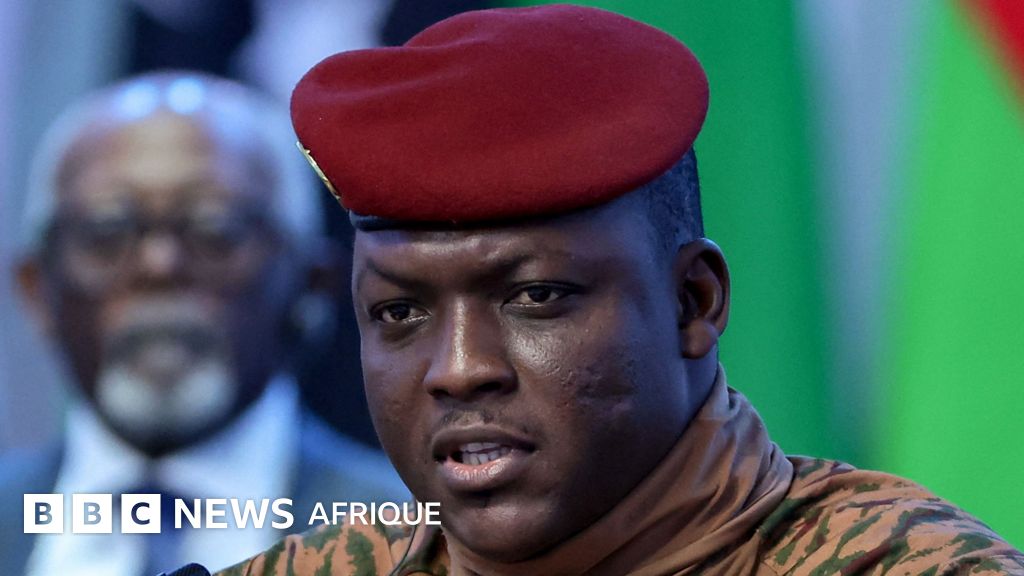
In a televised address to the nation, Captain Ibrahim Traoré, Burkina Faso’s military leader, made a bold declaration: the country must “forget democracy,” asserting it is “not for us.” These remarks, delivered during a prime-time broadcast, mark a sharp shift from his earlier pledge to restore civilian rule by July 2024.
Traoré, who seized power in a 2022 coup, justified his stance during the interview, stating that democratic systems imported from the West have consistently led to chaos and bloodshed globally. “Wherever they [Western powers] try to impose democracy, bloodshed follows,” he argued. As an example, he pointed to Libya, which descended into a prolonged civil war after the fall of Muammar Gaddafi’s regime—supported by Western intervention—and has yet to hold stable elections.
The 38-year-old leader, who positions himself as an anti-imperialist revolutionary, has extended his military rule indefinitely, postponing elections and dissolving all political parties in January 2026. He claims these parties are divisive and incompatible with his revolutionary project, describing them as hubs for deceit, flattery, and empty rhetoric. “A true politician in Africa—or at least in Burkina Faso—is someone who embodies all vices: a liar, a flatterer, a smooth talker,” he stated.
Traoré outlines an alternative path
While Traoré did not elaborate on a concrete alternative to democracy, he emphasized building a new system rooted in sovereignty, patriotism, and revolutionary mobilization. Traditional leaders and grassroots structures would play a central role, he suggested, alongside a focus on economic and military self-reliance. “We are not trying to copy anyone. We aim to completely transform how things are done,” he asserted.
The leader also stressed the need for relentless effort, arguing that Burkina Faso cannot catch up to wealthier nations with standard six-to-eight-hour workdays. His government has cracked down on dissent, targeting opposition figures, media outlets, and civil society groups. Critics have accused his administration of silencing opponents by sending them to frontline combat roles against Islamist militants.
Regional shifts: Burkina Faso breaks ties with the West
Since Traoré’s rise, Burkina Faso has distanced itself from Western allies, particularly France, in the fight against Islamist insurgencies plaguing the Sahel. Alongside neighboring juntas in Mali and Niger, the country has pivoted toward Russia for military support. However, violence in the region continues unabated despite these realignments.
The consequences of Traoré’s rule are stark. According to recent reports, over 1,800 civilians have been killed in Burkina Faso since he took power in 2023, with two-thirds of the deaths attributed to government forces and allied militias. Islamist militants are responsible for the remainder. The crisis has intensified debates about the effectiveness of military-led governance in addressing security and development challenges.
Despite the turmoil, Traoré has cultivated significant support across Africa for his anti-Western rhetoric and panafricanist vision. Yet, the humanitarian toll and the unresolved conflict with militants raise urgent questions about the sustainability of his alternative model.