Burkina Faso’s military leader rejects democracy in televised address

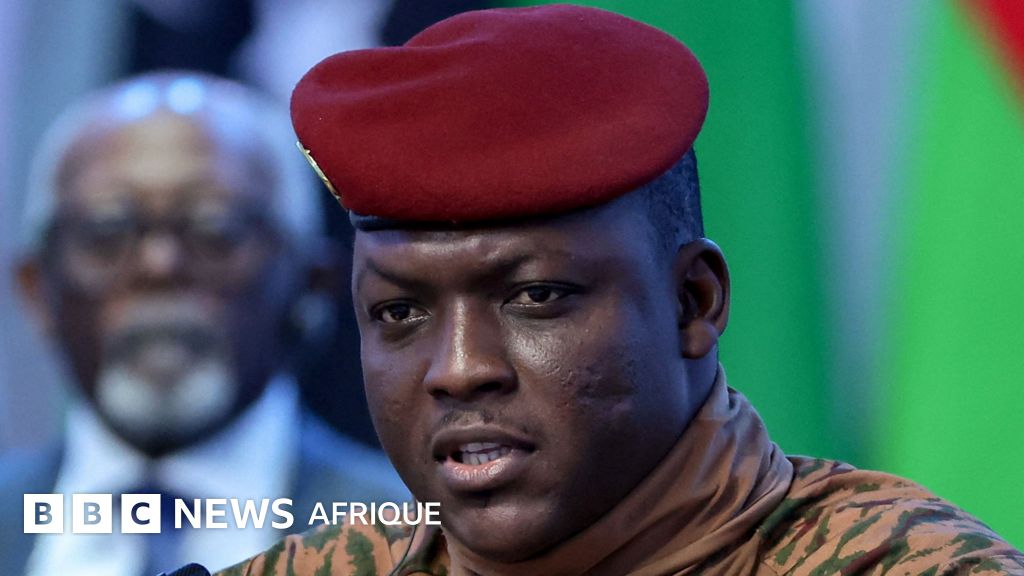
During a nationally televised interview on Thursday evening, Burkina Faso’s military leader, Captain Ibrahim Traoré, declared that democracy was “not for us” and urged citizens to abandon the concept entirely.
« People must forget about democracy. Democracy is not for us, » Traoré stated, emphasizing his belief that the political system was incompatible with Burkina Faso’s needs. The 38-year-old leader, who seized power in a 2022 coup, argued that most Africans reject democratic governance, though he provided no concrete evidence to support this claim.
The captain, who presents himself as a revolutionary opposing Western imperialism, initially pledged to restore civilian rule by July 2024. However, just two months before the deadline, his junta extended its rule by five years, citing the need to stabilize the nation and rebuild state institutions.
In January, authorities banned all political parties, transferring their assets to the state as part of a broader plan to « reconstruct the nation. » Traoré condemned political parties as divisive and dangerous, describing them as vehicles for corruption and deceit.
« The truth is, in Africa—or at least in Burkina Faso—real politicians embody every vice: liars, flatterers, and empty talkers, » he asserted. He offered no alternative governance model but insisted Burkina Faso would forge its own path, free from foreign influence.
Traoré’s vision emphasizes sovereignty, patriotism, and revolutionary mobilization, with traditional leaders and grassroots structures playing a central role. He also stressed the urgent need for economic and military self-reliance, arguing that the country’s development would require far longer working hours than the standard six to eight hours.
The military leader drew parallels with Libya, highlighting the consequences of Western intervention in the North African nation. Under Muammar Gaddafi’s authoritarian regime, Libya provided social housing, free education, and healthcare, but its collapse following a Western-backed uprising left the country fractured and mired in conflict, with no elections held since.
Traoré’s governance has faced criticism over its suppression of dissent. Opposition figures, media outlets, and civil society groups have been targeted, with some critics allegedly sent to frontline combat zones against Islamist militants as punishment for opposition. Despite these controversies, his anti-Western rhetoric and panafricanist stance have earned him significant support across the continent.
Like neighboring juntas in Mali and Niger, Burkina Faso has distanced itself from Western partners—particularly France—in its fight against Islamist insurgencies that have plagued the region for a decade. Instead, the country has turned to Russia for military assistance, though violence continues unabated.
Recent reports indicate a staggering toll on civilians since Traoré’s rise to power in 2023, with over 1,800 deaths attributed to both state forces and Islamist militants. According to monitoring groups, government-aligned militias and the army account for two-thirds of civilian fatalities, while the remaining third is linked to insurgent attacks.
His administration’s crackdown on dissent and military-first approach have intensified regional scrutiny, raising questions about the long-term stability and governance of Burkina Faso under its current leadership.