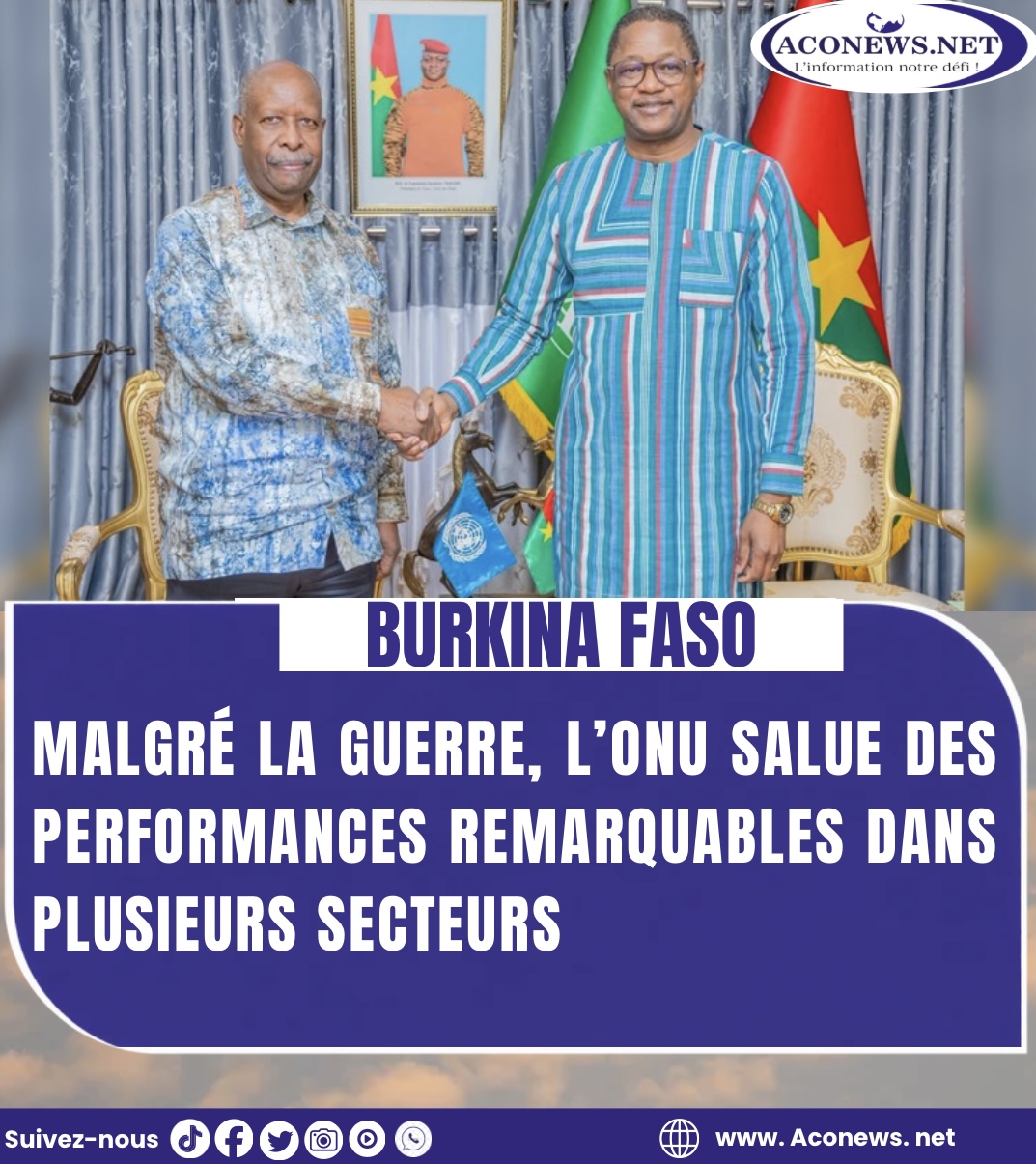
The security crisis that continues to grip Burkina Faso has not prevented the West African nation from making remarkable strides across multiple critical sectors. In a high-level engagement that underscored international acknowledgment of these efforts, United Nations Special Representative for West Africa and the Sahel, Leonardo Santos Simão, commended the country’s progress during an official visit to Ouagadougou.
Direct consequences of Burkina Faso’s determined progress
Leonardo Santos Simão’s visit came at a pivotal moment, following a series of notable achievements by Burkinabè authorities despite persistent security challenges. The UN envoy highlighted groundbreaking advances in national security, economic stability, food self-sufficiency, and critical infrastructure development. These milestones are reshaping Burkina Faso’s trajectory and sending a strong message to the international community about the depth of its resilience.
How national security efforts are paying off
The UN representative specifically praised the Burkinabè government’s comprehensive approach to reclaiming and securing territory, a strategy that has not only restored stability in key regions but also bolstered public confidence. Among the most tangible results are:
- Enhanced food security through agricultural innovations and community-based initiatives.
- Major infrastructure upgrades, including expanded road networks and hydraulic projects, facilitating better connectivity and resource distribution.
- Sustained economic activity in urban centers, defying the downward trends seen in other conflict-affected regions.
Simão remarked, “These accomplishments are commendable. There are nations not currently at war that cannot match the progress Burkina Faso has achieved.”
Diplomatic momentum strengthens global standing
The UN envoy also lauded Burkina Faso’s proactive foreign policy, particularly its leadership within the Alliance of Sahel States (AES). The bloc’s coordinated efforts to reframe international perceptions of the region were highlighted, especially during a side event at the recent UN General Assembly in New York. The initiative succeeded in dismantling misconceptions and fostering a more nuanced understanding of the AES’s strategic vision.
Burkinabè Minister of Foreign Affairs, Karamoko Jean Marie Traoré, emphasized that the New York event was designed to demystify AES policies and present an accurate, fact-based narrative about the confederation’s objectives. He praised the UN’s willingness to engage directly with realities on the ground, calling field visits essential to dispelling baseless criticism.
Rebuilding trust through action and transparency
The minister underscored the importance of relying on verified information to craft effective, context-sensitive responses. The frank exchange between Burkinabè officials and the UN envoy marked a turning point in bilateral relations, which had experienced strain in 2025. Both parties renewed their commitment to deepening collaboration, signaling a renewal of trust and mutual support.
This diplomatic rapprochement reflects not only Burkina Faso’s resilience but also the global recognition that sustained effort—even amid adversity—can yield transformative outcomes.