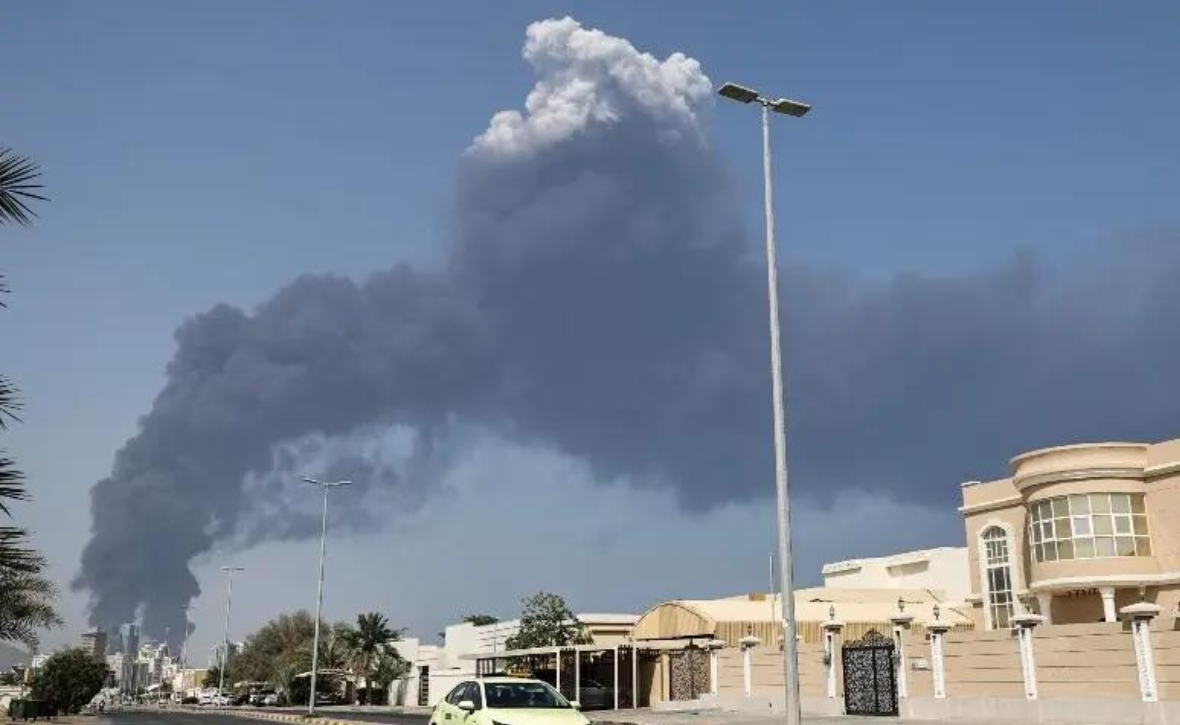
Tensions in the Persian Gulf have reached a critical level following Iran’s latest military strikes against key American installations in Bahrain and Kuwait. The operation marks a significant escalation in the ongoing confrontation between Tehran and Washington, raising immediate concerns over regional stability and the potential for broader conflict.
US military installations in Bahrain and Kuwait under fire
The attacks targeted strategic sites used by the United States in both countries, including the Ali Al Salem Air Base in Kuwait and radar facilities in Bahrain. While military sources confirm the strikes, the full extent of the damage remains unverified at this stage.
In Kuwait, air defense systems intercepted hostile drones, preventing direct hits on military infrastructure. Bahrain, home to the US Fifth Fleet headquarters, also faced multiple aerial threats, though no confirmed strikes on the fleet’s command center have been substantiated.
The operations reflect Iran’s expanding strategy of targeting American military assets beyond its immediate conflict zones, forcing Gulf nations to reassess their defense postures.
Bahrain’s strategic importance in the Iran-US standoff
Bahrain plays a pivotal role in the US military presence in the Middle East, hosting the headquarters of the Fifth Fleet, which oversees maritime security in the Persian Gulf, Gulf of Oman, and surrounding waters. The kingdom’s proximity to Iran makes it a high-value target in any escalation.
Reports indicate that radar installations near the Sheikh Isa Air Base were among the sites hit. However, local authorities have not confirmed whether the fleet’s operational center itself was compromised. Social media claims suggesting a direct strike on the Fifth Fleet’s headquarters remain unverified.
Kuwait’s military cooperation with the US puts it in Iran’s crosshairs
Kuwait’s strategic location and close military ties with Washington make it another focal point in Iran’s retaliatory campaign. The Ali Al Salem Air Base, a critical logistical hub for US operations in the region, was reportedly struck, though details of the attack’s impact are still emerging.
Kuwaiti air defenses intercepted several drones, signaling the growing threat posed by Iran’s evolving military tactics. The kingdom now faces the dual challenge of protecting its territory while avoiding entanglement in a direct US-Iran conflict.
Regional stability at risk as retaliatory cycle intensifies
The latest strikes are part of a broader pattern of escalation, with both Washington and Tehran engaging in tit-for-tat military actions. US operations against Iranian positions have drawn reciprocal strikes, creating a dangerous feedback loop.
Analysts warn that a single miscalculation—such as significant US casualties—could trigger a disproportionate military response, potentially dragging the entire region into a wider war.
The Gulf states, though aligned with the US, must tread carefully to avoid becoming collateral damage in this high-stakes confrontation.
Oil and trade routes face unprecedented threats
The Persian Gulf’s geopolitical tensions pose severe risks to global energy markets. The Strait of Hormuz, a chokepoint for oil and gas shipments, remains vulnerable to disruption. Any prolonged blockade or attack on commercial vessels could send shockwaves through international energy prices.
Economic analysts highlight the Strait’s pivotal role: nearly a fifth of the world’s oil supply passes through these waters daily. A sustained closure or attack on shipping lanes would disrupt supply chains, driving up fuel costs and destabilizing markets.
Diplomatic efforts struggle to contain the crisis
With each military strike, the prospects for dialogue diminish. Countries like Oman and Qatar, which maintain communication channels with both Iran and the US, are under pressure to mediate. However, the recent attacks have eroded trust, making negotiations increasingly difficult.
For Washington, safeguarding its troops and bases in the Gulf is a top priority. For Tehran, maintaining the capacity to retaliate remains central to its deterrence strategy. The question now is whether this cycle of strikes can be halted before the region spirals into a full-blown military confrontation.
What’s next for the Persian Gulf?
The coming hours will be decisive. Will the latest escalation prompt a calibrated response, or will it spiral into a broader conflict? The fate of the Persian Gulf—and its critical infrastructure—hangs in the balance.