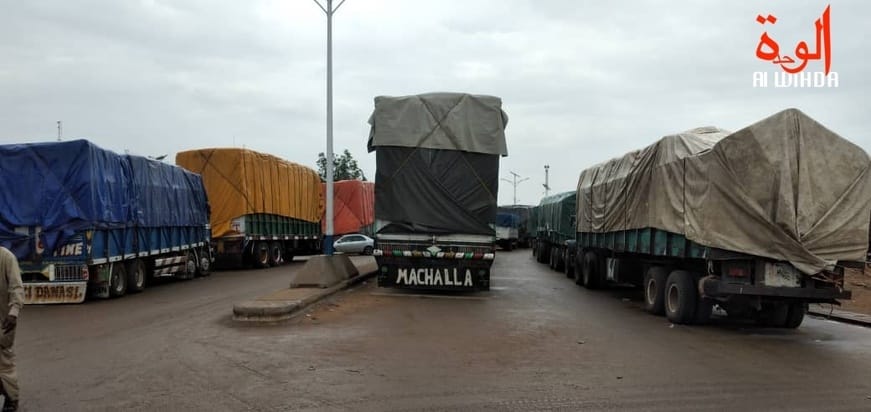
Chad’s trade landscape: China dominates imports, UAE leads exports
Two global economic powers profoundly shape Chad’s foreign trade, each playing a distinct role.
China: Chad’s indispensable supplier
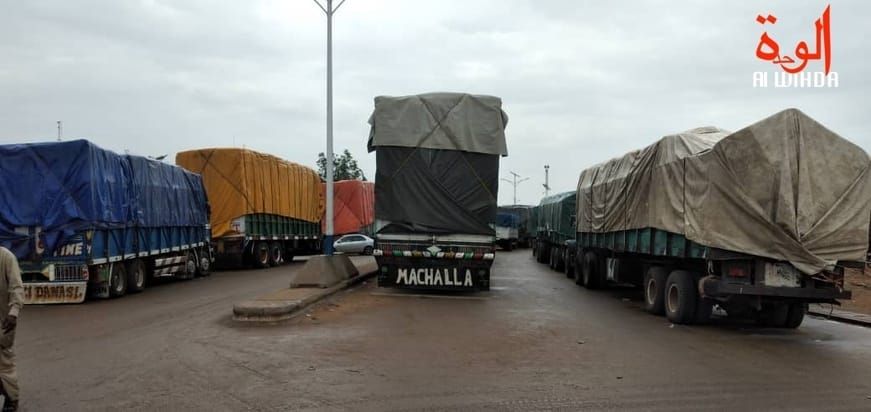
In 2025, China solidified its position as Chad’s undisputed leading supplier, delivering goods valued at 306.5 billion FCFA, which accounted for a significant 30.7% of the nation’s total imports. This dominance is unparalleled, with its closest competitor, Cameroon, supplying a mere 108.4 billion FCFA – less than a third of China’s contribution. Libya followed in third place, contributing 85.8 billion FCFA, or 8.6% of imports.
The nature of Chinese exports to Chad mirrors a typical North-South trade dynamic: primarily manufactured goods, industrial equipment, and essential consumer products. This model, where an African nation absorbs industrial output from an Asian economic powerhouse often in exchange for raw materials, has been successfully implemented by Beijing across the African continent for the past two decades.
The United Arab Emirates: a major export hub
The landscape of Chad’s exports presents a stark contrast. The United Arab Emirates (UAE) emerged as the primary destination for Chadian goods, purchasing 333.3 billion FCFA worth of exports, representing 26.2% of the total. The UAE surpassed Malaysia, which accounted for 297.8 billion FCFA (23.4%), and Germany, at 279.9 billion FCFA (22%).
The UAE’s role, however, extends beyond that of a direct consumer. Cities like Dubai and Abu Dhabi function as vital global commercial hubs where Chadian crude oil often transits. Here, it may undergo processing or blending before being re-routed to various international markets. While this intermediary role proves lucrative for the Emirates and acceptable for Chad, it frequently means that N’Djamena lacks complete visibility into the ultimate destination of its valuable resources.
Chad’s trade at a glance:
- 30.7% of imports – originate from China, marking a regional high.
- 26.2% of exports – are absorbed by the United Arab Emirates.
- 79.8% of top 10 partners – indicates a high concentration of import sources among the leading ten countries.
France and the United States: present but less influential
Despite its historical ties with Chad, France’s share of imports stood at only 5.1% (50.9 billion FCFA), placing it sixth among suppliers. The United States maintained its fifth position, contributing 53.0 billion FCFA (5.3%). These figures underscore a gradual shift in Chad’s commercial alliances, moving towards Asian, Middle Eastern, and other emerging economies, and away from traditional Western partners.
India (4.3%), Togo (3.6%), Brazil (2.9%), and Turkey (2.3%) further diversify Chad’s import sources. While the nation is expanding its network of suppliers, it remains overwhelmingly reliant on China for the sheer volume of goods imported.
Reconfiguring strategic dependencies
The strategic implication of Chad’s trade report is clear: the nation’s exports are highly concentrated, with the top ten buyers accounting for a staggering 98.9% of total exports. Concurrently, while import sources are somewhat more diverse, they remain heavily dominated by Beijing. This dual concentration exposes Chad to potential external economic shocks, highlighting an urgent need for a comprehensive commercial diversification policy, encompassing both imports and exports, to mitigate future vulnerabilities.